Backwaters Beyond Houseboats: Life Along Kerala’s Hidden Canals
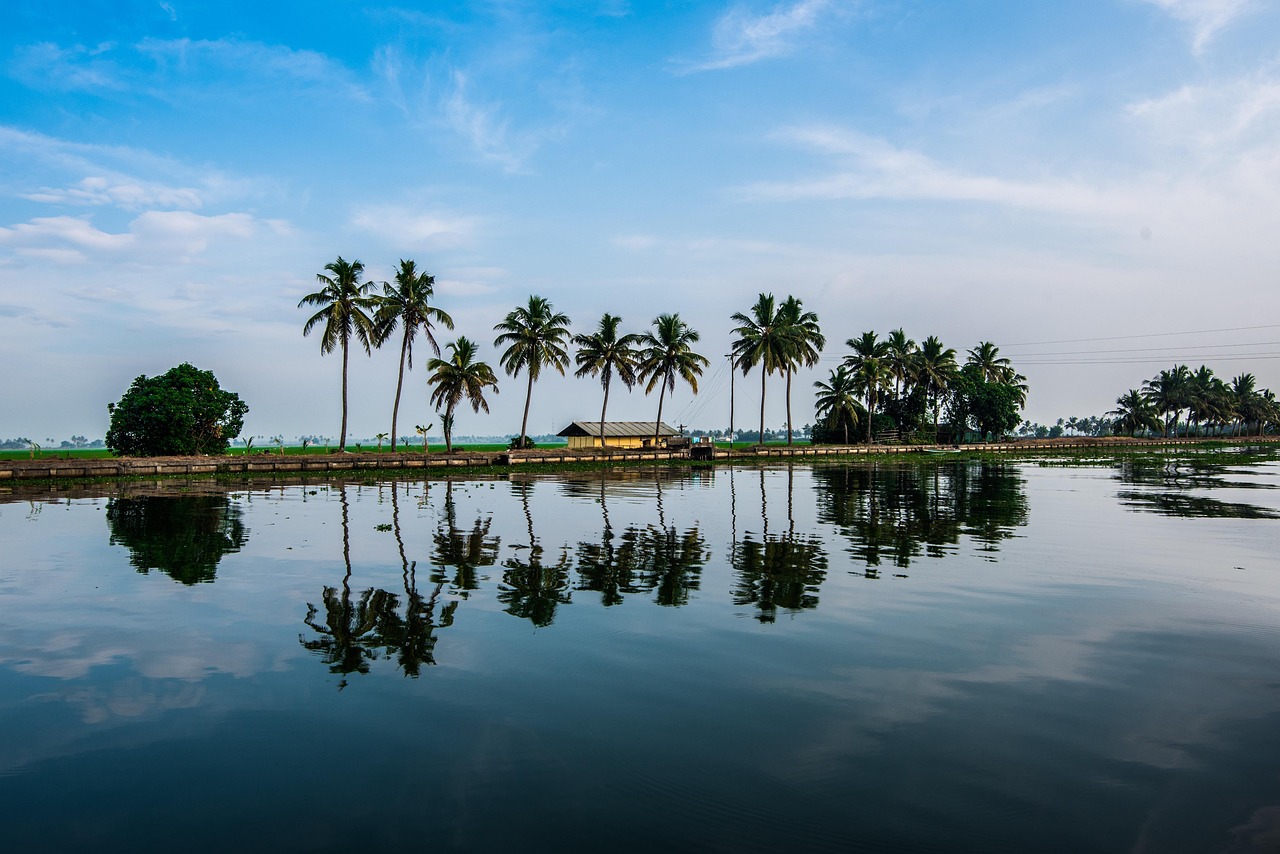
Picturesque backwaters of Alleppey (Alappuzha). Image Courtesy: Kerala Tourism Department
For much of the world, Kerala’s backwaters exist as a single, polished image: a large houseboat drifting slowly across open water, framed by coconut palms and reflections of the sky. This image is not inaccurate, but it is incomplete. Beyond the wide lakes and tourist routes of Alleppey (Alappuzha) lies a dense, quieter network of narrow canals, village waterways, and lived-in edges where the backwaters are not an attraction but a way of life.
These interior canals do not appear prominently in travel brochures. They do not accommodate luxury boats or fixed itineraries. Yet it is here—away from the open stretches of Vembanad Lake—that the ecological, cultural, and social meaning of the backwaters becomes most visible. To understand Alleppey fully, one must move beyond the spectacle of houseboats and pay attention to the everyday water culture that sustains the region.
The Backwaters as a Living System
Long before tourism reshaped Alleppey’s global image, the backwaters functioned as a complex inland water system connecting land, labour, and livelihood. Canals acted as transport routes, irrigation channels, drainage systems, and social spaces. Water determined settlement patterns, occupational rhythms, and even architectural forms.
In many villages, canals still serve as the most direct routes between homes, fields, markets, and places of worship. Small wooden canoes glide through waterways barely wide enough for two boats to cross. These are not recreational rides but functional journeys—carrying vegetables, firewood, fishing nets, schoolchildren, and household supplies.
Unlike open backwater stretches designed for leisure cruising, interior canals demand familiarity. Navigation depends on seasonal water levels, submerged boundaries, and intimate local knowledge. The backwaters here operate less like a landscape to be admired and more like an ecological system to be negotiated daily.
Homes Built at the Edge of Water
Along narrow canals, houses are built close to the waterline, often without fences or clear separations between domestic space and the canal itself. Stone steps or earthen slopes descend directly into the water, serving as washing points, bathing areas, and boat landings.
Mornings begin early. The sound of oars touching water, the distant call of vendors, and temple bells drifting across canals mark the start of the day. Women rinse rice and utensils at the water’s edge. Clothes are washed on smooth stones worn down by decades of use. Children learn to swim in canals before they learn to ride bicycles.
These activities are not performed for visitors. They continue regardless of who watches, shaped by habit and necessity rather than display. For travellers accustomed to curated cultural experiences, this ordinariness can be unexpectedly revealing.
Interior Fishing Practices
Fishing in Alleppey’s interior backwaters differs significantly from the image presented along tourist routes. It is small-scale, seasonal, and closely tied to ecological cycles. Cast nets, hand lines, and traditional Chinese dip nets are still used, depending on water depth and salinity.
The movement of fish is influenced by the delicate balance between freshwater inflow and tidal exchange with the Arabian Sea. Monsoon rains, bund openings, and canal blockages all affect the daily catch. Fishermen adjust techniques accordingly, relying on observation and inherited knowledge rather than fixed schedules.
The catch rarely travels far. Fish moves directly from canal to household kitchens or nearby markets, forming a local food system that remains responsive to environmental change. For visitors who encounter these early-morning routines, fishing becomes less a spectacle and more an insight into subsistence economies shaped by water.
Paddy Cultivation Below Sea Level
One of the most remarkable yet least discussed aspects of Alleppey’s backwaters is the agricultural landscape that exists alongside them. In regions such as Kuttanad, paddy fields lie below sea level, protected by earthen bunds and regulated canals.
Farming here depends on collective management of water rather than individual land ownership alone. Farmers coordinate the timing of bund openings, drainage, and planting cycles. Simple wooden or metal shutters control water flow, maintaining a fragile balance between freshwater and salinity intrusion.
This system represents an accumulated body of ecological knowledge developed over generations. It challenges conventional ideas of agriculture by demonstrating how human communities can adapt to, rather than dominate, challenging landscapes.
Coir, Canoes, and Canal Economies
Long before tourism reshaped Alleppey’s economy, the backwaters sustained a network of water-based industries rooted in coconut cultivation and manual skill. Among them, the coir industry once defined the region’s global identity. Coconut husks were soaked for months in canal water to soften fibres, which were then hand-spun into coir yarn and ropes.
The canals functioned as production spaces as much as transport routes. Bundles of husk floated near homes, women worked along shaded banks, and finished coir was moved by canoe to collection points. Though mechanisation and market shifts have reduced the scale of this industry, remnants of coir yards and fibre-soaking areas still appear along interior waterways.
Canoes themselves form another quiet economy. Built and repaired locally, these narrow wooden boats are designed for shallow, plant-filled canals where larger vessels cannot pass. Their continued use reflects an adaptation to landscape rather than technological lag. In many villages, canoe ownership remains as essential as road access.
Along the canal network, livelihoods unfold largely unseen by visitors who remain on houseboats. Toddy tappers move across narrow bunds at dawn, collecting sap from coconut palms lining the waterways. Boat repairers work from temporary yards near canals, patching hulls damaged by submerged roots or shifting sediments.
Small traders use canoes to sell vegetables, fish, and household goods directly to waterside homes. These floating exchanges reduce the need for road transport and sustain a form of local circulation shaped entirely by water access.
Such labour does not align with tourist schedules. It follows daylight, tides, and seasons. For travellers who encounter these activities during walks or canoe rides, the backwaters appear less as a destination and more as a working landscape with its own internal rhythms.
Tourism and Its Ecological Limits
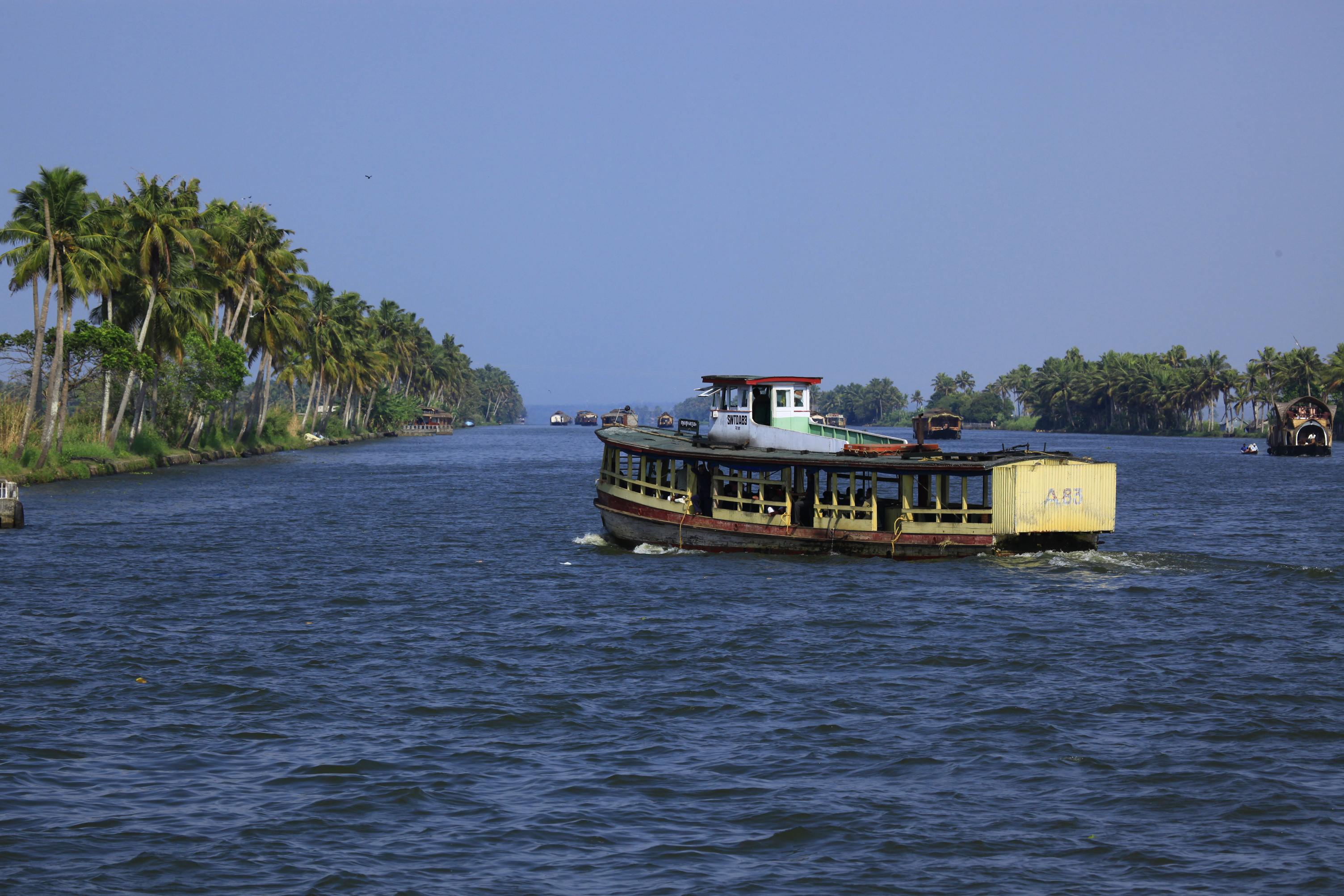
Canal-Cruise
Courtesy: Department of Tourism, Govt of Kerala
The rise of houseboat tourism brought visibility and income to Alleppey, but it also introduced ecological pressures. Waste discharge, fuel leakage, noise pollution, and canal congestion have altered water quality in several stretches of the backwaters.
Interior canals remain relatively insulated from these impacts not by design but by limitation. Their narrow width, shallow depth, and dense vegetation make them unsuitable for large vessels. As a result, they continue to support daily life with fewer disruptions.
This contrast highlights an important question for visitors: how can the backwaters be experienced without overwhelming the systems that sustain them? The answer lies not in avoiding tourism altogether, but in choosing forms of engagement that respect scale, pace, and context.
Walking the Backwaters
One of the most revealing ways to experience Alleppey’s interior backwaters is on foot. Canal-side paths connect clusters of homes, temples, small shops, and paddy fields. Walking allows visitors to observe daily routines without imposing on them.
Guided walks, when led by locally knowledgeable guides, can help contextualise what might otherwise go unnoticed. For travellers interested in understanding Alleppey beyond surface impressions, a walking exploration of village spaces offers a grounded introduction to backwater life.
Some visitors choose to join structured walking experiences that focus on everyday life rather than landmarks. Options such as a locally guided
walking tour in Alleppey
can provide orientation while maintaining a low ecological footprint.
Staying Close to the Water
Accommodation choices shape how visitors interact with the backwaters. Large resorts and luxury houseboats offer comfort but often isolate travellers from local contexts. Smaller homestays and guesthouses, especially those located along interior canals, allow for quieter observation and informal exchange.
Staying within a village setting means sharing space with daily routines—morning canoe traffic, evening conversations by the water, and the subtle sounds of life shaped by canals. For travellers seeking a slower, more reflective experience, such stays provide continuity rather than spectacle.
Many visitors use platforms like
Booking.com
or
TripAdvisor
to identify locally run accommodations that prioritise scale and location over amenities alone.
Moving Through the Canals
Non-motorised or low-impact travel offers another way to experience the backwaters responsibly. Canoe rides operated by local residents allow access to narrow canals without disturbing aquatic life or daily activities.
Unlike motorised boats, canoes move quietly, making it possible to observe birds, plants, and water patterns up close. These journeys often follow routes shaped by necessity rather than design, offering insight into how canals function as connective tissue between land and water.
Such experiences shift the focus from consumption to observation, allowing visitors to participate briefly in the backwaters without reshaping them.
Observing Without Intruding
Experiencing Alleppey’s interior backwaters requires a different kind of attention than conventional sightseeing. These canals are not open-air museums or cultural exhibits; they are lived spaces shaped by routine, necessity, and long familiarity. Visitors who approach them with curiosity rather than entitlement are more likely to understand their deeper rhythms.
Photography, for instance, demands sensitivity. People washing, cooking, or working by the canal are engaged in private acts within shared spaces. Seeking consent, maintaining distance, and sometimes choosing not to photograph at all are forms of respect that matter in small communities.
Observation here is less about collecting images and more about recognising patterns—how water levels shift through the day, how labour adapts to seasons, and how social life unfolds along canal edges without formal boundaries.
Seasonal Changes and the Monsoon Reality
The backwaters are not static. Seasonal changes, especially the monsoon, reshape both landscape and daily life. Rising water levels redraw canal edges, submerge pathways, and alter fishing and farming routines. What appears calm in summer may become unpredictable during heavy rains.
For residents, this variability is expected rather than disruptive. Homes are adapted to flooding, boats replace footpaths, and daily routines adjust without drama. For visitors, understanding this seasonal rhythm is essential to setting realistic expectations.
Travellers arriving during the monsoon months often encounter a quieter Alleppey—less crowded, more introspective, and closer to everyday realities. Those planning international travel may find it useful to remain flexible with itineraries, especially when weather disruptions affect flight schedules or connections.
Reaching Alleppey with Awareness
Alleppey is well connected by rail and road, but most international visitors arrive via nearby airports such as Kochi. Planning this journey thoughtfully can reduce stress and allow travellers to begin their experience at a slower pace.
Some visitors compare flight options and routes using platforms such as
Aviasales
or
Cheapoair
,
especially when travelling from Europe or long-haul destinations.
Flexible ticketing and awareness of passenger rights can be particularly useful when weather-related delays occur. Services like
AirHelp
or
Compensair
are sometimes consulted by travellers navigating flight disruptions, allowing them to focus more fully on the journey itself rather than logistical setbacks.
Slow Travel as an Ethical Choice
Choosing to spend more time in fewer places changes how the backwaters are experienced. Slow travel encourages walking, waiting, and observing—practices that align naturally with canal life. It reduces pressure on infrastructure while offering deeper engagement.
Instead of moving rapidly between attractions, visitors who linger begin to notice subtle transitions: how evening light changes canal colours, how conversations gather near water after dusk, and how silence itself becomes part of the landscape.
Travel platforms that prioritise multi-city flexibility, such as
WayAway
,
are sometimes used by long-term travellers planning extended stays rather than fixed itineraries. Such approaches align well with the pace of life found along Alleppey’s interior waterways.
Beyond the Surface of Water
The true story of Alleppey’s backwaters is not written on the open surface where boats drift for photographs. It unfolds quietly along shaded canals where water and human life remain inseparable. Here, the backwaters are not consumed as an experience but lived as an ongoing relationship.
To look beyond houseboats is to recognise the backwaters as a layered system—ecological, economic, and cultural. It is to understand that tourism, when practiced carefully, can coexist with daily life without overwhelming it.
For travellers willing to slow down and observe, Alleppey offers something increasingly rare: a landscape where water is not scenery, but memory, labour, and continuity. Listening to these quieter currents reveals a deeper understanding of Kerala’s backwaters—one that remains long after the journey ends.
 Toddy Shop Food
 Canal-Cruise