Listening to the Monsoon: When Rain Became Kerala’s First Music
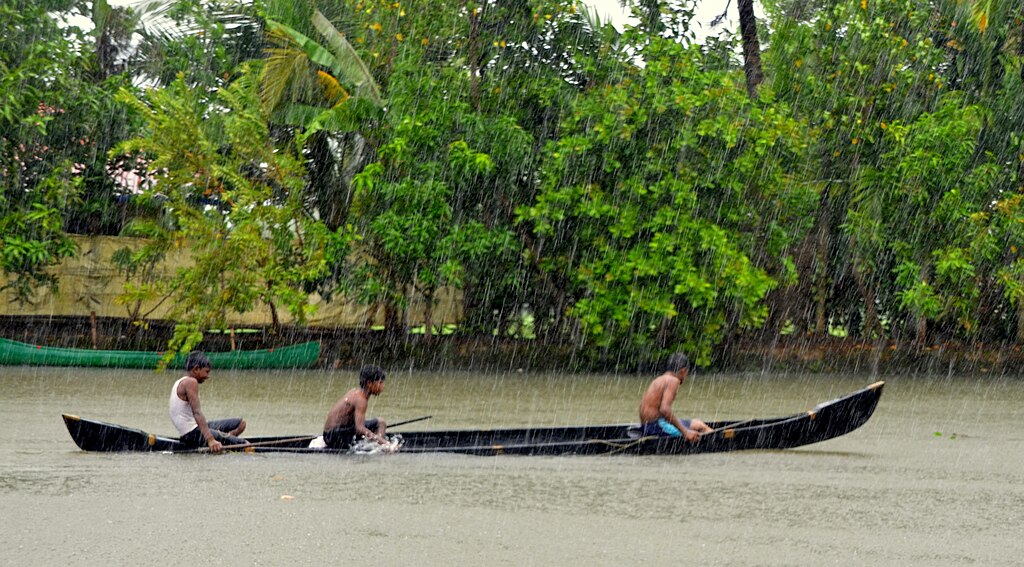
Courtesy: Hemanthreddy, CC BY-SA 3.0, via Wikimedia Commons
In Kerala, rain was never a silent phenomenon. Long before microphones, meteorological apps, or climate graphs, the monsoon announced itself through sound—on tiled roofs, palm leaves, temple courtyards, flooded paddy fields, and forest floors. To live here was to listen. The arrival, intensity, and retreat of rain were interpreted not through numbers but through rhythm, pitch, and duration.
Ethnomusicologists often describe culture as something that emerges from environment, and Kerala offers a rare example where climate itself became a sonic teacher. Traditional rain songs, work chants, and ritual percussion evolved in close conversation with the acoustic texture of monsoon rainfall. The steady drumming of rain on clay tiles echoed the measured beats of the chenda, while softer showers falling on leaves shaped slower, contemplative musical phrases heard in folk lullabies and seasonal recitations[1].
Soundscape theorist R. Murray Schafer introduced the idea that every region possesses a distinct acoustic identity. Kerala’s identity, for centuries, was inseparable from monsoon sound—layered, repetitive, immersive, and cyclical. Rain here was not background noise; it was a shared auditory environment that regulated time, mood, and social life[2].
Even ritual spaces were designed to amplify or soften rain sounds. Temple courtyards allowed rainfall to enter uninterrupted, transforming worship into a multisensory experience where prayer, percussion, and precipitation merged. Silence during heavy rain was not emptiness—it was attentiveness.
Farming by the Sky: How Monsoon Rhythms Shaped Agricultural Life
Kerala’s agrarian systems did not merely depend on rain; they were synchronized with it. Farming here was guided by seasonal listening as much as visual observation. Farmers distinguished rainfall by sound—sharp, fast drops signaling short bursts, deeper continuous drumming indicating sustained showers suitable for transplantation.
Traditional paddy cultivation cycles such as Virippu and Mundakan were aligned with the arrival and withdrawal of monsoon phases. Decisions about ploughing, sowing, and transplanting were made through an embodied knowledge passed orally across generations, rooted in rainfall patterns rather than fixed calendars[3].
Wetlands like Kuttanad and Kole lands functioned as seasonal listening landscapes. Overflowing canals, the sound of water entering bunded fields, and the soft splashing of ankle-deep labor informed farmers about soil readiness and crop timing. This form of indigenous meteorology represented a sophisticated ecological literacy rarely acknowledged in modern agricultural narratives[4].
Importantly, this rain-centered agriculture encouraged patience. The farmer waited for the correct rain, not maximum yield. Excess rain was as carefully noted as scarcity, reinforcing a worldview where balance, not domination, defined human interaction with nature.
Architecture That Heard the Rain: Buildings Shaped by Sound and Water
Kerala’s traditional architecture evolved as a direct response to monsoon intensity. Houses were not sealed against rain; they were designed to receive it gracefully. Sloping clay-tiled roofs dispersed rainfall into layered rhythms, preventing erosion while producing a steady acoustic presence that softened interior spaces.
The nadumuttam—an open central courtyard—allowed rain to fall directly into the heart of the home. This was not merely climatic adaptation but cultural choice. Rainwater cooled interiors, nourished household plants, and created an auditory center that marked seasonal continuity[5].
Wooden joinery expanded and contracted with humidity, while extended verandas functioned as transitional listening zones where people observed rainfall without withdrawing from it. These spaces encouraged reflection, storytelling, and rest during monsoon months—an architectural invitation to slow down.
Modern concrete structures, by contrast, often treat rain as intrusion. The disappearance of sloped roofs, courtyards, and permeable ground has not only intensified flooding but also silenced a cultural relationship with rainfall that once shaped daily life. What was lost is not just architectural wisdom, but a way of hearing the environment[6].
Ecology in Motion: How Rain Awakens Forests, Fields, and Creatures

Courtesy: Jan Joseph George, CC BY-SA 4.0
The Kerala monsoon does not merely water the land—it activates it. Entire ecological systems remain suspended in anticipation, responding to the first sustained rainfall with sudden movement, sound, and reproduction. In the Western Ghats, amphibians emerge almost overnight, their calls forming one of the most complex seasonal soundscapes in the tropics. Many frog species time their breeding cycles precisely with monsoon onset, using humidity and rainfall acoustics as biological signals[7].
Forest floors soften, leaf litter decomposes rapidly, and microbial life accelerates nutrient cycling. Streams that were narrow trickles transform into corridors of migration for fish and insects. This seasonal abundance supports birds, reptiles, and mammals whose survival depends on monsoon-driven food chains. Rain here is not disruption—it is synchronization.
Sacred groves (Sarpa Kavu and Kaavu) reveal this ecological intelligence most clearly. During monsoon months, these protected forest patches become breeding grounds for snakes, amphibians, medicinal plants, and insects. Ritual prohibitions against disturbance coincided with peak ecological sensitivity, demonstrating how belief systems functioned as environmental safeguards[8].
Modern ecology increasingly recognizes what indigenous systems long practiced: that seasonal excess, if allowed to flow naturally, sustains biodiversity. Attempts to control or suppress monsoon waters often lead to ecological collapse rather than stability.
Ritual Time and Slow Time: Living by the Monsoon Calendar
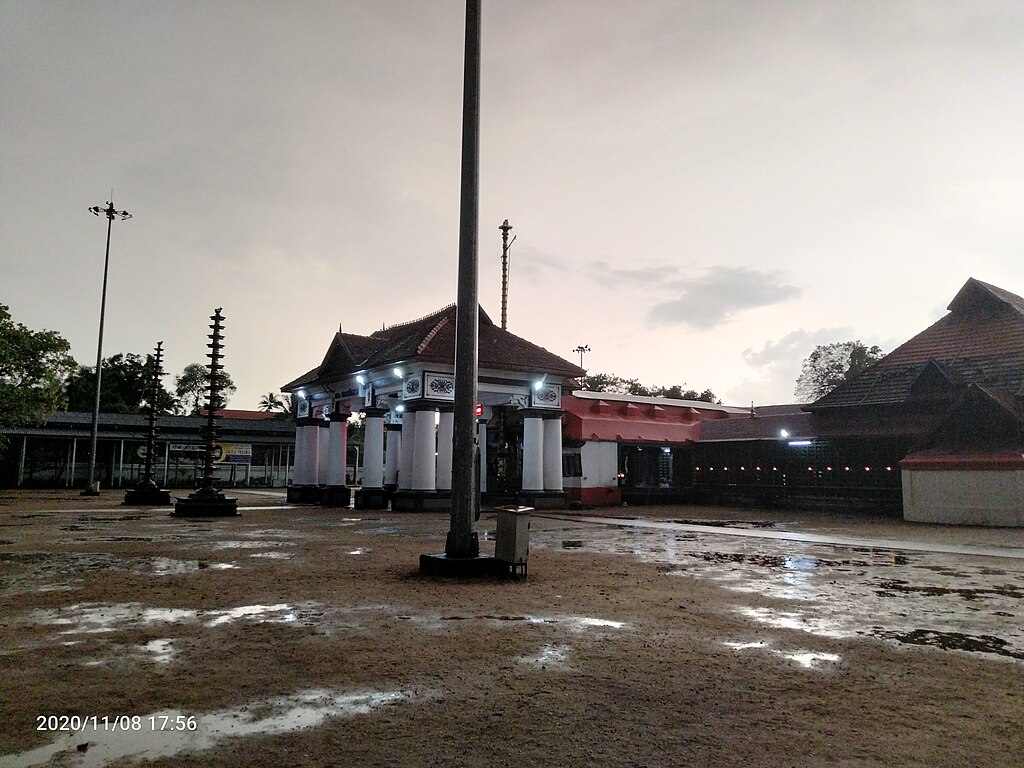
Courtesy: Vijayanrajapuram, CC BY-SA 4.0, via Wikimedia Commons
In Kerala, the monsoon structured time itself. The Malayalam calendar’s month of Karkidakam, coinciding with peak rainfall, was traditionally observed as a period of restraint, reflection, and ritual purification. Travel slowed, diets changed, and daily routines adapted to reduced physical exertion.
This was also a season of listening. The recitation of the Ramayana in households during monsoon evenings, known as Ramayana Masam, aligned storytelling with rainfall rhythms. Ayurveda likewise recognizes the monsoon as a vulnerable period for the human body, prescribing seasonal therapies that acknowledge humidity, digestion changes, and lowered immunity[9].
Temple festivals were minimal during heavy rains, not due to inconvenience, but because monsoon demanded inwardness. Social life adjusted to climatic reality rather than resisting it. Slowness was not a luxury—it was adaptation.
This rain-centered calendar reduced stress on bodies and ecosystems alike. By slowing consumption, travel, and construction during monsoon months, communities allowed land and labor to recover naturally.
What Modernity Forgot: From Listening to Controlling Rain
The contemporary relationship with monsoon is defined largely by anxiety—flood alerts, traffic disruption, structural failure. In sealing buildings, paving wetlands, and silencing traditional soundscapes, modern development has reframed rain as a threat rather than a collaborator.
Concrete roofs amplify noise without dispersing water, while drainage systems rush monsoon flows away instead of allowing absorption. The disappearance of courtyards, sloped roofs, and permeable ground has increased flood intensity even as rainfall patterns remain historically consistent[10].
More critically, the loss is cultural. When rain is no longer listened to, its signals are missed. Indigenous forecasting based on wind, cloud movement, soil smell, and sound has been replaced by abstract data detached from lived experience.
As climate change intensifies monsoon variability, Kerala’s older rain literacy offers valuable lessons. Adaptation does not begin with control, but with attention. To relearn how to live with rain, we may first need to relearn how to hear it.
Remembering How to Live with Rain
The monsoon in Kerala was never an interruption to life—it was life’s underlying rhythm. Rain shaped how people listened, built, cultivated, healed, worshipped, and rested. It taught patience in farming, humility in architecture, attentiveness in music, and restraint in ritual. To live here was to accept that nature did not need to be mastered, only understood.
What emerges from this history is not nostalgia, but instruction. At a time when climate change forces societies to rethink resilience, Kerala’s monsoon culture offers a rare lesson: sustainability begins with sensory awareness. When people listened to rain, they adapted to it. When they slowed down during monsoon months, ecosystems recovered. When architecture welcomed water instead of sealing it out, floods were absorbed rather than amplified.
Modern development has muted these relationships, replacing listening with control and coexistence with extraction. Yet the rain continues to fall—asking the same ancient questions of those who live beneath it. Will we build against it, or with it? Will we treat it as noise, or as knowledge?
To remember how to live with rain is not to return to the past, but to recover a cultural intelligence shaped over centuries of careful attention. In the sound of the monsoon lies a forgotten archive—of balance, restraint, and ecological humility. Learning to hear it again may be one of the most urgent acts of our time.
References
- Kerala Folklore Academy. Seasonal Songs and Agrarian Sound Traditions of Kerala.
- Schafer, R. Murray. The Soundscape: Our Sonic Environment and the Tuning of the World. Destiny Books.
- Kerala Agricultural University. Research on Monsoon-Based Paddy Cultivation Cycles.
- Gadgil, Madhav & Guha, Ramachandra. Ecology and Equity: The Use and Abuse of Nature in Contemporary India.
- Silpa Sastra traditions and studies on vernacular architecture of South India.
- Centre for Development Studies (Kerala). Climate, Urbanization, and Flood Impact Reports.
- Western Ghats Ecology Expert Panel. Biodiversity and Seasonal Ecological Cycles.
- Gadgil, Madhav. Sacred Groves of India: Ecological Traditions.
- Government of Kerala, Ayurveda Department. Seasonal Regimens and Monsoon Health Practices.
- Centre for Water Resources Development and Management (CWRDM), Kerala. Flood, Drainage, and Monsoon Studies.