The Malabar Tapestry: A Comprehensive Analysis of Culinary Heritage and Cultural Tourism in North Kerala
The Malabar region of Kerala represents one of the most significant geographic and cultural corridors in the Indian subcontinent. Extending along the southwestern coast between the Western Ghats and the Arabian Sea, this territory has served as a primary gateway for international exchange for over five millennia.[1] Geographically, the Malabar Coast is defined by its dramatic interaction with the monsoon; as moisture-laden clouds are intercepted by the mountains, the region becomes the wettest in southern India, fostering a lush landscape of rainforests, mangroves, and fertile plains.[1] Historically, the name "Malabar" is believed to be a westernized evolution of the Malayalam words Mala (hill) and puram (region), reflecting the verticality of a landscape that descends from the misty peaks of the Ghats into the emerald waters of the Arabian Sea.[1] This unique topography created a protected yet accessible enclave where diverse religious traditions—Hinduism, Islam, and ancient Christianity—could flourish in a state of syncretic harmony, shaping a destination that is as intellectually stimulating as it is visually breathtaking.[1]
The Historical Foundations of the Malabar Identity
The identity of Malabar is inextricably linked to its maritime history. Long before the arrival of European explorers, the ports of Kozhikode, Kannur, and Ponnani were vibrant nodes in a global trade network that connected the East with Mesopotamia, Egypt, Greece, and Rome.[1] The region was the heart of the ancient Chera kingdom, specifically the Keralaputra dynasty, until the 12th century.[3] Following the fragmentation of the Chera power, several independent principalities emerged, most notably the kingdom of the Zamorins (Samoothiris) of Kozhikode.[1] The Zamorins emerged as the dominant political force by the 13th century, largely by providing a stable and welcoming environment for Arab merchants.[1]
The cultural composition of the region underwent a transformative shift in the 7th century with the arrival of Islam via trade routes rather than conquest.[2] This led to the emergence of the Mappila (or Moplah) community—a name derived from the honorary title Maha Pillai (meaning "honored people")—formed through the marriage and settlement of Arab traders with local women.[2] This intermingling created a distinct cultural vernacular that is evident in the region’s architecture, language, and most famously, its cuisine.[2] The historical weight of Malabar is further underscored by the landing of Vasco da Gama at Kappad beach in 1498, an event that heralded the colonial era and reshaped the geopolitics of the Indian Ocean.[4]
Geographic Subdivisions and Regional Character
The Malabar region exhibits a varied geographic and cultural character across its districts. Kozhikode, marked by its coastal plains and landmarks such as the historic Mananchira Tank and Kappad Beach, is celebrated as the “City of Spices” and served as the former capital of the Zamorin rulers, playing a central role in the maritime history of the Indian Ocean trade network.[1] Kannur is distinguished by its sandy beaches, laterite cliffs, and the imposing St. Angelo Fort; culturally, it is regarded as the heartland of Theyyam ritual performance and traditional handloom weaving, practices that continue to define its social identity.[11] Kasaragod, shaped by the Valiyaparamba lagoons and the Chandragiri River system, is home to the monumental Bekal Fort and sustains a rich spectrum of regional folklore reflecting its multilingual and cross-cultural history.[4] Malappuram, extending across the Chaliyar and Nila river basins and the forested tracts of Nilambur, holds deep spiritual significance and is often referred to as the “Mecca of Kerala” for its historical role in Islamic learning and reform movements.[12] Wayanad, rising into the highlands of the Western Ghats, is defined by dense forests, aromatic spice plantations, and archaeological sites such as the Edakkal Caves, which point to an ancient Neolithic human presence in the region.[4]
The geography of the region directly influences its tourism potential. The Malabar Coast’s moist forests, although significantly reduced from their original extent, continue to provide an ecologically rich backdrop for eco-tourism initiatives.[4] Inland waterways formed by a chain of lagoons and canals running parallel to the coast offer a quieter and more intimate “Venice of India” experience, distinct from the heavily frequented backwaters of southern Kerala.[3]
The Mappila Culinary Legacy: A Fusion of Centuries
The food culture of Malabar, specifically the Mappila cuisine, is perhaps the most sensory-rich manifestation of its history. It is a sophisticated blend of indigenous Kerala ingredients—coconut, rice, and seafood—with the bold aromatic spices brought by Arab, Persian, and later European traders.[2] Unlike the vegetarian-leaning traditions of southern Kerala, Malabar's menu is heavily meat-oriented, a preference traced back to the dietary habits of early Arab nomads for whom cattle and sheep formed a major part of the diet.[2]
The Anatomy of Malabar Spices and Ingredients
The culinary excellence of the Malabar region emerges from a distinctive constellation of spices and ingredients shaped by centuries of maritime exchange. At its core is Tellicherry Pepper, a locally cultivated variety of black pepper renowned for its clean, sharp heat and intense aroma, once prized as the “Black Gold” that drew traders to the Malabar coast from distant lands.[2] Complementing this are cardamom, cloves, and cinnamon, used generously and often whole, allowing oils and fats to absorb deep, lingering flavor profiles that define the region’s cooking.[2] A notable feature of Mappila cuisine is the selective use of ghee in place of coconut oil for festive and ceremonial dishes, reflecting Middle Eastern culinary influences that favor richness, aroma, and a warm, golden finish.[2]
Everyday ingredients further articulate Malabar’s culinary identity. Kaima, or Jeerakasala rice, a short-grain and highly aromatic variety, is preferred over Basmati for biriyani because of its exceptional capacity to absorb spices and meat essences while retaining its texture.[2] Coconut milk serves as the base for numerous stews and gravies, lending a soft, creamy balance to spice-forward dishes such as Moplah Mutton Stew.[16] The coastal geography is most vividly expressed through seafood traditions, where green mussels stand out as a regional specialty harvested almost exclusively along the Malabar shoreline, anchoring cuisine firmly within its marine landscape.[21]
Coconut, though omnipresent, is employed with remarkable nuance. Grated coconut is frequently slow-roasted to a deep brown, producing a nutty and complex foundation for meat-based curries, while fresh coconut milk is reserved to mellow the heat of robust stews and gravies.[18] Meals traditionally conclude with Sulaimani tea, a delicately brewed black tea infused with mint or lemon. This beverage represents a localized adaptation of Arabic kahwah, valued both for its cultural resonance and its role in aiding digestion after a richly spiced, meat-centered meal.[17]
Signature Dishes and Their Origins
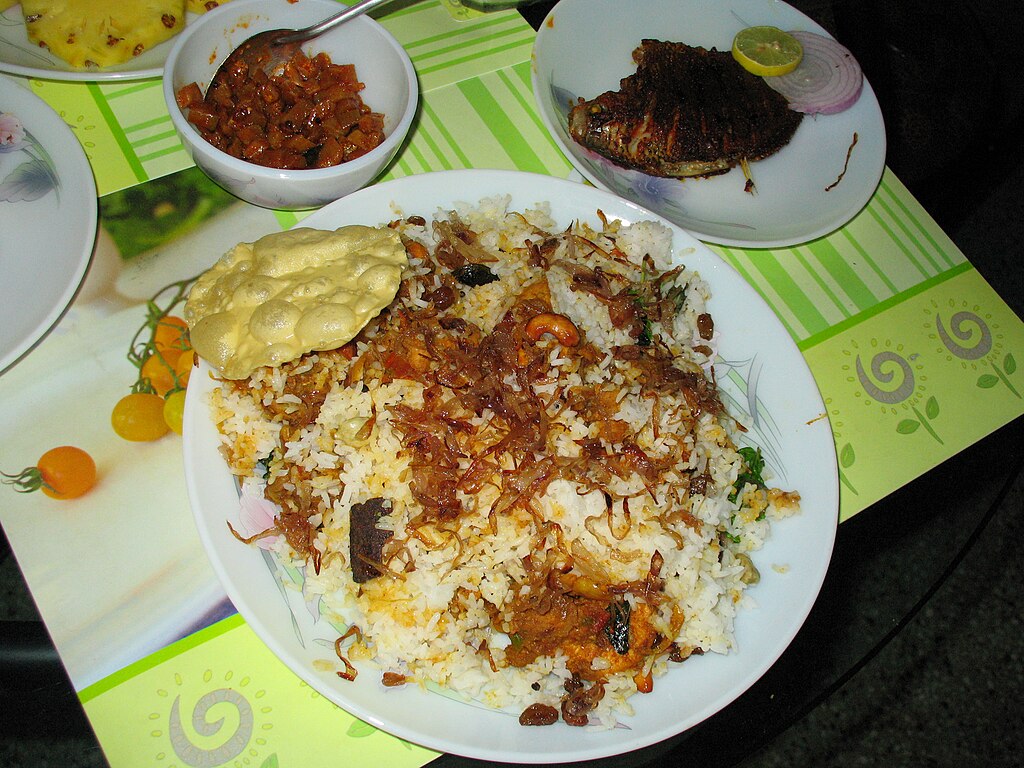
The Malabar Biriyani, specifically the Thalassery and Kozhikode varieties, stands as the pinnacle of this culinary fusion. Prepared using the dum method—where the vessel containing the partially cooked rice and spiced meat is sealed with dough and heat is applied from both top and bottom—the dish ensures that the aromas of the spices, meat, and rice are perfectly integrated without the loss of moisture.[17] The use of short-grain Kaima rice gives it a lighter, more delicate texture compared to the heavier Basmati-based biriyanis of northern India.[2]
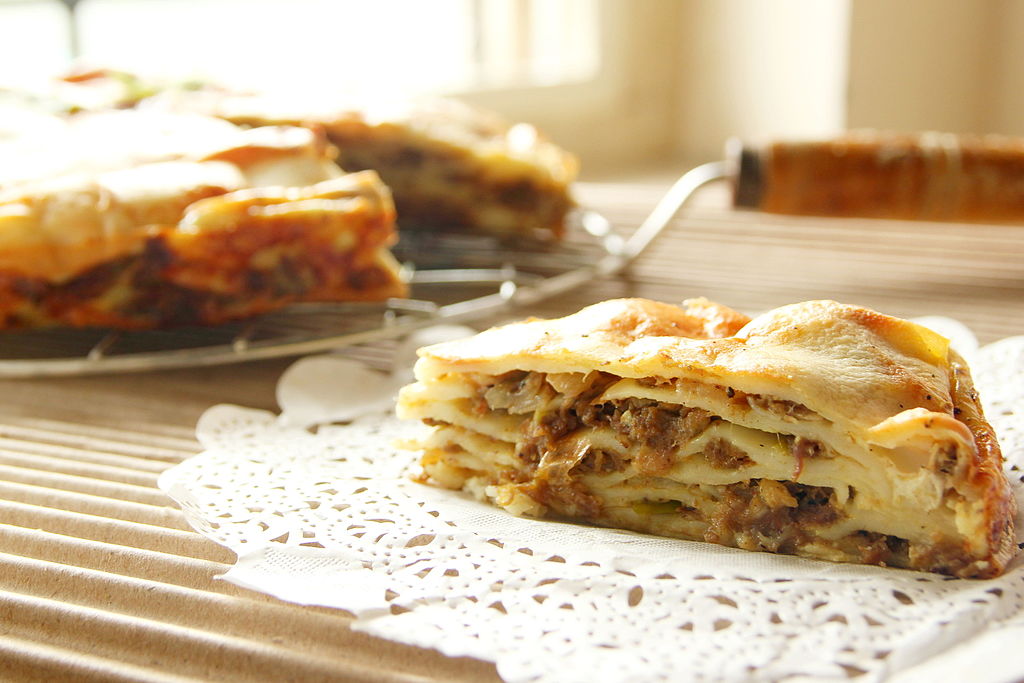
Another staple is the Pathiri, a thin, soft rice pancake that exists in dozens of variations. These include Irachi Pathiri (stuffed with meat and deep-fried or steamed), Chatti Pathiri (a layered, savory or sweet cake resembling lasagna), and Meen Pathiri (stuffed with spiced fish).[2] For breakfast, the region favors Puttu (steamed rice cake), but in Malabar, it is frequently served as Erachi Puttu, layered with spiced meat, reflecting the region's penchant for protein-heavy starts to the day.[17]
The seafood of Malabar is equally legendary. Kallummakkaya (green mussels) are a regional specialty found almost exclusively on this coast.[21] These are often prepared as Arikkadukka, where the mussels are stuffed with a spiced rice paste, steamed, and then fried to a golden crisp.[18] Squid, known locally as Koonthal, is typically roasted with a host of spices including turmeric and red chilli powder in coconut oil until it achieves a perfect balance of tenderness and spice.[16]
The Spirit of Ritual: Theyyam and the Divine Trance
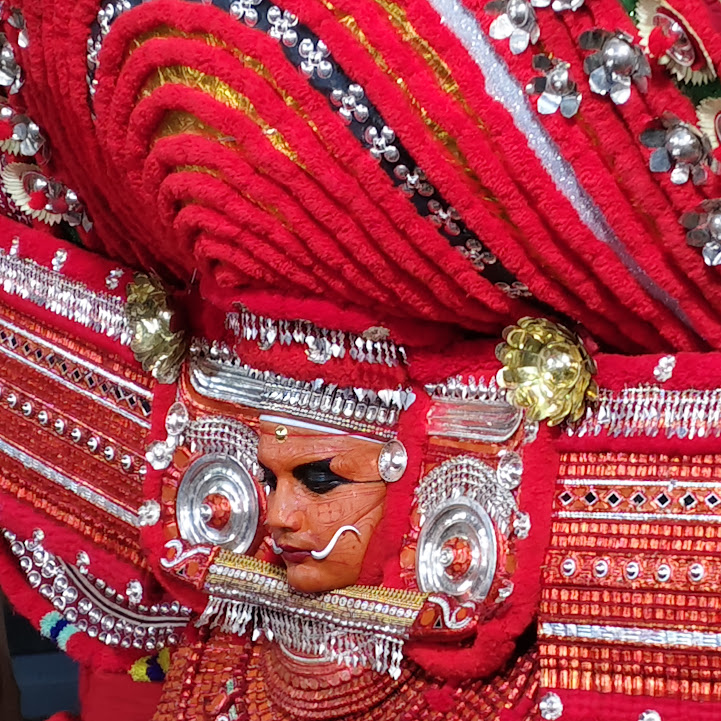
In the northern districts of Kannur and Kasaragod, the cultural heartbeat is found in Theyyam(also known as Kaliyattam), an ancient ritual art form that transcends mere performance. Theyyam is a manifestation of the divine, where the performer is believed to undergo a metamorphosis into a living deity.[22] Rooted in indigenous folklore, hero worship, and tribal heritage, Theyyam has survived for over 1,500 years, preserved in the sacred groves known as kaavus and centuries-old village temples.[11]
The Theyyam Calendar and Ritual Complexity
The performance cycle of Theyyam is closely regulated by seasonal rhythms, local ecology, and temple calendars. The Theyyam season generally begins in late October, corresponding to the Malayalam month of Thulam, and extends through the cooler and drier months until May, a period considered ritually and physically suitable for these demanding performances.[11] Most Theyyam forms are strictly seasonal, appearing only during this ceremonial window. A notable exception is Muthappan Theyyam, which is performed daily at the Parassinikadavu Muthappan Temple, allowing visitors and devotees year-round access to a living ritual tradition rather than a festival-bound spectacle.[11]
Within this seasonal framework exists a wide range of Theyyam forms, each defined by distinct narrative roles and performative intensity. Thee Chamundi is recognized for its fear-inducing fire dances, performed amid burning embers as a demonstration of courage and divine potency.[11] Vishnumoorthi Theyyam embodies the fierce Narasimha avatar, marked by bold red facial designs and powerful, kinetic movements that dramatize the destruction of injustice.[11] Pottan Theyyam occupies a socially reflective space, employing satire and ritual fire-walking to challenge caste hierarchies and affirm ideals of social equality.[11] Gulikan Theyyam, often described as the “Lord of Death,” appears as a dark yet majestic guardian figure, entrusted with the protection of Dharma and moral order.[11] In contrast, Bhagavathi Theyyam expresses divine feminine energy, simultaneously invoking motherhood, protection, and ferocity within a single ritual presence.[11]
Preparation for a Theyyam performance is itself a prolonged ritual process. Elaborate facial designs are created using natural pigments, while towering headgear known as mudi is constructed from coconut leaves, bamboo frames, and layered cloth, often reaching imposing heights that transform the performer into a larger-than-life presence.[22] Performances commonly unfold late at night or in the quiet hours before dawn, accompanied by the hypnotic rhythms of the Chenda drum and the metallic cadence of the Elathalam cymbals.[11] Devotees gather not as passive spectators but as participants seeking blessings, counsel, and resolution of personal or communal concerns, engaging directly with what is believed to be a temporarily embodied, “living god.”[22]
Architectural Syncretism: Mishkal Mosque and Traditional Vastu
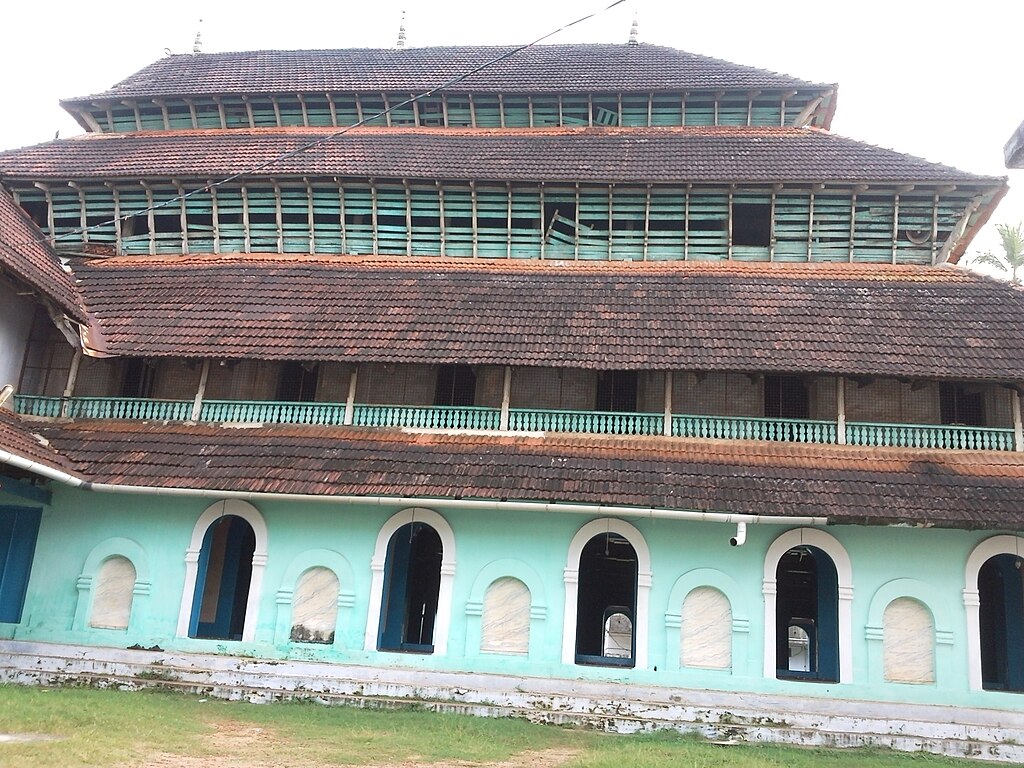
Image Credit: Zencv, CC BY-SA 3.0
The architecture of Malabar provides physical evidence of the region’s pluralistic history. The Mishkal Mosque in Kozhikode’s Kuttichira neighborhood is the most significant example of this architectural dialogue.[24] Built in the 14th century by the wealthy Arab merchant Nakhooda Mishkal, the structure is remarkably devoid of the cupolas and minarets that define Islamic architecture in the Middle East or Northern India.[1] Instead, it adheres to the Kerala-Islamic style, heavily influenced by traditional temple architecture and the indigenous principles of Vastu Shastra.[7]
The mosque is a four-story timber and laterite masterpiece, featuring 47 intricately carved doors and 24 engraved wooden pillars that provide structural support while serving as canvases for artistry.[24] The use of tiered roofs with clay tiles is a functional adaptation to the region’s heavy monsoon rains, allowing for superior ventilation and rapid drainage.[7] The interiors are characterized by a transition from bright, sunlit verandas to the deep, cooling darkness of the main prayer hall, reflecting a sophisticated understanding of tropical light and shade.[7] This architectural style underscores a period where local craftsmen applied their expertise in temple building to Islamic houses of worship, creating a shared aesthetic that defines the Malabar coast.[1]
Cultural Landmarks of Malabar
Malabar’s cultural landscape is marked by a dense concentration of religious and military monuments that reflect centuries of maritime contact, political power, and architectural exchange. In Kozhikode, the Mishkal Mosque stands as a rare fourteenth-century timber mosque built without minarets, representing an early and distinctive Islamic architectural tradition in Kerala.[24] The same city is also home to the Thali Temple, a fourteenth-century exemplar of classical Kerala temple architecture, historically associated with the Zamorin rulers and the ritual life of the region.[9] To the north, in Kasaragod, Bekal Fort dominates the coastline as Kerala’s largest sea fort, spread across thirty-five acres and designed to command both land and maritime routes.[1] Kannur’s St. Angelo Fort, constructed by the Portuguese in 1505 and overlooking the Arabian Sea, reflects the early phase of European military intervention along the Malabar coast.[28] Further south, in Malappuram, the Ponnani Juma Masjid occupies a central place in the intellectual history of Kerala, long revered as the “Al Azhar of Kerala” for its role as a major center of Islamic learning.[29]
The preservation of these landmarks extends beyond academic or touristic interest and remains central to Malabar’s collective identity. The Mishkal Mosque, for instance, still bears physical traces of the Portuguese attack of 1510, standing as a material witness to the region’s turbulent maritime history. Its subsequent restoration, aided by the Zamorin rulers, is frequently cited as an enduring example of communal coexistence and political pragmatism in premodern Malabar.[25]
Wayanad: The Aromatic Highlands and Neolithic Roots
While the Malabar coast historically concentrated on maritime trade and oceanic exchange, the highland district of Wayanad contributed to the region’s wealth through its agricultural and ecological resources, particularly spices.[14] Situated within the Western Ghats, Wayanad’s elevated terrain, regular monsoon rainfall, and fertile red soil create ideal conditions for the cultivation of pepper, cardamom, coffee, and vanilla, commodities that linked the highlands to global trade networks while sustaining local agrarian lifeways.[30]
The Spice Plantation Experience
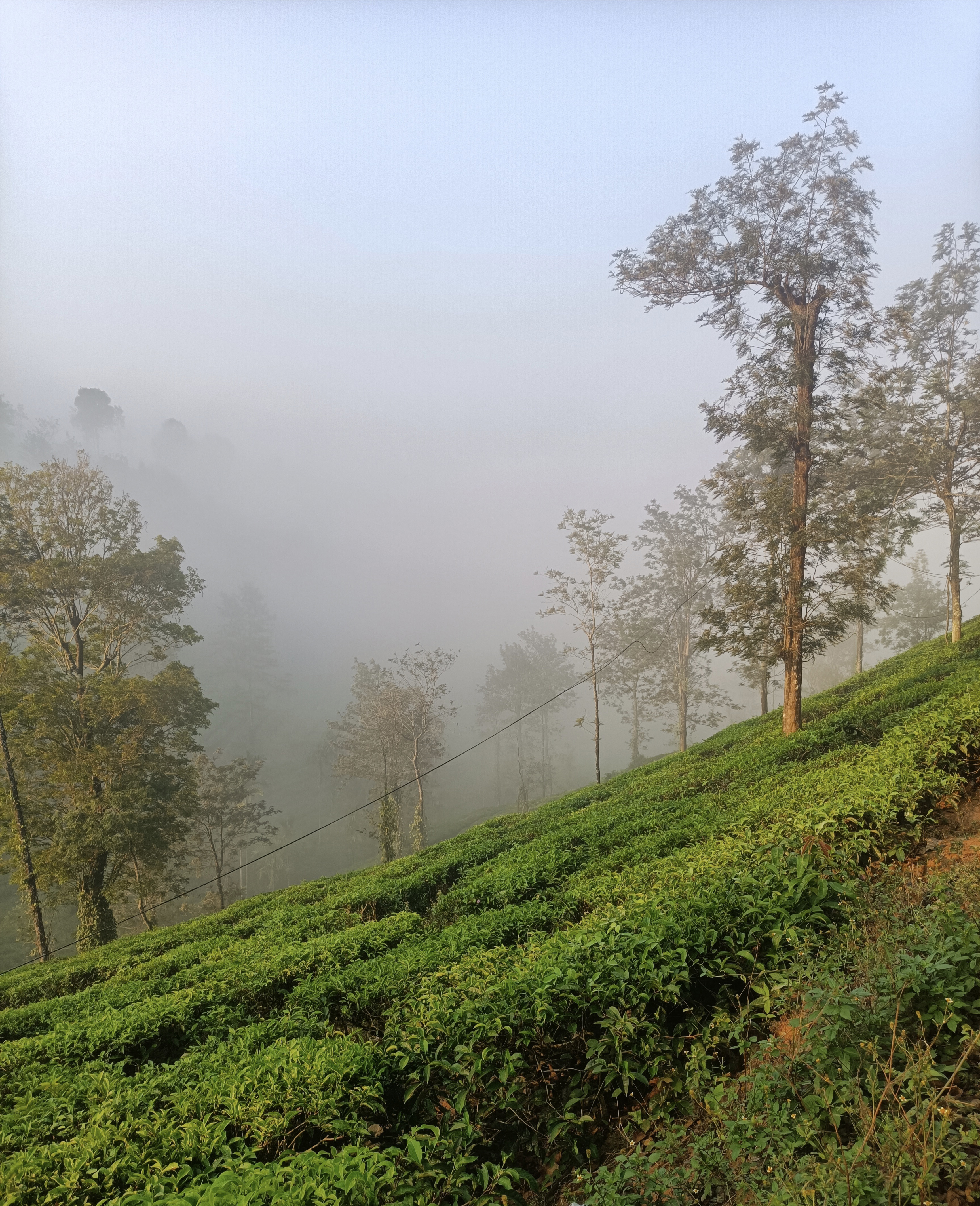
Tours of Wayanad’s spice plantations provide an immersive, sensory introduction to the region’s agrarian traditions, often described as a “sniff-and-identify” journey through living landscapes. Visitors can observe the labor-intensive hand-pollination of vanilla orchids and follow pepper vines as they climb silver oak host trees, practices that reveal the patient rhythms of plantation life.[30] Many of these estates are family-run enterprises sustained across generations and are characterized by a commitment to ecological balance through mixed-crop cultivation, shaded growing systems, and natural methods of pest control.[30]
Within these plantations, individual spices occupy both economic and cultural prominence. Black pepper, long celebrated as the “King of Spices,” remains central to Wayanad’s identity, valued both for the heat it lends to dishes such as pepper fry and for its long-recognized medicinal properties.[30] Cardamom, often referred to as “Green Gold,” is prized for its delicate aroma and finds expression in everyday and ceremonial preparations, from Sulaimani tea to richly scented biriyanis.[13] Turmeric, an essential rhizome in the regional diet, contributes its characteristic golden hue to dishes like Manjal Choru (turmeric rice) while also holding ritual and therapeutic significance.[30] High-value aromatics such as cinnamon and cloves, derived respectively from bark and unopened flower buds, are integral to slow-cooked meat stews, where they release depth and warmth over long cooking durations.[30]
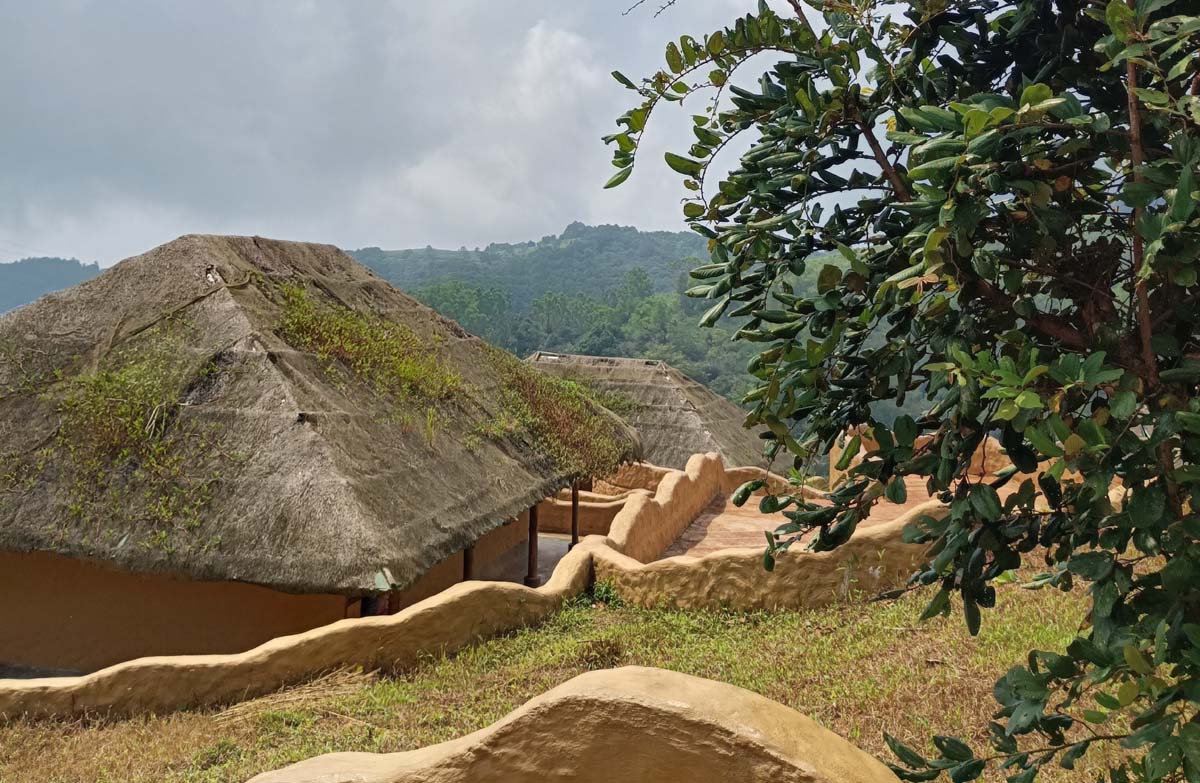
Beyond its plantations, Wayanad offers a deeper historical dimension through sites such as the Edakkal Caves. These natural rock shelters contain petroglyphs dating to the Neolithic period, around 6000 BCE, suggesting the presence of complex human societies in the highlands long before the emergence of large-scale oceanic trade networks.[4] For contemporary travelers seeking responsible engagement, initiatives such as En Ooru, a tribal heritage village, provide opportunities to encounter indigenous knowledge systems through displays of ancestral tools, farming practices, and culinary traditions, including preparations like tribal-style pepper fry and steamed tubers.[31]
Kozhikode: The Sweet Meat Legacy and S.M. Street
The city of Kozhikode serves as the commercial and culinary heart of Malabar. Its most iconic landmark is Mittai Theruvu, known in English as Sweet Meat Street (S.M. Street).[19] The street’s name originated during the British era; legend has it that British visitors saw the classic red halwa stacked in shops and, because its translucent, firm texture resembled slabs of meat, dubbed the area "Sweet Meat Street".[33]
The Evolution of Kozhikodan Halwa
Kozhikodan halwa occupies a distinctive place within India’s sweet-making traditions, differing notably from the ghee-heavy varieties common elsewhere in the country. Its defining characteristic is the use of coconut oil as the primary fat, a choice that imparts a subtle coastal aroma while also extending shelf life without the need for refrigeration.[19] Introduced in an early form by Arab traders as a localized adaptation of Middle Eastern hulw, the sweet was gradually assimilated into Kozhikode’s culinary culture, evolving into a product closely associated with the city and widely recognized as a regional specialty and export.[34]
Within Kozhikode, halwa exists in a wide range of varieties that reflect both tradition and experimentation. The deeply colored black halwa, prepared with jaggery, coconut oil, and rice starch, is known for its rich, earthy sweetness and holds a prominent place at wedding feasts and ceremonial gatherings.[34] Banana halwa, made from ripe Nendran bananas and delicately scented with cardamom, offers a dense, fruity profile and is especially associated with North Malabar.[34] Dates halwa, combining mashed dates with jaggery and ghee, is particularly favored during Ramzan Iftaar gatherings, linking culinary practice with religious observance.[34] In recent decades, confectioners have also introduced exotic variations using ingredients such as passion fruit, green chilli, and pepper, expanding the sensory range of halwa through controlled use of tartness and heat while retaining its characteristic texture.[34]
The cultural setting of Kozhikodan halwa is inseparable from S.M. Street, a commercial artery that represents a layered history of trade and coexistence. Beyond its reputation for sweets, the street has long been a shared space for Gujarati textile merchants, Parsi entrepreneurs, and local artisans, forming a living microcosm of Kozhikode’s cosmopolitan past.[33] This historic thoroughfare was immortalized by the Malayalam writer S.K. Pottekkatt in his 1960s novel Oru Theruvinte Katha (The Story of a Street), and his statue today stands as a quiet marker of the street’s enduring literary and cultural memory.[33]
Malappuram and Ponnani: The Spiritual Anchor
The district of Malappuram and its coastal town of Ponnani represent the spiritual and intellectual soul of Malabar’s Mappila community.[13] Ponnani, often referred to as the "Mecca of South India" or the "Mecca of Kerala," has been a center of Islamic learning for over five centuries.[13] The town’s history is defined by the Makhdoom family, scholars who migrated from Yemen and established Ponnani as a hub of religious and historical literature.[29]
The Nila River and Literary Tradition
The cultural identity of Malabar is closely intertwined with the Bharathappuzha, also known as the Nila, Kerala’s second-longest river, which flows westward to meet the Arabian Sea at Ponnani.[13] For centuries, the riverbanks have served as the site of ancient rituals, literary gatherings, and cultural transmission, linking spiritual, artistic, and social practices along its course.
Several landmarks along the Nila highlight the region’s rich literary and religious heritage. Thunchan Parambu in Tirur is revered as the birthplace of Ezhuthachan, widely regarded as the father of Malayalam literature.[12] In Kondotty, the 500-year-old Pazhayangadi Mosque reflects Mughal architectural influences and stands as a center of Islamic scholarship.[12] Ponnani itself houses the Thottungal Masjid, believed to be the oldest mosque in the district, while the ancient Navamukunda Temple in Thirunavaya, situated on the riverbank, was historically the site of the grand Mamangam festival.[5]
Ponnani exemplifies centuries of religious coexistence, with the “holy river” serving as both a venue for Hindu ancestral rites and a backdrop for the assembly of Islamic scholars.[5] The town remains a living repository of traditional Mappila culture, where narrow streets resonate with the aromas of freshly brewed tea and local snacks such as Unnakkaya (stuffed plantain), providing a sensory link between heritage and daily life.[5]
Maritime Heritage and the Art of the Uru
Credit: (WT-en) Rahulclt at English Wikivoyage , Public domain, via Wikimedia Commons
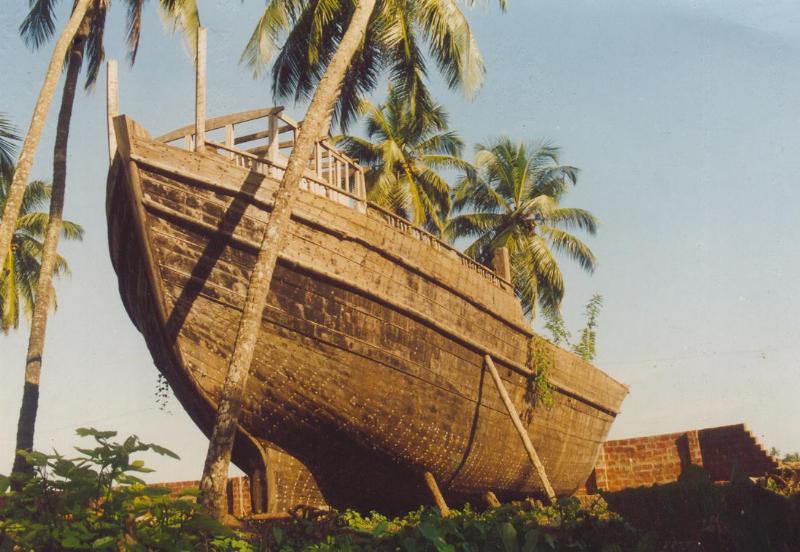
The maritime legacy of Malabar is perhaps best preserved in Beypore, an ancient port town near Kozhikode that remains one of the few places in the world where the Uru, or the Malabar Dhow, is still built by hand.[1] These massive wooden ships, which have been manufactured for centuries, were the vessels that carried the region’s spices to the markets of the Middle East and beyond.[1]
The construction of an Uru is a testament to the endurance of oral tradition and craftsmanship. The naval architects of Beypore do not utilize blueprints or modern computer-aided design; instead, the entire structural plan is stored in memory and executed using simple tools like threads, weights, and hand-shaped wooden blocks.[1] This industry represents a living link to the medieval spice trade, illustrating how Malabar’s artisanal skills were sought after by maritime powers across the Indian Ocean.[1]
The 2025 Traveler: Slow Travel and the Digital Landscape
As the global tourism landscape evolves toward 2025, Malabar is exceptionally well-positioned to capitalize on the "Slow Travel" trend. This movement emphasizes immersion in a destination for an extended period, favoring authentic connections with local people and environments over rushed, surface-level sightseeing.[39] For a travel platform like keralanaturevibes.com, understanding these shifts is crucial for engagement and relevance.
Emerging Trends in Malabar Tourism
Modern travelers are increasingly seeking experiences that allow them to disconnect from the constant connectivity of urban life. Concepts such as “Digital Detox” and “Off-Grid” travel have gained popularity, with visitors looking for sanctuaries that encourage mindfulness, immersion in nature, and slower rhythms of life.[41] In Malabar, this trend is visible in the growing appeal of forest retreats in Wayanad and beachside homestays in Kannur, many of which offer limited Wi-Fi and curated activities centered on ecological engagement, meditation, and traditional crafts.[41]
Specific emerging trends for 2025 highlight the evolving ways travelers are engaging with the region. “Slow Travel,” characterized by longer stays in a single location, has increased demand for heritage homestays that combine comfort with cultural authenticity.[39] Culinary journeys, including hands-on cooking experiences with local hosts, provide a deeper understanding of regional Mappila cuisine and its subtle variations.[41] Monsoon tourism, targeting the period from June to September, draws visitors eager to experience the dramatic greenery and atmospheric landscapes of Malabar, offering a visual and sensory appreciation of the region’s seasonal beauty.[36]
Cultural Dynamics: Oppana and Social Celebrations
Among the many folk arts of Malabar, Oppana remains a vibrant staple of social life, particularly during the multi-day wedding celebrations of the Mappila community.45 Traditionally performed by women around the bride, Oppana involves rhythmic clapping, synchronized movements, and songs known as Mappilappattu.46
The dance is more than entertainment; it is a ritualistic rite of passage. The lyrics, often a blend of Malayalam and Arabic, praise the beauty of the bride and offer playful, teasing comments about her future married life.46 The musical accompaniment—harmonium, tabla, and cymbals—reflects the cultural synthesis that defines the region.8 While Oppana is predominantly female-oriented, a male version also exists where the groom is the central focus, surrounded by friends who sing of his noble qualities.46 This tradition highlights the community spirit of Malabar, where life's major milestones are celebrated through shared rhythm and song.45
Practical Planning: Navigating the Malabar Tour
A successful food and cultural tour of Malabar requires strategic planning, particularly concerning timing and logistics. The region is well-connected through the Calicut International Airport and the newer Kannur International Airport, which has opened up the northern reaches of the coast to global travelers.24
Seasonal Recommendations and Itinerary Logic
The ideal time to explore Malabar largely coincides with the Theyyam season and the comfortable winter months from November to January, when the weather is mild and festival activity peaks.[11] The monsoon months, from June to September, offer a contrasting experience—often called “monsoon magic”—where the landscape transforms into lush, intense greenery, providing exceptional opportunities for photography, nature walks, and Ayurvedic retreats.[36]
A thoughtfully structured itinerary allows travelers to experience the region’s diversity while maintaining a relaxed pace. In Kozhikode (Calicut), a stay of two to three days is ideal for exploring S.M. Street, sampling the famed biriyani trail, and visiting the historic Mishkal Mosque.[9] The Wayanad highlands, with their spice plantations, tribal cuisine, and trekking opportunities, merit three to four days of immersion.[14] Along the Kannur coast, a two to three-day visit can encompass Theyyam performances, visits to traditional handloom centers, and time on the region’s serene beaches.[11] Finally, Ponnani and Tirur, with their Islamic heritage sites, the scenic banks of the Nila River, and literary landmarks, can be explored in one to two days.[13]
Travelers are encouraged to include “nothing days” in their plans—moments for simply sipping Sulaimani tea at a local shop or watching fishing boats at Beypore—as these unscripted experiences often become the most memorable aspects of a Malabar journey.[41] Engaging local expertise through guided Theyyam tours or hands-on culinary workshops in family homes enhances cultural immersion while respecting traditional customs, temple etiquette, and the rhythm of local life.[11]
Synthesis: The Enduring Allure of the North
The Malabar coast remains one of India's most authentic and rewarding destinations. It is a region where history is not confined to the pages of textbooks but is lived daily through the scent of drying cardamom, the vibrant colors of a Theyyam's mask, and the complex flavors of a slow-cooked biriyani.9 The convergence of diverse faiths and global trade histories has resulted in a society defined by instinctive hospitality and a shared cultural pride.5
For the visitor, Malabar offers a journey that is both outward into the stunning natural beauty of the Western Ghats and Arabian Sea, and inward into the intricate layers of an ancient maritime culture.9 As the world moves toward 2025 with a renewed focus on sustainability and local immersion, the "Tapestry of Cultures" that is Malabar stands ready to offer experiences that are as profound as they are unforgettable.10 Whether it is the spiritual intensity of a fire-dance in a sacred grove or the simple sweetness of a banana halwa from a 100-year-old bakery, Malabar provides a sensory and intellectual richness that captures the very essence of Kerala’s nature and vibes.11
References
- Menon, K. R. & Varghese, S. Beypore Uru: Shipbuilding Traditions and Indian Ocean Maritime Trade. Kerala Historical Society, 2012.
- Ali, F. & Hassan, R. Ethnography of Malabar Coastal Communities. Malabar Cultural Studies, 2010.
- Roberts, T. Colonial Travelogues: Kozhikode Trade Streets. Oxford University Press, 2008.
- Sharma, P. Arab–Malabar Trade Relations: A Historical Study. Penguin India, 2011.
- Kumar, V. Religious Coexistence in Malabar: A Regional Cultural Study. Sage Publications, 2009.
- Nair, R. South Indian Folk Performance Archives. University of Kerala Press, 2007.
- Mohammed, A. Oral Histories of Malabar Muslim Communities. Calicut University Publications, 2013.
- Ramesh, S. Mappila Music and Cultural Studies. Kerala Folklore Society, 2015.
- Kerala Tourism Department. Official Publications on Cultural Heritage. Government of Kerala, 2018. https://www.keralatourism.org
- Singh, A. Comparative Cultural Studies on Indian Coastal Societies. Routledge, 2014.
- Nambiar, T. Theyyam Ritual Calendars and Seasonal Tourism. Malabar Ritual Studies, 2016.
- Pillai, K. Literary Histories of Tirur and Thunchan Parambu. DC Books, 2010.
- Hussain, M. Ponnani: Historical and Religious Heritage. Islamic Heritage Press, 2012.
- Varma, S. Wayanad Tribal and Spice Plantation Studies. Western Ghats Research Institute, 2011.
- Menon, R. Kerala Monsoon Tourism and Landscape Studies. Kerala Tourism Development Corporation, 2015.
- Hameed, K. Historical Mosque Architecture Surveys of Malabar. Malabar Heritage Foundation, 2008.
- Nair, P. Food Anthropology of Malabar Cuisine. HarperCollins India, 2013.
- Brown, J. British Colonial Records on Kozhikode Markets. Cambridge University Press, 2005.
- Rafiq, S. Kozhikodan Halwa Traditions. Calicut Culinary Archives, 2016.
- George, T. Urban History of Mittai Theruvu (S.M. Street). DC Books, 2012.
- Ali, H. Arab Culinary Diffusion in South India. Routledge, 2011.
- Menon, L. Malabar Wedding Ritual Ethnographies. Kerala Folklore Society, 2009.
- Kurup, A. Malayalam Literary Criticism. Oxford University Press India, 2007.
- Airport Authority of India. Regional Connectivity Reports. https://www.aai.aero/en
- Khan, R. South Indian Islamic Education Histories. Islamic Heritage Press, 2010.
- Rajan, P. Riverine Cultural Landscapes of Bharathappuzha. Kerala Studies Journal, 2014.
- Chandran, V. Trade Guild Histories of Gujarati and Parsi Merchants. Malabar Historical Society, 2008.
- Menon, K. Kerala Coastal Archaeology Publications. Government of Kerala, 2011.
- Makhdoom, S. Makhdoom Family Historical Manuscripts. Private Collection, 2005.
- Varghese, S. Comparative Folklore Studies. Routledge, 2012.
- Patel, R. Slow Travel Movement Research Papers. Travel Research Journal, 2020. https://www.slowtravel.org
- Kumar, S. Tourism Sustainability Frameworks. UNWTO Publications, 2018. https://www.unwto.org
- Sharma, N. Digital SEO and Travel Behavior Studies. Springer, 2019.
- Rafiq, S. Documentation on Halwa Varieties. Calicut Culinary Archives, 2016.
- Varma, T. Monsoon Ecology and Tourism Aesthetics. Kerala Tourism Research, 2017.
- Nair, P. Visual Anthropology of Ritual Performance. Malabar Folklore Society, 2014.
- Hameed, K. Malabar Spice Trade Historiography. Western Ghats Research Institute, 2011.
- Chaudhuri, K. Indian Ocean World-System Studies. Routledge, 2010.
- George, T. Hospitality Ethics in Traditional Societies. Malabar Cultural Press, 2012.
- Patel, R. Mindfulness and Off-Grid Tourism Trends. Travel Research Journal, 2020. https://www.slowtravel.org/mindful-tourism
- Kumar, S. Human-Centered Travel Narrative Research. Springer, 2019.
- Sharma, N. Voice Search and Tourism SEO Analysis. Springer, 2020.
- Kerala Tourism Department. Contemporary Kerala Cultural Policy Reports. https://www.keralatourism.org
- Varghese, S. Community-Based Tourism Models. UNWTO, 2018. https://www.unwto.org/community-tourism
- Nair, P. Oppana and Mappilappattu Performance Manuals. Kerala Folklore Society, 2015.