Where a Century-Old Reservoir Became a Wildlife Sanctuary
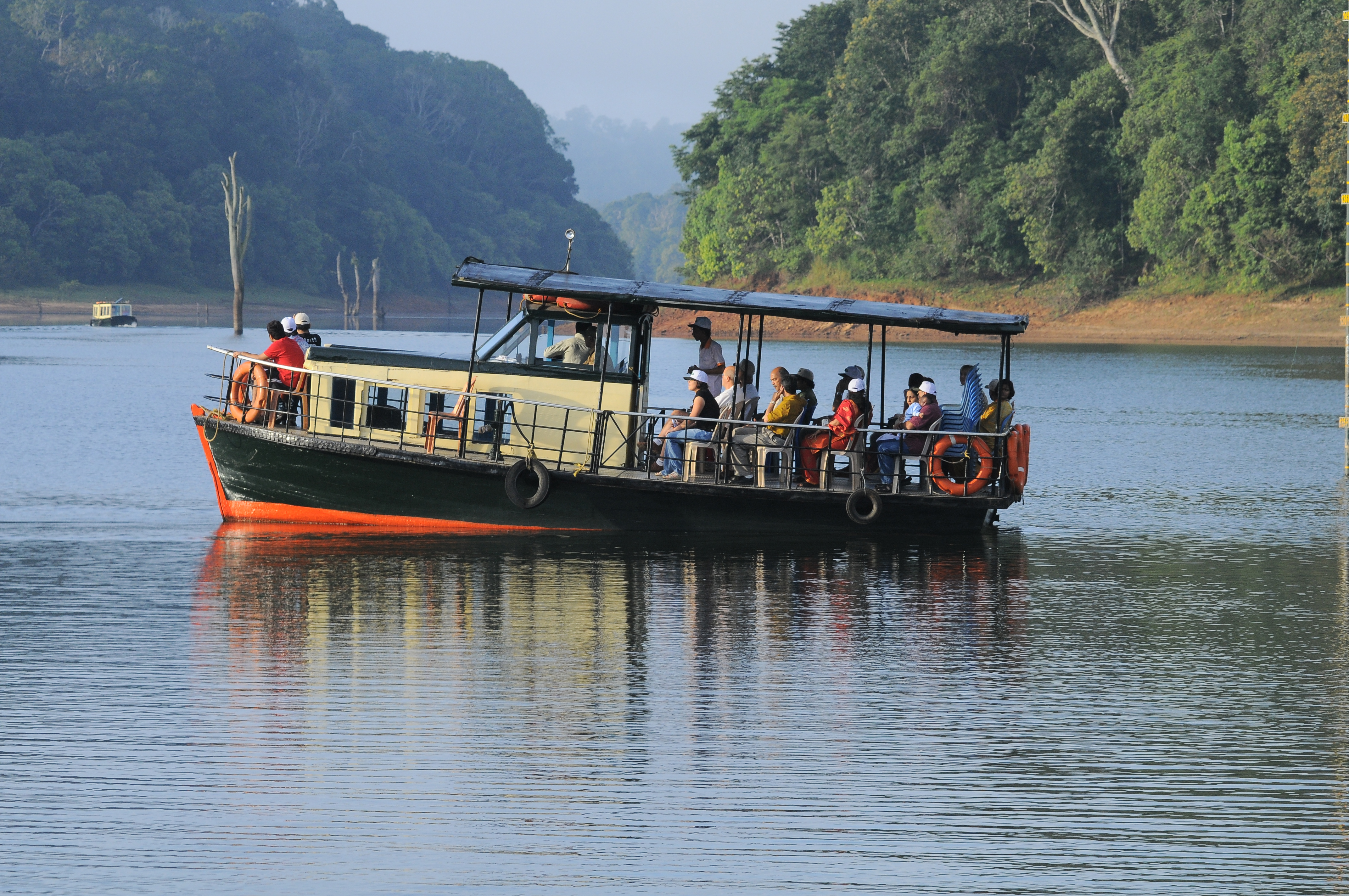
There's a particular moment on Periyar Lake — just after sunrise, mist still sitting on the water — when an elephant herd walks down to drink and the whole boat goes quiet without anyone asking it to. That's the reserve's signature experience, and it's earned: Periyar sits in the Cardamom Hills of the southern Western Ghats, spread across roughly 925 sq. km in Kerala's Idukki and Pathanamthitta districts, named for the Periyar River that rises here and runs 244 km to the sea.
What sets Periyar apart from India's other major reserves isn't only its wildlife — it's the specific combination of dense evergreen forest, a large artificial lake at its centre, spice country along its edges, and an eco-tourism model built around genuine community involvement rather than exclusion. Former poachers now work as reserve guides. Revenue from tourism programmes flows, at least in part, back to the indigenous Mannan community. It's not a perfect system, but it's a genuinely unusual one, and it's shaped how the reserve is run today.
A Century of Protecting This Forest
Periyar's protection story begins, unusually, with a dam. In 1895 the British colonial administration built the Mullaperiyar Dam across the Periyar River, forming a 26 sq. km reservoir that would eventually become the reserve's centrepiece. The surrounding forest was notified as reserve forest as early as 1899 by the Maharaja of Travancore; by 1934, Maharaja Chithira Thirunal Balarama Varma had declared it a protected game reserve, checking the expansion of tea plantations into the forest interior. It joined independent India's list of wildlife sanctuaries by 1950.
Creates the 26 sq. km reservoir that becomes the reserve's ecological and scenic centre.
The surrounding forest gains formal protected status under the Kingdom of Travancore.
Maharaja Chithira Thirunal halts tea-plantation expansion into the forest.
Formally included in independent India's list of wildlife sanctuaries.
Periyar is brought under India's national tiger conservation programme.
The 350 sq. km core zone receives the strongest level of legal protection.
Recognises Periyar's importance as one of India's significant elephant habitats.
More recently, the Periyar Foundation's eco-development programmes have reshaped how the reserve operates day to day — placing the indigenous Mannan community, and in some programmes rehabilitated former poachers, at the centre of conservation work rather than at its margins. Whatever else changes about Periyar, this shift in who does the protecting, and who benefits from it, is probably the most consequential development of the last three decades.
Forest, Mist and Still Water
The reserve rises from a 1,200 m plateau in the west to ridgelines of roughly 1,700 m in the north and east; its highest point, Kottamala Peak, reaches 2,019 m and is cloud-wrapped for much of the year. Dense evergreen forest — some of the thickest in peninsular India — covers around 360 sq. km of the total protected area, giving way to semi-evergreen and moist deciduous forest at lower elevations, and to montane grassland important for gaur and sambar higher up.
Periyar is also a critical watershed: both the Periyar and Pamba rivers — Kerala's own and the river Sabarimala pilgrims bathe in before their ascent — originate within this forest system, and the Idukki Dam downstream generates a meaningful share of the state's electricity. With 1,965 recorded flowering plant species, including 171 grass varieties, 143 orchid species and Podocarpus wallichianus — the only conifer native to South India — the reserve's botanical richness alone would justify its protection even before accounting for the animals that depend on it.
Who You Might Meet in the Reserve
Periyar is home to 60-plus mammal species, 265 recorded birds, 36 reptiles, 12 amphibians, 35 fish and more than 160 butterfly species — a genuinely comprehensive cross-section of Western Ghats wildlife.
Asian Elephant
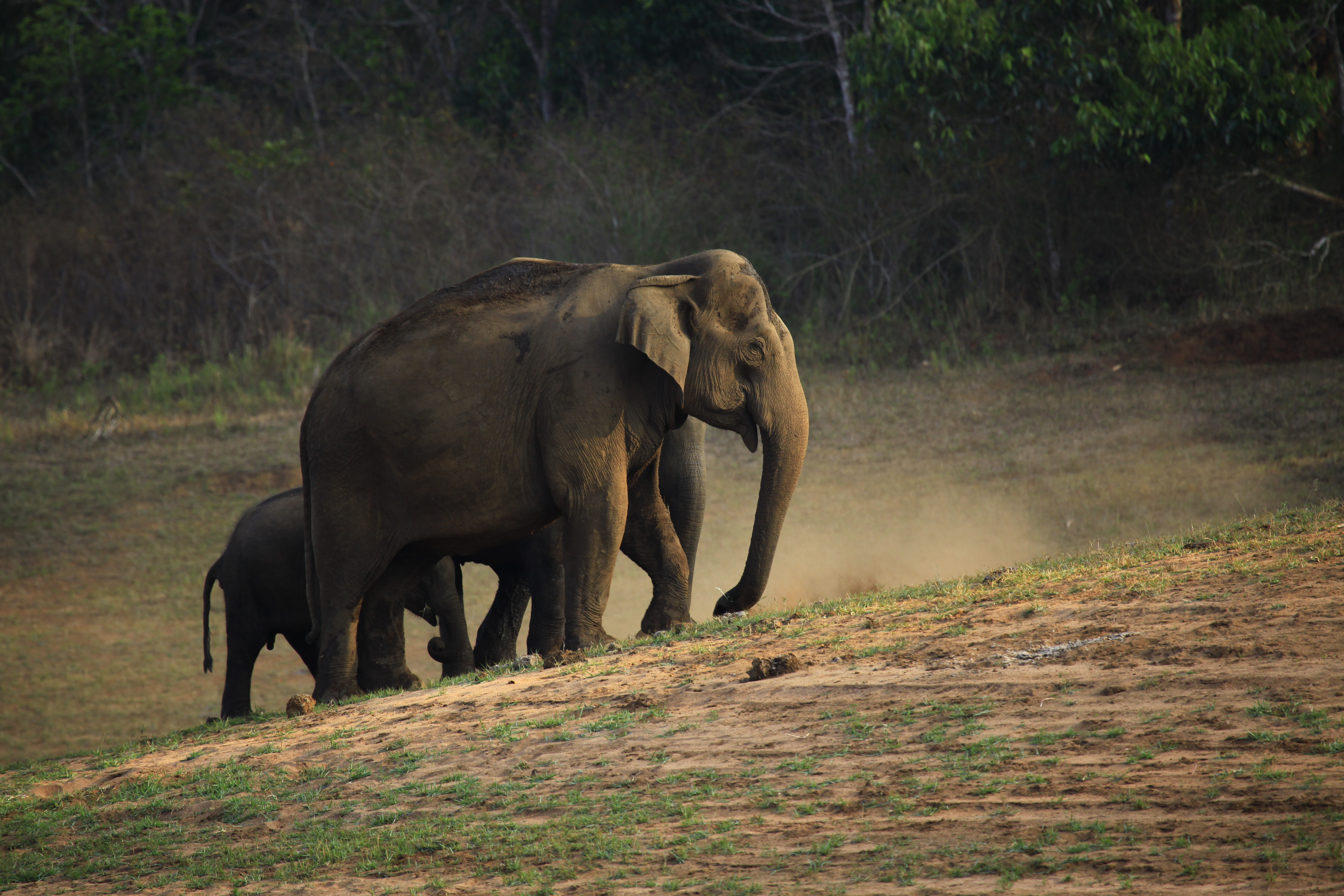
An estimated 900–1,000 individuals — one of India's largest wild elephant concentrations. Watching a herd come to drink and bathe is, for most visitors, the defining Periyar experience.
Bengal Tiger
The reserve's namesake. Thick evergreen cover makes direct sightings genuinely rare, but the population has grown under decades of Project Tiger protection. Pugmarks are a far more common sign of presence.
Sambar & Barking Deer
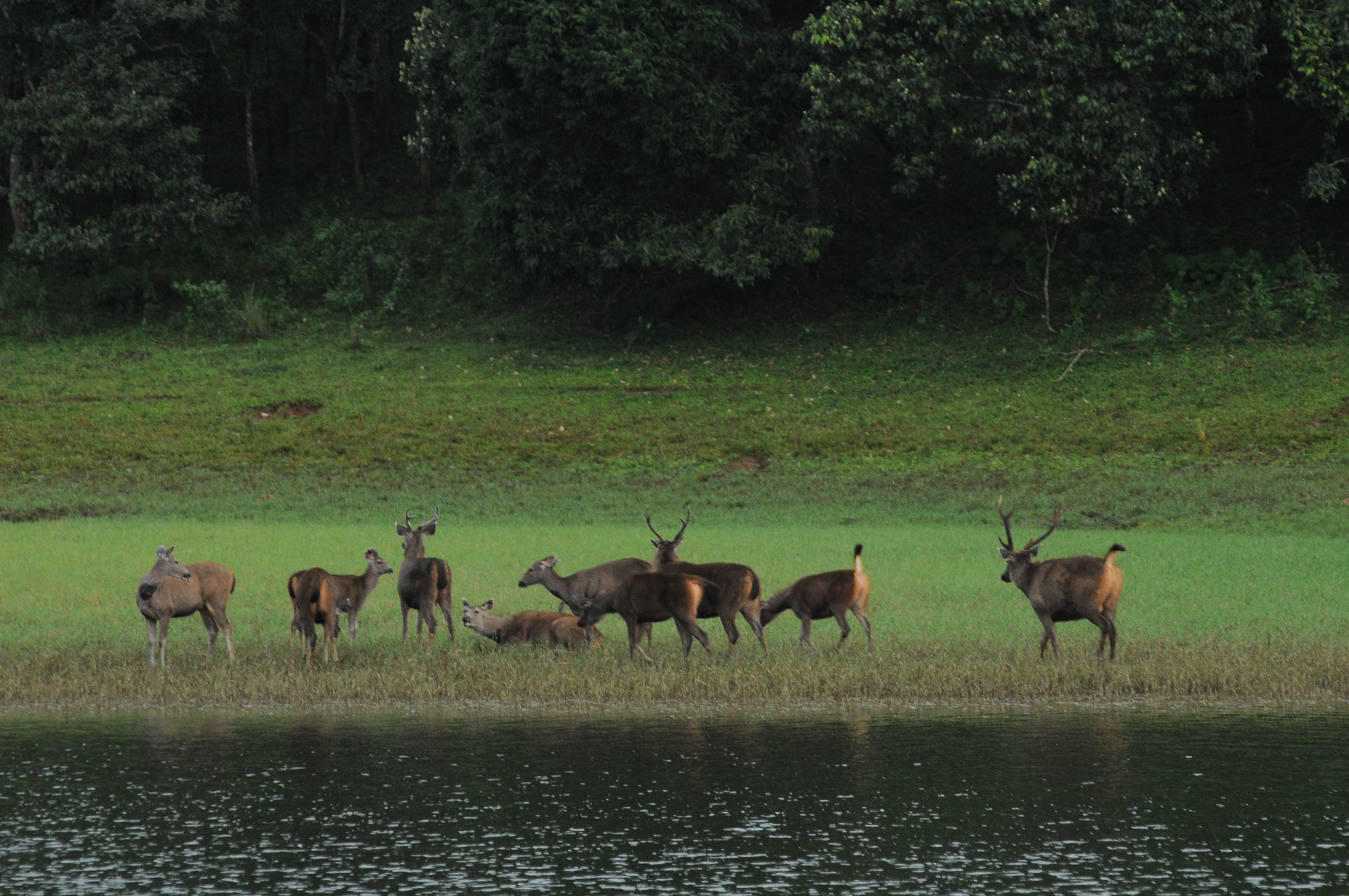
Sambar, India's largest deer, are commonly spotted near the lake edge and forest clearings; the smaller barking deer is more often heard than seen, thanks to its distinctive alarm call.
Leopard
Present throughout the reserve but largely nocturnal and rarely seen on standard visits — night-trekking programmes offer the best, if still uncertain, chance of an encounter.
Lion-Tailed Macaque
One of the world's most endangered primates, restricted entirely to the Western Ghats. Look for the distinctive silver mane in the deeper interior evergreen forest.
Birds & Butterflies
265 recorded bird species including the Great Cormorant, Osprey and Woolly-necked Stork; over 160 butterfly species including the rare, range-restricted Travancore Evening Brown.
The Indian Gaur — Lords of the Forest Floor
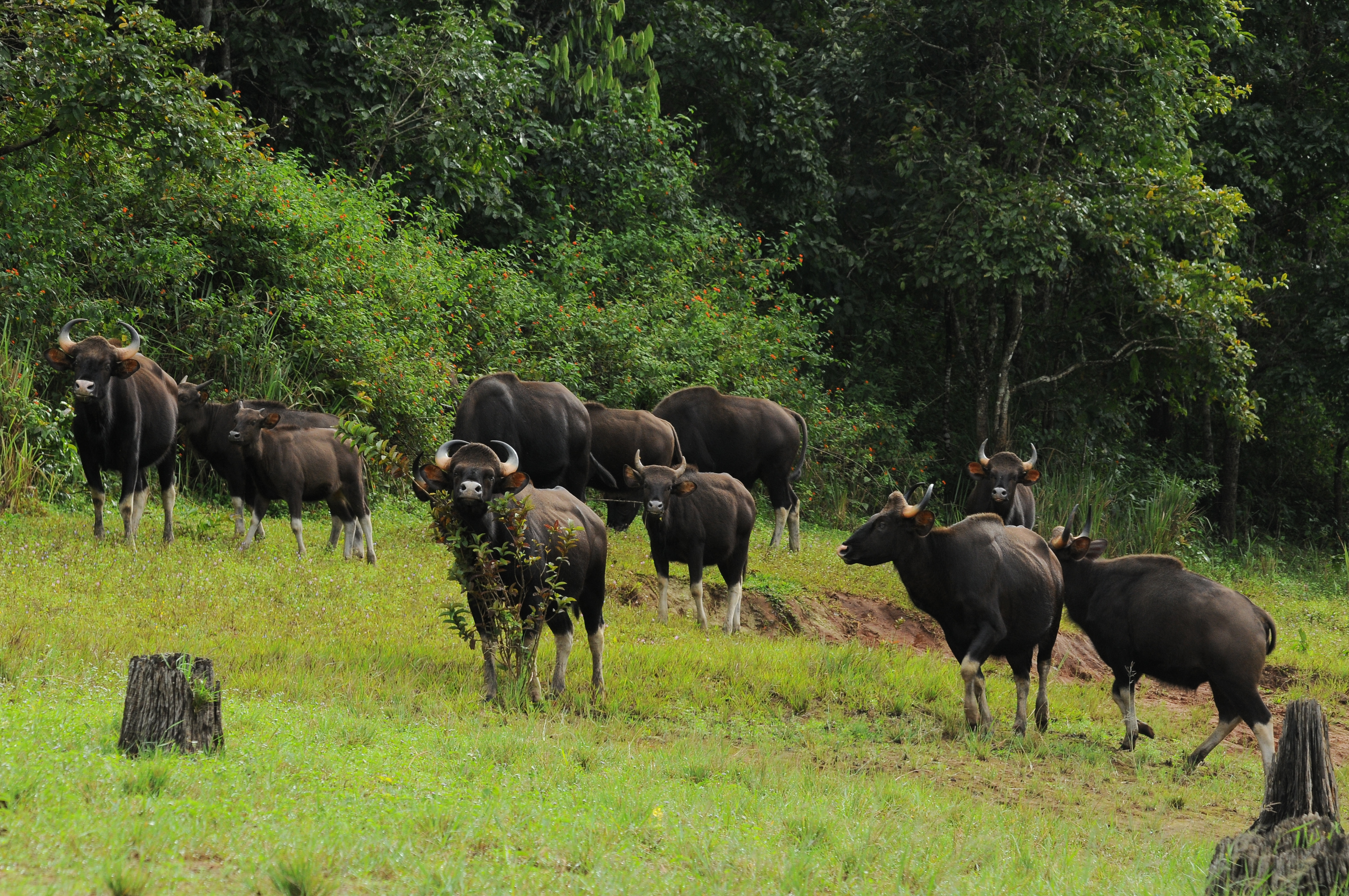
Few sights in the reserve are as quietly impressive as a full-grown gaur standing at the treeline in early morning light. These are the world's largest wild cattle, and Periyar is one of the more reliable places in India to see them in the open. Herds are most active at dawn and dusk, typically grazing in grassland patches that fringe the lake or moving through the forest in single file — their muscular build and distinctive white "stockings" make them identifiable even at a distance from a boat. They aren't aggressive unless provoked, but their presence tends to bring a natural, unprompted hush over any group that spots one.
What There Is to Actually Do Here
Periyar rewards more than a single boat ride — several of its best experiences are run directly by local communities, which means your visit funds the same conservation model that keeps the reserve intact.
Boat Safari on Periyar Lake
The signature experience — a government-run boat crossing the 26 sq. km lake past elephant herds, gaur and waterbirds. Early morning and late afternoon slots see the most activity.
Bamboo Rafting
A slower, quieter alternative to the main boat, reaching stretches of the lake the larger vessels can't access, with a naturalist guide throughout.
Tiger Trail Trek
Periyar's best-known eco-tourism innovation: multi-day treks led by reformed former poachers deep into the reserve, camping in the wilderness along the way.
Guided Nature Walks
Shorter morning or afternoon walks with trained naturalists — a good introduction for families or anyone new to wildlife-focused travel.
Night Jungle Camping
Spending a night inside the reserve, with the forest audibly different after dark. Seasonal availability, and worth booking well ahead.
Spice Plantation Walks
The countryside around Thekkady is thick with cardamom, pepper and cinnamon — a half-day walk pairs naturally with a morning safari.
🎒 Book a Guided Periyar Experience
Reserve boat safaris, treks and multi-day Kerala circuits that include Thekkady before you travel — slots sell out fast in peak season.
Practical Numbers Before You Go
The reserve is open every day of the year, gates from 6:00 AM to 7:00 PM. Arrive early — both for better sightings and because boat tickets sell out quickly on weekends and through the October–March peak season.
| Category | Fee / Detail |
|---|---|
| Indian Adults | ₹45 per person |
| Indian Children | ₹15 per child |
| Foreign Adults | ₹500 per person |
| Foreign Children | ₹180 per child |
| Boat Safari (Indian) | ₹470 per seat |
| Boat Safari (Foreign) | ₹1,130 per seat |
| Bamboo Rafting | ₹1,200–1,500 per person |
| Nature Walk | ₹100–300 per person |
| Camera Fee (Still / Video) | ₹25 / ₹150 |
| Park Timings | 6:00 AM – 7:00 PM daily |
| Boat Safari Slots | 7:30–9:00 AM · 9:30–11:00 AM · 11:15 AM–12:45 PM · 1:45–3:15 PM · 3:30–5:00 PM |
Entry fees and timings are revised periodically — treat these as a planning guide and confirm current rates at the Forest Information Centre in Thekkady (+91-4869-222027) or the official booking channel before you travel.
Best Time to Visit Periyar
Periyar is one of the few major Indian reserves that stays open through the monsoon, so there's no month you technically can't visit — but the experience varies a great deal by season.
Cool, dry, and the most reliable wildlife sightings near the lake. Book boat safaris well ahead.
Warmer and drier, which pushes large mammals toward the lake for water — often spectacular elephant and gaur sightings, with fewer crowds.
Heavy rain transforms the forest into a lush, misty landscape. Some treks are restricted, but the atmosphere rewards photographers and the lowest prices of the year.
How to Reach Periyar Tiger Reserve
The reserve is accessed via Thekkady/Kumily in Idukki district — the entrance sits barely a kilometre from Kumily town, so once you're there, getting in is straightforward.
By Air
Cochin International Airport (Kochi) is around 140 km away and the most connected option; Madurai Airport in Tamil Nadu, about 134 km from Thekkady, is a useful alternative depending on your route.
By Rail
Kottayam Railway Station, roughly 106 km away, is the closest major railhead, well connected to Kochi, Thiruvananthapuram and Chennai. Frequent buses and taxis cover the onward 3–3.5 hour journey to Kumily.
By Road
The drive itself is worthwhile — tea estates, rubber plantations and cardamom-scented valleys along well-maintained mountain roads. KSRTC buses connect Thekkady to Kottayam, Kochi, Thiruvananthapuram and Madurai; the drive from Kochi takes about 5 hours, from Kottayam roughly 3.
✈️ Flying Into Kochi or Madurai
Compare fares to Cochin International Airport or Madurai, and consider flight protection since a delayed connection can eat into a tightly planned safari schedule.
Before You Go
- Book boat safari and bamboo rafting tickets in advance, especially for weekends and the October–March season — the Eco-Tourism Office at Ambadi Junction, Kumily, handles most bookings
- Wear muted, nature-toned clothing — greens, browns, khakis. Bright colours can disturb animals and other visitors' sightings alike
- If trekking during the monsoon, bring a proper waterproof jacket and closed waterproof shoes; leech socks are provided for certain programmes
- The 7:30 AM boat slot typically offers the best wildlife activity — arrive on time, the reserve keeps a firm schedule
- Keep quiet during any wildlife encounter — noise sends animals retreating into the forest, and it matters for everyone else's experience too
- Bring binoculars; many of the lake's best sightings happen at a distance
- Plastic is prohibited inside the reserve — carry a reusable water bottle
- Local Mannan guides carry generations of forest knowledge — listen to them; they'll show you things no guidebook can
🏨 Where to Stay Near Thekkady
Most visitors base themselves in Kumily or along the reserve's edge. Compare stays and check recent guest reviews before booking, since standards vary considerably between properties close to the park boundary.
🏨 Find a Stay Near the Reserve
Book accommodation in Kumily or Thekkady ahead of peak season, when the best-located properties fill up fastest.
Some links on this page are affiliate links — if you book through them, we may earn a small commission at no extra cost to you. See our Affiliate Disclosure for details.
Destinations Worth Combining With Periyar
An off-the-beaten-path eco-tourism spot inside the same reserve system — cardamom plantations, waterfalls and excellent birdwatching, with far fewer visitors than Thekkady proper.
Kerala's best-known tea-growing hill station — the drive between the two through the Western Ghats is one of the more scenic road journeys in South India.
Fresh cardamom, black pepper and cinnamon at source prices, right at the reserve's edge.
Rolling meadows and paragliding over Thangalpara — a good one-night extension after a couple of safari-focused days.
The 1895 colonial-era dam that inadvertently created one of Asia's finest wildlife sanctuaries by forming the lake at Periyar's centre.
One of the world's largest pilgrimages takes place inside this same tiger reserve — worth reading if you're curious about that side of the landscape.