Sacred Groves of Kerala: When Faith Became the World’s First Conservation Law
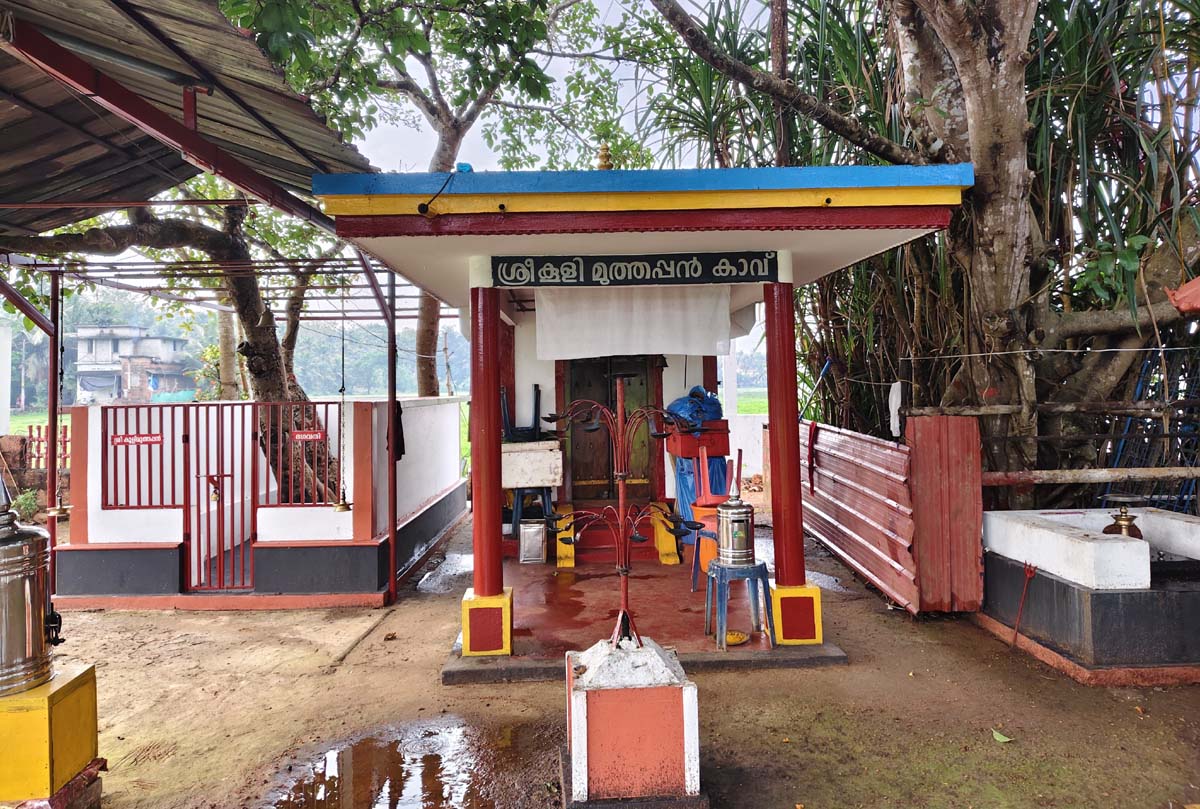
Koolikkavu Sacred Grove – a village shrine reflecting Kerala’s living tradition of nature worship
Long before the words environmental protection, biodiversity policy, or climate resilience entered human vocabulary, small forest patches across Kerala were already protected by an unwritten yet strictly enforced law: sacredness. These forests, known locally as Kavu, were not preserved through fences or government orders, but through belief, fear, ritual, and collective memory.
In a world searching for sustainable models of coexistence between humans and nature, Kerala’s sacred groves stand as living evidence that conservation does not always begin with science—it often begins with culture.
What Are Sacred Groves?
Sacred Groves are fragments of natural forests traditionally protected by local communities due to religious, spiritual, or cultural beliefs. Unlike managed forests or wildlife sanctuaries, these groves evolved organically within village landscapes—near homes, fields, ponds, and temples.
In Kerala, sacred groves are commonly associated with serpent deities (Naga), mother goddesses (Bhagavathi), forest spirits, and ancestral guardians. Cutting trees, disturbing soil, or even removing fallen leaves from these groves was traditionally forbidden.
What makes these groves remarkable is not their size—many are less than an acre—but their ecological intensity. They function as micro-reserves, preserving rare plants, insects, amphibians, and microorganisms that often vanish from surrounding landscapes.
Sacred Groves as a Global Phenomenon
Kerala is not alone in preserving sacred forests. Across the world, indigenous and traditional communities have developed similar systems:
- Sacred forests of West Africa protected by ancestral spirits
- Shinto shrine forests in Japan
- Holy woodland sites of the Celtic world
- Community-protected groves in Ethiopia and Ghana
Yet Kerala’s sacred groves stand out due to their deep integration into everyday life. They were not distant ritual spaces but part of domestic and agricultural settings, creating a seamless bond between livelihood and landscape.
For global environmental scholars, these groves are increasingly recognized as early examples of community-led conservation, operating without written laws, enforcement agencies, or external funding.
Historical Roots of Sacred Groves in Kerala
The tradition of sacred groves in Kerala predates organized temple culture. Early Dravidian belief systems emphasized the sanctity of land, fertility, and non-human life forms. Forest patches were perceived not as resources to be extracted but as living entities with agency and power.
Over centuries, these beliefs merged with later religious influences, including Brahmanical traditions, local goddess worship, and serpent cults. Yet the core principle remained unchanged: nature was not subordinate to humans.
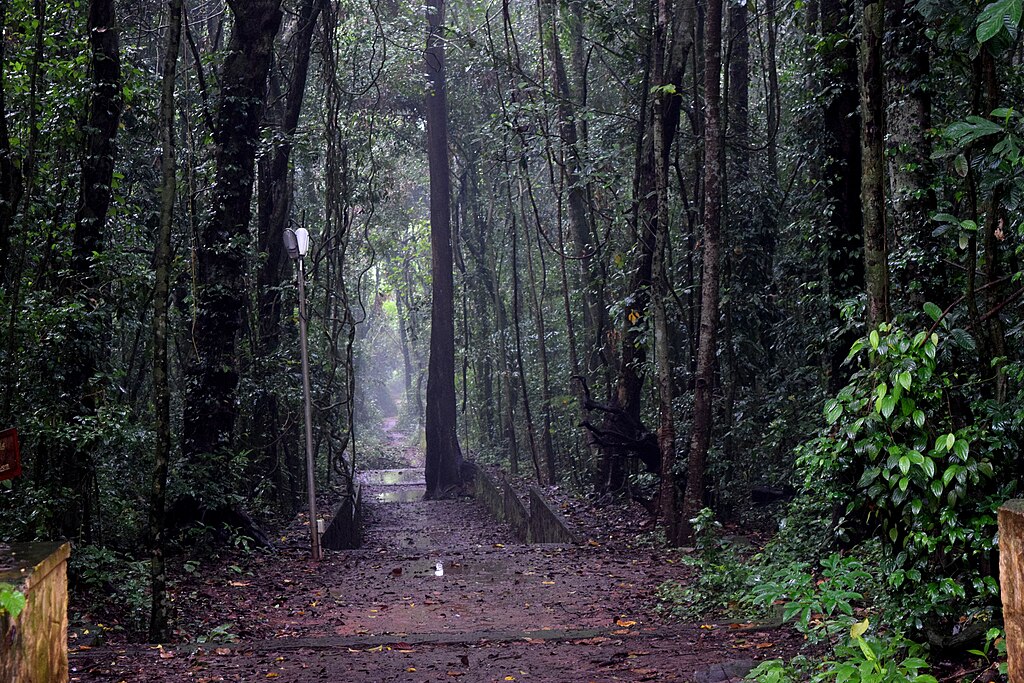
This worldview materialized across Kerala in the form of distinct sacred landscapes. In central Kerala, groves such as Iringole Kavu in Ernakulam and Kottiyur forest shrines of Kannur preserved dense forest cover as part of ritual obligation rather than conservation policy. In northern Malabar, ritual-centered groves associated with Theyyam—such as those around Madayi Kavu and Rajarajeshwara temple forest belts—functioned as ceremonial spaces where deities were believed to temporarily inhabit the natural world.
In the southern regions, sacred landscapes like Parassinikkadavu riverine groves and Neyyattinkara-associated forest shrines demonstrate how water systems, wetlands, and forest patches were ritually protected as interconnected ecological units. These sites were rarely monumental; their power lay in restraint, silence, and continuity.
In many villages, the sacred grove functioned as:
- A rain-regulating ecosystem protected through taboo rather than law
- A gene bank for medicinal and endemic plant species
- A spiritual court where oaths, conflict resolutions, and social contracts were sealed
- A cultural archive preserved through oral tradition, ritual performance, and myth
The destruction of a sacred grove was believed to invite illness, infertility, or social disharmony—beliefs that acted as powerful deterrents against ecological damage. Such narratives transformed conservation into a moral obligation rather than an external enforcement.
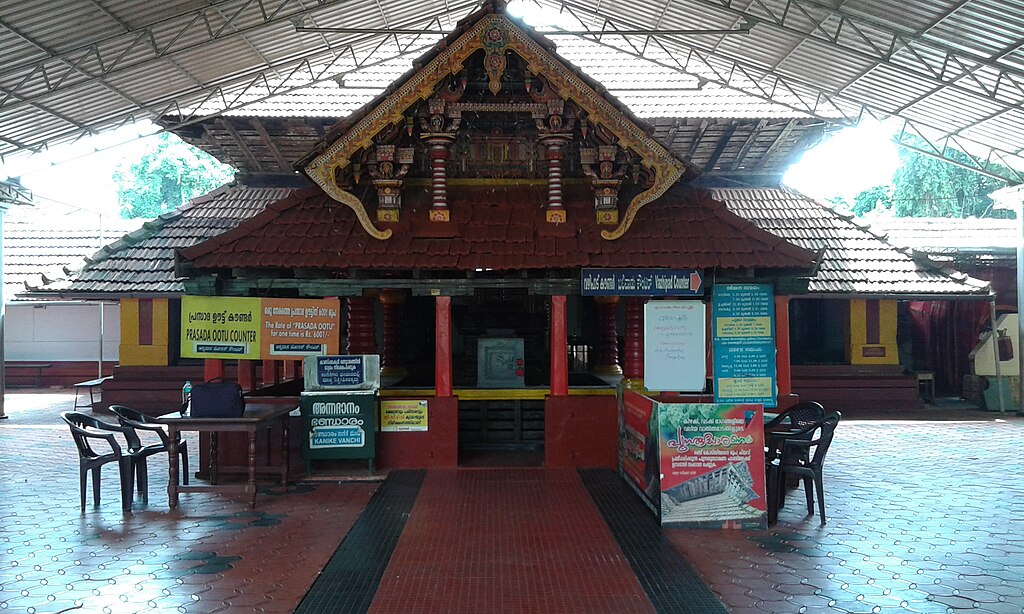
Today, travelers seeking meaningful experiences increasingly look beyond beaches and resorts, searching instead for landscapes that tell deeper stories. Exploring regions where sacred groves still survive allows visitors to witness a rare cultural ecology where belief, biodiversity, and community memory coexist.
For those planning an eco-conscious journey through Kerala, choosing accommodations close to culturally significant landscapes can enhance both understanding and impact. Trusted platforms such as Booking.com and Tripadvisor offer stays near traditional village regions where sacred groves remain part of daily life.
Sarpa Kavu: Where Serpents Became the Guardians of Soil
At the edge of many old homesteads in Kerala, hidden behind creepers and centuries of accumulated leaves, lies a small patch of forest that rarely appears on maps. No signboard announces it. No pathway invites entry. Yet generations have walked past it with lowered voices and careful steps.
This is the Sarpa Kavu—the serpent grove.
To the outsider, it may appear as an abandoned piece of land. To the community, it is alive. Cobras, believed or real, are said to inhabit these spaces. But more importantly, the grove itself is the deity. The snake is not merely an animal here—it is the symbol of subterranean water, fertility, and the unseen forces beneath the soil.
Across Kerala, Sarpa Kavus exist in varied forms. In central Kerala, the ancient Mannarasala Nagaraja Temple grove preserves one of the largest living serpent forests in the region, where ritual protection has sustained biodiversity alongside belief. In North Malabar, smaller household Sarpa Kavus near ancestral tharavads continue to be ritually acknowledged during Theyyam seasons, even when the surrounding land has transformed.
The Peralassery Sree Subrahmanya Temple in North Malabar stands as a rare convergence of serpent worship and Murugan tradition, where Nāga symbolism is interwoven with ritual practice rather than confined to a separate grove. Local belief holds that the surrounding sacred landscape, including remnants of older serpent spaces, reinforces the temple’s association with fertility, protection, and ancestral continuity.
In the southern districts, Sarpa Kavus such as those associated with Neeramankara and Vilappilsala remain tied to water sources, wells, and paddy fields, reinforcing the belief that disturbing the grove could disrupt both fertility and groundwater balance. These spaces were traditionally entered only during specific ritual moments, if at all.
Unlike temples built of stone, the Sarpa Kavu demanded restraint rather than construction. Fallen leaves were not cleared, undergrowth was not trimmed, and even a broken branch was approached with caution. Protection emerged not from walls or authority, but from inherited fear, reverence, and memory.
Fear as a Conservation Strategy
Modern conservation often relies on awareness campaigns and legal penalties. Sacred groves operated on a far older and more effective mechanism: fear blended with reverence.
Cutting a tree inside a Sarpa Kavu was believed to anger the serpent spirits, resulting in skin diseases, infertility, or misfortune in the family. Whether one believed these consequences literally or metaphorically did not matter—the rule held.
In this way, belief functioned as law, and ritual acted as enforcement.
What remained untouched for centuries because of faith is today recognized by ecologists as critical micro-habitats supporting frogs, insects, fungi, medicinal plants, and moisture-retaining soil systems.
The Invisible Architecture of Biodiversity
Step inside a sacred grove—if permitted—and the temperature drops almost instantly. The air feels thicker, damp with the scent of decaying leaves and wild roots. Sunlight filters through layered canopies, rarely touching the forest floor directly.
This microclimate is not accidental. Sacred groves preserve:
- Endemic medicinal plants no longer found in open landscapes
- Amphibians sensitive to chemical fertilizers
- Native pollinators essential for surrounding farms
- Soil organisms that regenerate fertility naturally
Many of these species vanish the moment modern landscaping or construction enters the scene. The grove survives because it remains untouched—not optimized, not cleaned, not improved.
In a world obsessed with efficiency, sacred groves remind us that ecological health often depends on leaving things alone.
Rituals That Replaced Written Laws
Sacred groves were not passive spaces. They were actively maintained through ritual calendars.
Annual offerings, serpent worship ceremonies, and seasonal festivals ensured that the community regularly acknowledged the presence of the grove. These rituals reinforced memory: this place is not ours to own.
No priest stood guard year-round. No fence marked boundaries. The law existed in stories told to children, in warnings whispered by elders, and in songs performed during rituals.
This oral environmental code proved remarkably resilient—until modern land pressure and changing belief systems began to erode it.
When Groves Disappear, Water Follows
Many villagers recall a simple observation: when a sacred grove was cleared, nearby wells began to dry faster. Frogs disappeared. Snakes vanished. The land became hotter.
Sacred groves act as natural sponges. Their dense vegetation slows rainwater runoff, allowing it to percolate into underground aquifers. Remove the grove, and the water cycle fractures silently.
Long before hydrology became a science, communities understood this through experience. Protecting the grove meant protecting life beyond the grove.
Today, travelers seeking meaningful encounters with Kerala’s landscapes are increasingly drawn to regions where such traditional ecological knowledge still survives. Experiences that combine nature, ritual, and local storytelling offer deeper insight than conventional sightseeing.
Cultural and eco-sensitive activities—such as guided village walks, traditional martial arts, or ritual performances—can be explored through responsible platforms like Viator , which connect visitors with local knowledge holders rather than mass-tourism circuits.
The Quiet Disappearance of Sacred Groves
Sacred groves rarely disappear overnight. They shrink silently.
A corner cleared for a house extension. A pathway widened. Fallen leaves swept away “for cleanliness.” A concrete platform added for convenience.
None of these acts appear destructive in isolation. Yet together, they unravel an ecosystem that took centuries to form.
As belief weakens, protection weakens with it. What once required ritual permission now requires only a land document.
What Science Is Now Confirming
Modern ecological studies increasingly validate what traditional communities understood intuitively.
Researchers studying sacred groves in the Western Ghats have found that these sites often contain higher species diversity than nearby protected forests of similar size. Rare medicinal plants, endemic amphibians, and pollinator species frequently survive only within these untouched pockets.
Soil samples from sacred groves show richer microbial life and better moisture retention, helping regulate groundwater recharge and local temperature.
In simple terms: sacred groves are not symbolic forests. They are functioning climate stabilizers.
Why the World Is Looking Back at Ancient Wisdom
Across the globe, conservationists are revisiting indigenous protection systems— not out of nostalgia, but necessity.
International environmental frameworks increasingly recognize that biodiversity survives best where communities feel emotional ownership, not external enforcement.
Kerala’s sacred groves offer a powerful lesson: ecosystems endure when they are woven into identity, ritual, and memory.
The question is no longer whether these traditions were effective. The question is whether modern societies can learn without romanticizing or erasing them.
Responsible Travel: Witness, Don’t Consume
Sacred groves are not tourist attractions—and that is precisely why they matter.
Yet travelers who approach Kerala with patience and respect can still encounter landscapes shaped by this ancient ecological ethic. Wetlands, mangroves, village forests, and ritual spaces together form a living continuum.
Guided nature trails, mangrove walks, and cultural immersion experiences—when led by local communities—can support conservation rather than disrupt it.
Carefully curated experiences such as the Kadalundi Mangrove Trails demonstrate how ecological awareness and livelihoods can coexist.
Planning a Thoughtful Journey to Kerala
Visitors arriving from abroad often underestimate the complexity of travel in ecologically sensitive regions. Flight delays, cancellations, or missed connections can disrupt carefully planned itineraries.
Using tools like Aviasales, Kiwi, or Cheapoair can help travelers compare routes efficiently.
In cases of unexpected disruptions, services like AirHelp and Compensair assist passengers in understanding and claiming compensation—allowing the journey to continue with less stress.
The Choice Before Us
Sacred groves ask an uncomfortable question of modern humanity:
Can we protect something without needing to own it?
These forests survived not because humans managed them efficiently, but because humans knew when to step back.
In a century defined by climate anxiety and ecological loss, the silence of Kerala’s sacred groves offers not escape—but instruction.
To listen, however, we must slow down.
A Call to Remember, Not Replicate
Sacred groves cannot be recreated once destroyed. They are not models to copy mechanically, but philosophies to understand deeply.
Protecting what remains requires more than policies—it requires cultural humility, community participation, and respect for non-human life.
Whether you are a traveler, researcher, policymaker, or reader from afar, remembering these forests is itself an act of conservation.
Because sometimes, the most radical environmental act is simply this: leave a forest alone.
References & Further Reading
- Gadgil, M., & Vartak, V. D. (1976). Sacred groves of India: A plea for continued conservation. Journal of the Bombay Natural History Society.
- Chandran, M. D. S. (1997). On the ecological history of the Western Ghats. Current Science.
- Ramakrishnan, P. S. (1998). Conserving the Sacred: For Biodiversity Management. Oxford & IBH Publishing.
- Kerala State Biodiversity Board. Sacred Groves of Kerala: Documentation and Conservation Status.
- Malhotra, K. C., Gokhale, Y., Chatterjee, S., & Srivastava, S. (2001). Cultural and Ecological Dimensions of Sacred Groves in India. Indian National Science Academy.
- Western Ghats Ecology Expert Panel (2011). Ecology, Environment and Sustainable Development.
- Posey, D. A. (1999). Cultural and Spiritual Values of Biodiversity. United Nations Environment Programme (UNEP).
- Folklore Academy, Government of Kerala. Studies on Sarpa Kavu and Ritual Ecology in Kerala.
- Gadgil, M. (2011). Ecology Is for the People. Permanent Black.