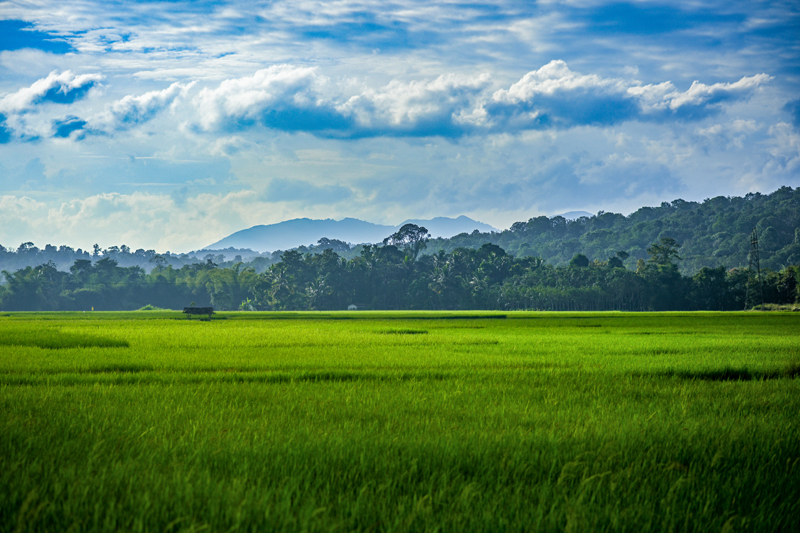
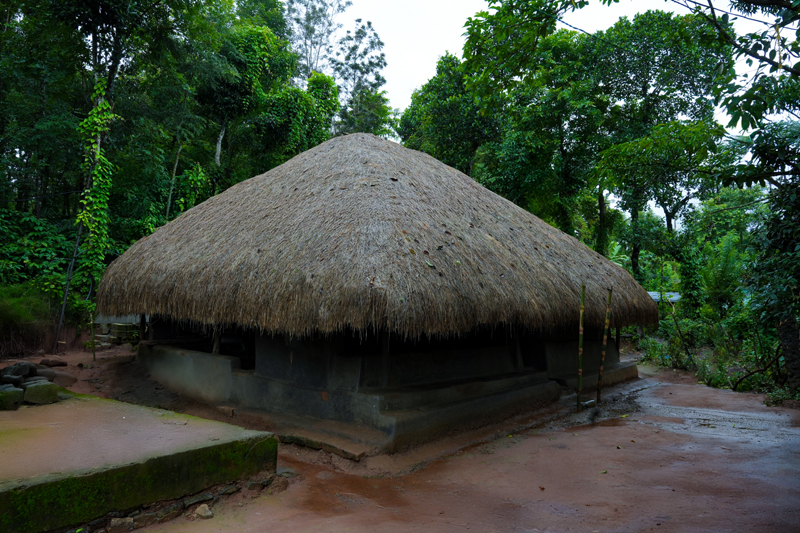
In the far northern reaches of Kerala, where the Western Ghats rise to meet the skies of Karnataka and Tamil Nadu, lies a district that holds more biodiversity per square kilometre than almost anywhere in South Asia. Wayanad — meaning "Land of Paddy Fields" in the old tongue — is today one of India's most compelling eco tourism destinations, a place where the conversation between forest and community has shaped something rare and precious: a living model of sustainable travel.
The Land Wayanad Holds — Understanding the Ecology
To travel responsibly in Wayanad, it helps to first understand what you are entering. This is not simply a "green hill station." Wayanad sits at the convergence of three of India's most critical wildlife corridors — linking Nagarhole National Park in Karnataka, Bandipur Tiger Reserve, and Mudumalai Tiger Reserve in Tamil Nadu. Together, these landscapes form the Nilgiri Biosphere Reserve, the largest protected wilderness area in South Asia at 5,520 km², and one of UNESCO's recognised Man and Biosphere zones.
Within Wayanad itself, wildlife moves through three interconnected protected areas: Muthanga Wildlife Sanctuary (344 km², linked to Bandipur), Tholpetty Wildlife Sanctuary (344 km², linked to Nagarhole), and the Wayanad Wildlife Sanctuary buffer zones. The forests of Kurichiyarmala, Thirunelli, and Vythiri are not sanctuaries in the legal sense — but they function as critical wildlife corridors that depend on the cooperation of tribal communities and landowners who choose conservation over conversion.
The result is a living mosaic of habitats: shola forests (stunted subtropical montane forests unique to the Western Ghats), moist deciduous forest, bamboo groves that can reach seven metres in a single monsoon season, tea and coffee estates managed with varying degrees of ecological sensitivity, and the paddy fields and wetlands of the valley floor that support an extraordinary diversity of water birds, migratory species, and amphibians.
Wayanad's ecology is not static. It is under continuous negotiation — between human settlement and wildlife movement, between agricultural economy and forest conservation, between the rights of tribal communities who have lived here for millennia and the demands of a modern tourism economy that discovered Wayanad relatively recently. Understanding this negotiation is the foundation of responsible eco tourism in the district.
"Every tree in Wayanad is a library. Every tribal elder is a librarian. Eco tourism, at its best, is nothing more than the act of learning to read."
— Field note, Kerala Nature Vibes Research Journey, January 2025
What Makes Wayanad Eco Tourism Different
The term "eco tourism" has been diluted by decades of misuse. A resort surrounded by a manicured garden is not eco tourism. A jeep safari that ends at a luxury spa is not eco tourism. What distinguishes authentic eco tourism in Wayanad from conventional nature tourism is a specific structure of ecological integrity, community benefit, and educational depth.
Kerala's Responsible Tourism Mission (RTM) — launched in 2017 and operational across 600+ village clusters — has given Wayanad a formal framework for this distinction. RT-certified eco tourism experiences in Wayanad are required to meet audited criteria: local staff exclusively, a defined percentage of revenue flowing to community welfare funds, waste management protocols, and noise restrictions in forest buffer zones. This is not a marketing label — it is a verifiable standard, and it matters to the forests and people involved.
When booking Wayanad eco tourism experiences, always verify your operator holds Kerala Tourism's RT certification. Verify at keralatourism.org/rt-certified-operators. Certified operators are audited annually on social equity, waste management, biodiversity protection, and fair wage standards.
True Wayanad eco tourism has three distinguishing characteristics absent from conventional tourism in the district:
- Tribal knowledge as the core product — not as entertainment, but as genuine intellectual exchange. The Kurichiya tribe's forest navigation skills, the Paniya community's medicinal plant knowledge, and the Kattunaika's understanding of animal behaviour corridors are forms of ecological intelligence that university-trained naturalists openly acknowledge as superior for specific forest tasks.
- Visitor numbers as a conservation tool — responsible operators in Wayanad cap group sizes at 6–12 persons for forest trails, not as a premium pricing strategy but as a wildlife disturbance mitigation protocol. The forest itself determines the carrying capacity, not the accountant.
- Departure from extraction logic — the best eco tourism stays in Wayanad leave the forest with more than they found. Community reforestation contributions, firebreak maintenance participation, and invasive species removal are offered to enthusiastic visitors as meaningful optional activities that directly benefit the ecosystem they have come to appreciate.
The Six Pillars of Wayanad Eco Tourism
1. Tribal Forest Stays — Living Inside the Knowledge
The most transformative eco tourism experience available in Wayanad is the tribal forest homestay — spending one or more nights with a Paniya, Kurichiya, or Adiya household in a community that has lived at the forest edge for generations. These are not performance spaces; they are homes where families welcome guests as participants in daily life.
A tribal forest stay in Wayanad typically involves waking before dawn to join the household in forest monitoring walks — observing animal trails, reading pug-marks in the mud, and listening for alarm calls that tell experienced ears exactly which predator is moving where. Meals are cooked on wood fires with forest produce: bamboo shoots, wild tubers, foraged herbs, and the dense, smoky flavours of Kerala's tribal cuisine that no restaurant has ever successfully replicated.
In the Thirunelli area and the Kurichiyarmala community forest zones, tribal-led stays are operated under the supervision of the Wayanad Tribal Welfare Department in partnership with the Kerala Forest Department. Revenue allocation is formalised: 60% directly to the host household, 20% to the community welfare fund (administered by a women's collective), and 20% to forest conservation activities including patrol equipment and native tree nurseries.
2. Trekking — Reading the Forest Floor
Wayanad's trekking offerings span a wider range than any other Kerala district. At the accessible end, the tea-estate trails of Vythiri and Meppadi offer half-day walks through managed landscapes with striking mountain views. At the serious end, the Chembra Peak trail (2,100 m, Wayanad's highest summit) is a full-day commitment that rewards with the district's most iconic viewpoint: a perfect heart-shaped lake at 1,800 m that appears to have been designed by a cartographer in love.
Chembra Peak Trek
Full day, 12 km return, 950 m gain. Heart-shaped lake at 1,800 m. Forest Dept. permit required. Cost: ₹600–₹1,200.
Soochipara Falls Trail
Easy 2-km forest walk to a 200-ft three-tiered waterfall. Swimming permitted in designated pool. No permit required. Cost: ₹150–₹200 entry.
Edakkal Caves Forest Path
Moderate 2-km forest climb to Stone Age petroglyphs (6,000+ years old). Archaeological & eco combined experience. Cost: ₹100–₹150.
Uravu Bamboo Grove Walk
Easy guided walk through Asia's largest bamboo research grove. Craft demonstrations included. Great for families. Cost: ₹200–₹400.
Beyond these popular trails, the tribal-led forest routes of Kurichiyarmala offer something rare: treks guided not by trained hotel staff carrying GPS devices, but by men and women who have walked these paths since childhood and know the name of every tree in Malayalam, Kannada, and their own tribal tongue. These routes are not marked on any public map. They are shared orally, and the experience of following them is a form of deep listening.
3. Wildlife Safaris — The Ethics of Watching
Wayanad's two primary wildlife sanctuary zones — Muthanga (southern, bordering Bandipur) and Tholpetty (northern, bordering Nagarhole) — offer jeep safari experiences of very different characters. Muthanga is known for large elephant herds; Tholpetty for the more elusive encounters: leopard, Indian wild dog (dhole), and the rare but unforgettable tiger sighting that sends its witness into a state of reverent silence.
The ethical framework for Wayanad wildlife safaris is stricter than many visitors expect — and rightly so. Jeep engines must be cut if within 200 metres of a predator. Feeding is a criminal offence under the Wildlife Protection Act 1972. Flash photography is prohibited at all times. And the operators with genuine conservation credentials will refuse to chase or circle wildlife for better photographs, even under pressure from impatient guests.
Wayanad is also one of very few forest zones in India where night safaris are available under strictly controlled conditions. Tholpetty's night safari slots (book months in advance in peak season) reveal a completely different forest: the amber eye-shine of a civet, the ghostly movement of a Malabar giant squirrel between canopy platforms, and on the luckiest nights, the long-striding gait of a leopard crossing the road as if human vehicles are merely an inconvenience.
Wayanad sits within one of India's most active elephant corridors. Human-elephant conflict is a genuine and serious issue here — not a tourist novelty. Maintain a minimum 30-metre distance at all times, never use vehicle horns near elephants, and immediately report any conflict incident to Forest Department helpline: 04936-202251.
| Wildlife | Best Location | Best Time | Probability |
|---|---|---|---|
| Asian Elephant | Muthanga / Tholpetty | Oct–Feb mornings | Very High |
| Gaur (Indian Bison) | Tholpetty / Kurichiyarmala | Oct–Mar | High |
| Leopard | Tholpetty Night Safari | Nov–Feb | Moderate |
| Tiger | Tholpetty / Muthanga borders | Oct–Feb (rare) | Low–Moderate |
| Malabar Giant Squirrel | Tholpetty / forest trails | Year-round | High (with guide) |
| Indian Dhole (Wild Dog) | Muthanga buffer | Nov–Mar mornings | Moderate |
| Nilgiri Langur | Throughout Wayanad forests | Year-round | Very High |
| Great Hornbill | Thirunelli forest / Tholpetty | Oct–Mar | High (with guide) |
| King Cobra | Bamboo forest zones | Post-monsoon (Sep–Oct) | Low (but present) |
4. Bamboo Eco Experiences — The Remarkable Grass
Wayanad's relationship with bamboo is ancient and multidimensional. The district harbours 32 of India's 150 bamboo species, and bamboo groves cover significant portions of the mid-elevation landscape, functioning as crucial wildlife habitat, water-retention systems, and carbon sinks. The Uravu Bamboo Grove in Thrissapally, Thrikkaipetta, is Asia's largest bamboo research, propagation, and craft centre — a living laboratory that has trained thousands of tribal artisans in bamboo craft and architecture since 1996.
A guided bamboo grove walk at Uravu is a surprisingly rich eco tourism experience. Expert guides explain how different bamboo species manage water differently, which species elephants prefer and how that shapes their movement, and how Wayanad's tribal communities have used bamboo for architecture, medicine, fishing equipment, and musical instruments for thousands of years. The accompanying craft workshop, where visitors can try their hand at traditional bamboo weaving under Kurichiya women's guidance, generates direct income for artisans and is one of the most genuinely educational 90 minutes available in Wayanad.
5. Organic Farm Stays — Eating the Landscape
Coffee, cardamom, pepper, turmeric, ginger, vanilla — Wayanad is a spice landscape of extraordinary richness, and the best eco farm stays in the district make the kitchen a classroom. Several certified organic farms in the Vythiri, Ambalavayal, and Panamaram areas offer multi-day immersive farm stays where guests participate in the full agricultural cycle — soil preparation, planting, harvest, processing, and cooking — guided by the farming families who have tended these slopes for generations.
These are not boutique resort experiences with a token farm tour. They are working farms with genuine agricultural schedules that guests join as participants, not observers. The smell of freshly harvested cardamom pods drying in the morning sun, the precision required to pick individual coffee cherries at peak ripeness, and the revelatory experience of watching black pepper grow wild on a jungle vine while your host explains its medieval importance to global trade history — these are the encounters that convert tourists into advocates for Wayanad's agricultural ecology.
6. Birding — 350 Species and the Art of Listening
Wayanad is one of India's top ten birding destinations, with over 350 recorded species including 25 Western Ghats endemics found nowhere else on Earth. The Great Hornbill — Kerala's state bird — is resident in Wayanad's tall forests and visible year-round with an experienced guide. The Malabar Trogon, with its brilliant crimson underparts and emerald back, inhabits Wayanad's shola-forest edges. The Ceylon Frogmouth (Sri Lanka Frogmouth) — one of India's most sought-after and cryptically camouflaged birds — roosts motionless on bamboo stems in Tholpetty's forest interior.
The standard jeep safari in Wayanad is nearly useless for serious birding — engines and human voices suppress bird activity within a radius that far exceeds the safari range. The best Wayanad birding experiences involve pre-dawn starts, slow walks on foot with tribal guides who communicate in whispers and can identify 200+ bird calls by ear, and the practice of sitting silently at a known forest drinking-pool for two hours as the bird community cycles through its morning attendance.
Wayanad's Tribal Communities — Who You Are Travelling With
Wayanad has one of India's highest concentrations of Scheduled Tribe populations, with approximately 18% of the district's 8,17,000 residents belonging to one of 36 recognised tribal communities. The largest groups are the Paniya (historically agricultural labourers, now increasingly active in eco tourism), the Kurichiya (forest-dwelling cultivators with sophisticated ecological knowledge), the Adiya (known for their traditional forest honey-collection), the Kattunaika (one of India's Particularly Vulnerable Tribal Groups, with intimate knowledge of deep forest ecosystems), and the Kuruma (traditional cattle-keepers and weavers).
These communities are not curiosities to be photographed. They are knowledge-holders whose intellectual property — traditional ecological knowledge built over millennia — is increasingly recognised under international law and Kerala's own forest governance frameworks. When a Kurichiya elder tells you which mushroom is edible and which is dangerous, when a Paniya guide reads elephant body language to determine threat level, when a Kattunaika woman identifies a medicinal plant that appears in no pharmacological database — you are witnessing a form of intelligence that the modern world has only recently begun to appreciate and has not yet figured out how to adequately compensate.
Responsible eco tourism in Wayanad requires active upward revision of what we pay for these services. The standard forest guide fee at most Wayanad sanctuaries undervalues the knowledge and ecological service being provided. When a tribal guide charges the Forest Department's minimum fee, and a five-star resort charges ten times more for a guided "wellness walk" through the same forest, something has gone structurally wrong with the distribution of value. Support operators and experiences that pay tribal guides above the minimum rate.
Practical Guide — Planning Your Wayanad Eco Tourism Visit
Getting There
By Air: The nearest airport is Calicut International Airport (Kozhikode/CCJ), approximately 80–100 km from Kalpetta (Wayanad's district headquarters) via the scenic Thamarassery Ghat road — 18 hairpin bends that offer the most dramatic entry into any Kerala district. Travel time from Kozhikode Airport to Kalpetta is approximately 2–2.5 hours by road. Taxis from the airport cost approximately ₹1,200–₹1,800.
By Rail: The nearest railway stations are Kozhikode (80 km) and Mysuru (120 km, Karnataka side). Wayanad has no direct railway connectivity — road travel from the rail head is necessary.
By Road: KSRTC super-fast buses operate direct services from Kozhikode, Kochi, Bangalore, and Mysuru to Kalpetta and Mananthavady. Self-drive or rental vehicles offer maximum flexibility for multi-point eco tourism itineraries within the district.
Where to Stay — Responsible Accommodation in Wayanad
Wayanad's accommodation spectrum for eco tourism ranges from tribal homestays (₹800–₹2,000 per person per night, meals included) to certified eco lodges (₹3,000–₹8,000) and boutique forest retreats (₹8,000–₹20,000+). The metric that matters most for eco tourism is not price tier but RT certification status and community employment ratio.
| Accommodation Type | Cost Range | Best For | RT Certified? |
|---|---|---|---|
| Tribal Forest Homestay | ₹800–₹2,000/night | Deep immersion, cultural learning | Most: Yes |
| Bamboo Eco Hut | ₹1,500–₹4,000/night | Eco couples, solo travellers | Varies — verify |
| Organic Farm Stay | ₹2,000–₹5,000/night | Families, slow travel | Many: Yes |
| Community-Run Eco Lodge | ₹3,000–₹7,000/night | Comfort + community benefit | Yes (RT-certified tier) |
| Forest-View Retreat | ₹6,000–₹20,000/night | Luxury eco with privacy | Check carefully |
| Tent Camping (Operator-led) | ₹2,000–₹5,000/night | Adventure travellers | Most: Yes |
Forest Entry Permits
All entry into Wayanad's wildlife sanctuaries requires pre-booked permits through the Kerala Forest Department e-permit portal (keralaforest.gov.in). Permits can be booked up to 30 days in advance and are strongly recommended to be booked at least 7–10 days ahead in peak season (December–January). Night safari slots at Tholpetty must be booked weeks ahead and sell out rapidly.
Entry fees at Muthanga and Tholpetty are revised periodically; current approximate rates are ₹150–₹200 per person plus jeep hire (₹800–₹1,200) and mandatory guide fee (₹300–₹400). Photography permits for professional or commercial photography are separate and require application to the District Forest Officer.
Wayanad Forest Division: 04936-202251 · Muthanga Range Office: 04936-241600 · Tholpetty Range Office: 04985-205020 · DTPC Wayanad: 04936-202134 · Kerala Tourism Helpline: 1800-425-4747
The Monsoon — Wayanad's Most Misunderstood Season
Most travel guides advise avoiding Wayanad during the South-West Monsoon (June–August). This is sensible advice for first-time visitors who are primarily interested in trekking and wildlife safaris, both of which are significantly curtailed during this period. But it is misleading advice for the traveller who wants to understand Wayanad as an ecological system.
Wayanad receives approximately 2,500–3,000 mm of rainfall annually, almost entirely concentrated in the monsoon months. This rainfall is not a visitor inconvenience — it is the engine of everything that makes Wayanad remarkable. The sound of rain on bamboo at 3 am, the extraordinary visual density of the forest when every leaf is saturated and the air is thick with mycorrhizal spore clouds, the thundering of Soochipara Falls when its volume has multiplied fifty-fold, and the sight of a bamboo grove growing at the rate of a centimetre per hour — these are things that no photograph taken in February can convey.
For experienced eco travellers prepared with proper waterproofs, leech-proof gaiters, and a tolerance for mud, a monsoon visit to Wayanad — restricted to community-led experiences outside closed sanctuary areas — is one of the most viscerally immersive natural experiences available anywhere in South Asia. Certified operators maintain certain farm stays and bamboo grove experiences year-round. And the post-monsoon transition (September–November) is, in the considered opinion of most naturalists who know Wayanad deeply, the single best month of the year to be here: the forest at maximum biological intensity, the rivers full, the air crystalline, and the crowds yet to arrive.
The Threats Wayanad Faces — Why Your Visit Matters
Wayanad's ecology is under pressure from multiple simultaneous directions. Human-wildlife conflict — particularly elephant-human conflict — has intensified as agricultural expansion reduces forest connectivity. In 2023–24, the Wayanad Forest Division recorded over 340 elephant-crop conflict incidents, and at least 4 human fatalities. The root cause is not elephants behaving abnormally; it is forest corridors fragmented by roads, power lines, and agricultural encroachment that force elephants through human settlements during seasonal migrations they have followed for centuries.
Invasive species are a second pressure. Lantana camara — a Central American shrub introduced during British colonial forest management — has colonised large sections of Wayanad's forest understory, suppressing the native groundcover that wildlife depends on. Senna spectabilis, another invasive, is now the dominant tree in sections of Muthanga that were mixed deciduous forest two decades ago. Certified eco tourism operators include lantana removal in community work days; some allow visitors to participate.
Mass tourism infrastructure is perhaps the most acute short-term threat. The 2010s saw Wayanad transform from a quiet hill district known primarily to Kerala residents into a Bangalore-weekend destination, driving rapid hotel construction, plastic pollution along scenic routes, and a homogenisation of the travel experience that actively displaces the community-led eco tourism model. When a forest-edge road that previously saw 50 vehicles a day now sees 500, the economics of conservation change fundamentally.
Responsible eco tourism is not just an ethical preference in this context — it is an active conservation choice. Choosing a tribal homestay over a resort, choosing a guided bamboo trail over a resort-arranged jeep tour, paying a guide's full fee without bargaining — these micro-decisions, multiplied across thousands of visitors annually, constitute a genuine intervention in the conservation economics of one of Asia's most important forest landscapes.
A Note on the Ethics of Forest Photography in Wayanad
No comprehensive guide to Wayanad eco tourism can omit the subject of photography — not because photography is wrong, but because it is the primary vector through which well-intentioned visitors cause unintended harm to the ecosystem and its communities.
In practical terms, the ethics of forest photography in Wayanad resolves to several clear principles: never use flash near wildlife, ever, for any reason; do not share GPS coordinates of leopard or tiger sightings publicly (this attracts irresponsible visitors to sensitive locations); do not photograph tribal community members without explicit, individual consent — not a general wave from the group leader, but a direct, translated conversation with the individual; and be especially cautious about photographing children in Adivasi settlements, whose images can circulate in ways their families cannot predict or control.
The most profound photographs from Wayanad are rarely taken through a telephoto lens from a moving jeep. They are taken slowly, with permission, in the spaces between planned activities — the curl of smoke from a cooking fire at dusk, the patient geometry of a spider web in morning dew, the exact moment a great hornbill turns its ridiculous casque toward the light and becomes, for a fraction of a second, the most beautiful object in the visible universe.