The Arabian Sea's Most Fascinating Edge
There is a reason Kerala's coastline has drawn travellers, traders, pilgrims, and explorers for over two thousand years. This is not simply a strip of warm sand beside a blue sea. It is a living, layered world — where ancient cliffs formed over millions of years meet 17th-century stone forts, where the scent of cardamom drifts onto the beach from the spice gardens behind, and where Chinese fishing nets silhouetted against a crimson sunset have become one of the most recognizable images on earth.
Stretching 580 kilometres along the Arabian Sea, Kerala's coastline is defined by its extraordinary geographic complexity. This is not one kind of place — it is five, or ten, or a hundred, depending on how closely you look. The turbulent open sea meets a parallel system of tranquil backwater lagoons and canals just a few hundred metres inland. The towering Western Ghats close the horizon to the east. Between these two worlds, Kerala's coastal communities have built a civilization anchored in fishing, the spice trade, maritime heritage, and a deep relationship with water in all its forms.
Kerala's coast is not a backdrop to visit — it is a world to inhabit, however briefly, with curiosity, respect, and a willingness to be genuinely changed by what you find there.
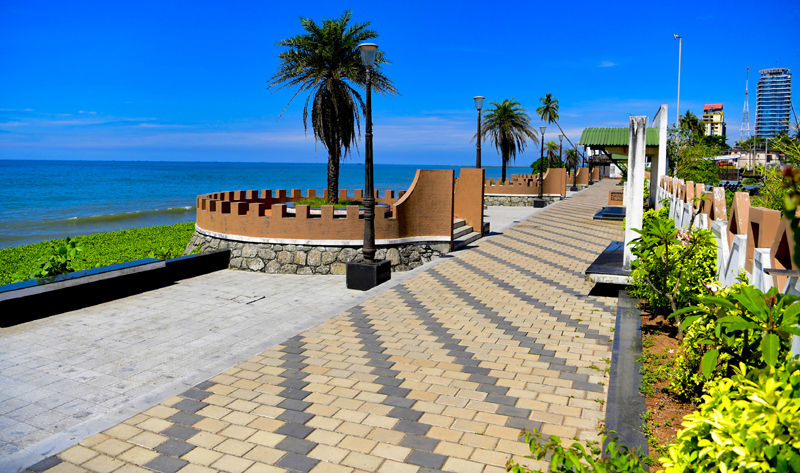
What makes Kerala's coast especially compelling for the thoughtful traveller is precisely what makes it different from other Indian beach destinations. The frequent estuary zones — where rivers and canals meet brackish lagoons before draining into the sea — naturally resist wall-to-wall resort development. Places like Kappil, Poovar, and Alleppey offer a geographical duality that any single-minded "beach destination" simply cannot replicate. This guide covers the entire arc of Kerala's coast — from Varkala's geological wonder in the south to the frontier beaches of Kasaragod in the north.
Kerala's Major Beach Destinations: A Quick Orientation
The coastline can be broadly understood through five regional clusters, each with its own personality, geography, and ideal visitor type.
| Beach Hub | Region | Character | Ideal For |
|---|---|---|---|
| Varkala | South Kerala | Geological cliffs, spiritual heritage, global backpacker village | Solo travellers, wellness seekers |
| Kovalam | South Kerala | Classic crescent beach, Ayurveda hub, historic lighthouse | Families, honeymooners |
| Alleppey / Marari | Central Kerala | Backwater confluences, coir culture, village life | Slow travellers, culture seekers |
| Fort Kochi / Cherai | Central Kerala | Colonial history, Chinese nets, island tranquillity | History lovers, photographers |
| Muzhappilangad / Bekal | North Kerala | Drive-in adventure, fort majesty, raw Malabar authenticity | Adventure seekers, history buffs |
Geology, Pilgrimage & the Global Village: South Kerala's Shoreline
Varkala — The Cliff That Changes Everything
If there is one Kerala beach that genuinely stops people in their tracks, it is Varkala. The Varkala Cliff is the only place along Kerala's entire 580 km coastline where ancient laterite escarpments rise directly out of the Arabian Sea — a dramatic wall of rust-red and ochre rock stretching approximately 6.14 kilometres, composed of Mio-Pliocene sedimentary rocks known as the Warkalli Formation.
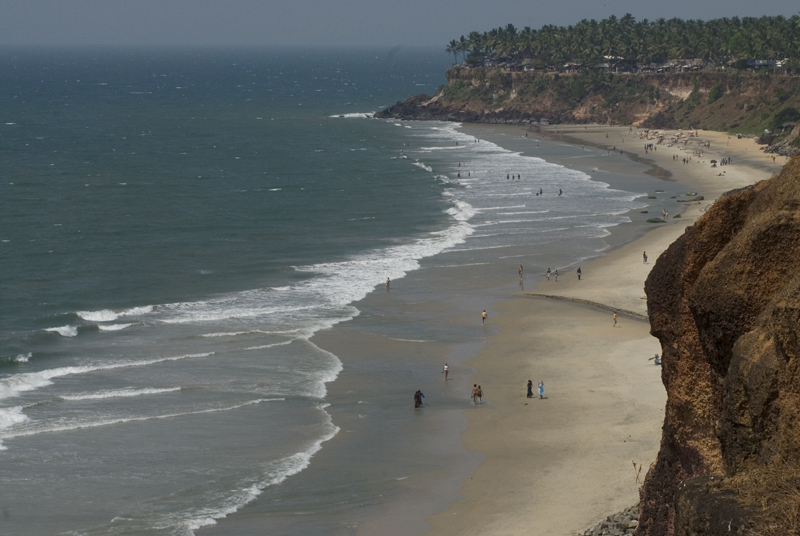
The Geological Survey of India has declared the cliffs a National Geological Monument, and they are under consideration as a potential UNESCO Geopark. Remarkably, the formation contains the mineral jarosite — considered a "Martian analogue" because of its similarity to minerals found on Mars by the NASA Opportunity rover. These cliffs are, therefore, not merely scenic; they are a window into planetary geology.
⚠ The Fragility Problem at Varkala
The cliffs are being actively eroded — not just by monsoon wave action, but by overburden pressure from resorts and cafés built directly on the cliff edge. The conscious traveller should choose accommodation set back from the cliff and support operators with measurable environmental commitments.
Varkala's beach is formally known as Papanasam Beach — "the destroyer of sins." The ancient Janardana Swami Temple, a 2,000-year-old Vaishnavaite shrine, sits above the cliff. Ancient Greek manuscripts referred to this shore as Balita, noting it as a port for foreign traders during the Shunga Dynasty. The beach holds not just sand but two thousand years of living human story.
Kovalam — The Crescent Queen
Just south of Thiruvananthapuram, Kovalam is where Kerala's international beach tourism story truly began. Its naturally segmented crescent coastline has made it one of the most-visited coastal destinations in South India.

Lighthouse Beach
Named for the iconic red-and-white Vizhinjam Lighthouse. A favourite for photographers, sunset watchers, and those wanting the classic Kovalam panorama.
Hawah Beach (Eve's Beach)
Ideal for swimming and sunbathing with beachside cafés and the most vibrant atmosphere of the three. The social hub of Kovalam.
Samudra Beach
Noticeably quieter — a retreat from the main tourist activity. The same beautiful coastline with considerably more peace.
Poovar & Pozhiyoor
Where the Neyyar River meets the Arabian Sea. Poovar's golden and black sands and mangrove canal rides make these the most secluded corners of south Kerala's coast.
Kovalam's journey from quiet fishing village to international destination began in the 1920s when the Regent Maharani Sethu Lakshmi Bayi of Travancore built her beach residence, the Halcyon Castle, here. Global fame arrived in the early 1970s when it became a key stop on the Hippie Trail. The Ayurvedic heart of Kovalam has endured through all of it.
🏨 Base Yourself on the South Coast
Compare Varkala cliff-top stays and Kovalam beach resorts, and check recent reviews before booking — accommodation quality varies more here than on a standard resort strip.
History, Coir & the World's Most Famous Backwaters
Alleppey — Venice of the East
To call Alleppey (Alappuzha) simply a "beach destination" would be a category error. The city is the gateway to an intricate, living labyrinth of lakes, rivers, and canals. The beach is anchored by a British-built lighthouse from 1862 and fronted by a historic pier that stretches into the Arabian Sea. Step back 500 metres from the sea and you are in a different world: houseboats, canal-side villages, paddy fields at water level, and the unhurried rhythms of a civilization that has always understood water as a resource, a road, and a way of life.
Alleppey is also the capital of Kerala's coir industry — an enterprise shaping this coastline's economy and culture since 1859. Coir, the natural fibre from coconut husks, is often called Kerala's "Golden Fibre," underpinning the livelihoods of tens of thousands of families, the majority of whom are women artisans. The International Coir Museum in Kalavoor offers live spinning and weaving demonstrations.
🌿 Vembanad — A Ramsar Wetland Under Pressure
- Vembanad Lake is a Ramsar Wetland of International Importance — one of the most ecologically significant wetland systems in South Asia.
- Home to 150+ fish species including the endemic Karimeen pearl spot, 190+ bird species, river otters, and rare aquatic mammals.
- Growth of houseboat tourism to over 1,000 vessels has introduced serious pollution and overcrowding.
- Choose certified eco-friendly operators, or opt for smaller canoe or shikara rides that dramatically reduce ecological impact.
Marari Beach — The Sanctuary of Slow Travel
A short distance north of Alleppey lies Marari Beach — the archetype of what Kerala coastal tourism can be at its most beautiful and unhurried. Village-style accommodation, natural materials, and an Ayurvedic sensibility define this shore. For even deeper seclusion, Marari Pozhi offers zero crowd pressure and the kind of silence that only an empty tropical beach can produce.
Fort Kochi — History, Art & the Iconic Chinese Nets
Fort Kochi's waterfront is defined by one of the most iconic images in all of Indian travel: the great Chinese fishing nets, believed to have been introduced by traders from the court of Kublai Khan in the 13th or 14th century. Silhouetted against the setting sun, with the old colonial quarter behind them, these nets have become a visual shorthand for the entire Kerala experience. Five centuries of layered colonial architecture — Portuguese churches, Dutch warehouses, British bungalows — surround the waterfront in a density found nowhere else on the Subcontinent.
Cherai Beach — The Tranquil Island Escape
On Vypeen Island north of Kochi, Cherai Beach offers something genuinely rare: a narrow strip where the Arabian Sea crashes on one side and still backwaters flow on the other, separated by a few hundred metres of coconut-grove-shaded sand. Dolphins have been spotted in the shallow waters here in the early mornings. The sunsets — viewed from a beach where the backwaters are visible behind you — are among the most beautiful on the Kerala coast.
Fortifications, Drives & Uncharted Shores: North Kerala's Wild Edge
Bekal Fort Beach — Laterite Majesty
In Kasaragod stands Bekal Fort — the largest, best-preserved fort in all of Kerala, built in the 17th century by Shivappa Nayaka of the Keladi Nayaka dynasty entirely from massive laterite slabs. It rises directly above the Arabian Sea with a commanding keyhole-shaped observation post that has surveyed this coastline for over 350 years.
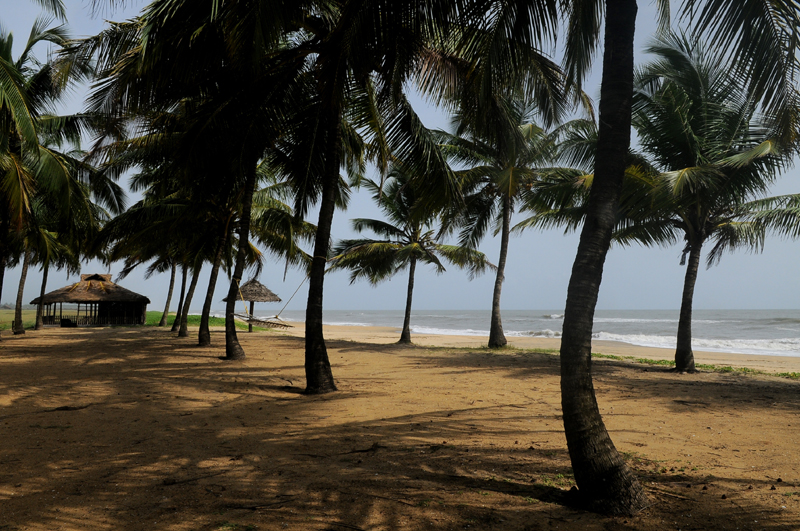
The fort's ramparts give you one of the finest coastal panoramas in Kerala — miles of undeveloped beach in both directions, the deep blue Arabian Sea beyond, and the Western Ghats framing everything from the east. The adjacent Pallikere Beach is noted for distinctive black sand dunes. Bekal has been a Special Tourism Zone since 1992, with development following a measured, eco-friendly approach.
Muzhappilangad & Kannur — Adrenaline and Ancient Ritual
Muzhappilangad Drive-in Beach near Kannur is Asia's longest drive-in beach — a 4-kilometre stretch of firm sand that vehicles can safely drive along at low tide. The experience of driving along an open beach with the Arabian Sea on one side and coconut palms on the other is one of the more joyful things you can do on the Kerala coast.
Kannur is also the heartland of Theyyam — one of India's most extraordinary ritualistic performance traditions, a spectacular form of divine possession and dance that has bound northern Kerala's coastal communities for centuries. Witnessing a Theyyam ceremony connects beach exploration to something ancient, sacred, and profoundly real.
Other Malabar Gems
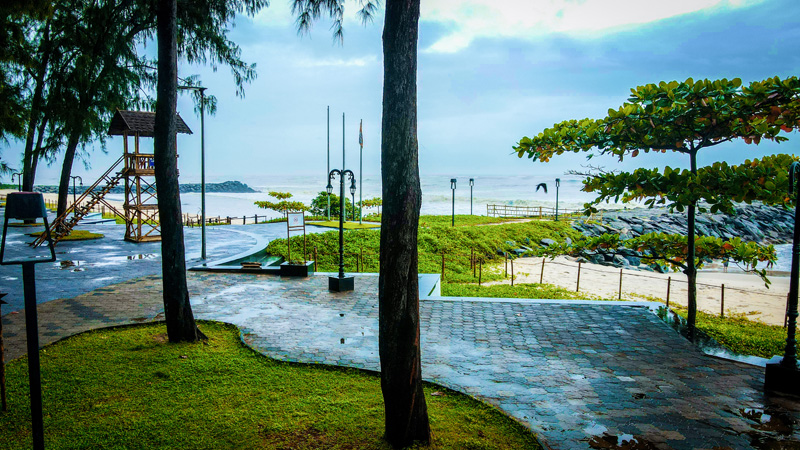
Kappad Beach
On 27 May 1498, Vasco da Gama landed here, opening the European sea route to India and transforming global trade. The commemorative rock pillar still stands.
Kozhikode Beach
Wide promenades, the iconic two-pier structure, and a deeply social atmosphere. Some of Kerala's finest biryani is a short walk from the shore.
Vallikunnu Beach
Velvety sands, thick coconut groves, and proximity to the Kadalundi Bird Sanctuary — one of South India's most important migratory bird habitats.
Kizhunna Ezhara Beach
Quiet sands, dramatic sunsets, local homestay warmth, and zero tourist infrastructure pressure. The beach version of a deep breath.
The Humane Lens: Livelihoods, Wildlife & the CRZ Challenge
The Fisherman's World — A Living Economy
Fishing is not a background detail of Kerala's coast — it is its heartbeat. The communities who have worked these shores for generations use techniques of remarkable ingenuity and ecological sensitivity: net types deployed with precision according to current, season, and species; artificial brush-pile reefs on the lakebed; and the ancient practice of bow-and-arrow fishing — a highly specialized technique requiring modified bows, reels, and custom arrows for rapid retrieval.
The contrast most instructive is visible at Varkala, where local fishermen drag heavy wooden boats to the water's edge each morning while foreign visitors surf a hundred metres away. Both are using the same sea. One is using it for breakfast; the other for recreation. Responsible travel demands we hold both realities simultaneously, and choose tourism providers that actively support the economic survival of fishing communities.
Mangroves, Ramsar Sites & Backwater Biodiversity
Kerala's coastal backwater system is ecologically extraordinary. Vembanad Lake and Ashtamudi Wetland are both Ramsar Wetlands of International Importance, together supporting 150+ fish species, 190+ bird species, river otters, and the Smooth-coated Otter. The Karimeen (pearl spot fish), Kerala's signature seafood, is endemic to these backwaters alone. Mangrove forests — particularly in Kadalundi and Paravur — act as natural nurseries for marine life, protect the coastline from storm surges, and function as critical carbon sinks.
The CRZ Conflict: Who Does the Coast Belong To?
No honest guide to Kerala's coast can avoid this question. The Coastal Regulation Zone (CRZ) Notification governs coastal construction and is at the centre of an ongoing conflict between fisherfolk communities, the tourism industry, and environmentalists.
| Stakeholder | Core Concern | Potential Impact |
|---|---|---|
| Traditional Fisherfolk | Protection of residential rights and livelihoods. Allege state seeks reclassification from CRZ III (rural, strict protection) to CRZ II (urban, closer construction). | Displacement from ancestral land; inability to rebuild traditional homes; loss of cultural identity |
| Tourism & Real Estate | Expanding hotel and resort infrastructure closer to the sea. | Uncontrolled development near ecologically fragile zones including Varkala Cliff |
| Environmentalists | Conservation of mangroves, backwaters, and fragile geological assets. | Accelerated ecosystem degradation and pollution in Ramsar-listed water bodies |
| Responsible Traveller | Authentic experience grounded in ethical consumption. | Has real power to shift the economic balance toward sustainable, community-centred tourism |
How to Travel Responsibly on Kerala's Coast
- Choose homestays and locally owned guesthouses over large resort chains — your money stays in the community.
- Book certified eco-friendly houseboat operators on Vembanad Lake; ask directly about their waste disposal practices.
- At Varkala, stay in accommodation set back from the cliff edge — cliff-top overburden measurably accelerates geological erosion.
- Visit the International Coir Museum in Kalavoor and buy from cooperative societies — your purchase supports women artisans.
- Opt for canoe or shikara rides in backwater areas rather than diesel-powered houseboats wherever possible.
- Look for Blue Flag certification at beaches like Chal Beach (Kannur) — it signals verified water quality, safety, and environmental standards.
- Never carry single-use plastics onto any Kerala beach — many areas now enforce this with genuine commitment.
What to Eat on Kerala's Coast: A Seafood Story
Kerala's coastal cuisine is the direct result of geography — coconut palms leaning over every beach, spice gardens on the slopes behind, and the Arabian Sea delivering its catch each morning. It is a cuisine built on freshness, layered spicing, and an absolute refusal to overcomplicate things that are already perfect in their simplicity.
Karimeen Pollichathu
Pearl spot fish endemic to Vembanad, marinated in rich spice paste, wrapped in banana leaf, and steamed. The banana leaf traps every nuance of flavour.
Kappa & Meen Curry
Boiled tapioca with a fiery coconut-milk fish curry. Humble, deeply satisfying, and about as "local Kerala" as food gets.
Malabar Fish Biryani
In the north, rice takes centre stage. Malabar Biryani — fragrant, spice-laden, cooked with whole fish or prawns — has its own dedicated pilgrimage following.
Mussels & Oysters
Freshly caught from backwaters around Kollam and Alappuzha. Stir-fried with shallots, coconut, and green chilli — a revelation for anyone who thinks they know what a mussel tastes like.
Chemeen (Prawn) Curry
Kerala's prawn curry elevated by raw mango, kokum, and freshly grated coconut. Eaten with rice or appam, the dish that converts people permanently.
Kozhikode Halwa & Chai
Famous wheat halwa with strong sweet tea at a beachside stall as the Chinese nets catch the evening light. One of travel's small perfect moments.
When to Come, How to Move & Where to Stay
Seasonal Wisdom
The ideal window for visiting Kerala's beaches is October to March — cool, dry weather, calm seas, all water activities running. March–April introduces heat but often brings spectacular wildlife sightings along backwater shores. June–August brings the full southwest monsoon — most water activities are restricted and swimming is generally unsafe, but the coast transforms into something genuinely beautiful: moody, green, mist-softened, and drawing photographers and writers who find something freeing in a beach that everyone else has left.
Start in Thiruvananthapuram
Gateway to Kovalam and Varkala. Two or three days covers both the cliffside wonder and the classic crescent beach, plus an evening at the extraordinary Padmanabhaswamy Temple.
Move North to Alleppey (3–4 days)
The 172 km drive takes ~3.5 hours through coastal backwater country. Spend at least one night on a houseboat. Visit the Coir Museum. Walk Marari Beach at dawn.
Kochi Hub (2 days)
Fort Kochi's waterfront and Chinese nets, Cherai Beach on Vypeen Island, and the city's extraordinary museums and restaurant scene.
North Malabar Extension (3+ days)
Kozhikode, Kappad, Kannur, Muzhappilangad Drive-in Beach, Bekal Fort — this stretch requires a dedicated trip. Its physical distance from the south contributes directly to its unspoiled character.
Beach Safety & Blue Flag Standards
Kerala's Beach Management Committees and the State Disaster Management Authority have significantly strengthened safety infrastructure. Recognized beaches are equipped with life buoys, rescue surfboards, and trained beach guards. Swimming is generally safe between October and April at established, guarded beaches. Before entering the water anywhere, observe the flag system: green = safe; yellow = caution; red = no swimming. The Blue Flag certification — an internationally recognized eco-label — sets the gold standard for Kerala's coastal experience. Chal Beach near Kannur is among Kerala's Blue Flag-certified beaches.
✈️ Flying Into Kerala's Coastal Airports
Trivandrum (TRV), Kochi (COK), Kozhikode (CCJ) and Kannur (CNN) each anchor a different stretch of this guide — compare fares and consider flight protection before booking.
🎒 Guided Coastal Experiences
Prefer a structured circuit linking several of these beaches with a private car and driver? This multi-day Kerala tour covers houseboat, resort and sightseeing stops along the route.
Some links on this page are affiliate links — if you book through them, we may earn a small commission at no extra cost to you. See our Affiliate Disclosure for details.
Frequently Asked Questions
October to March is the ideal window — cool dry weather, calm seas, and all water activities fully operational. March–April also brings excellent wildlife sightings near backwater shores. The monsoon (June–September) brings dramatic beauty but restricts most water activities and makes swimming unsafe at most beaches.
Varkala is arguably the most distinctive — the only place along Kerala's entire coastline where ancient Mio-Pliocene laterite cliffs rise directly from the Arabian Sea. Declared a National Geological Monument by the Geological Survey of India and a UNESCO Geopark candidate, it is also one of the oldest active pilgrimage sites in South India.
Yes — Muzhappilangad in Kannur district is Asia's longest drive-in beach, a 4 km stretch of firm packed sand that vehicles can safely drive along at low tide. One of Kerala's most genuinely exhilarating coastal experiences, popular with families and motorcyclists.
Karimeen Pollichathu (backwater pearl spot fish in banana leaf), Kappa and Meen Curry (tapioca with spicy fish curry), Malabar Fish Biryani from northern districts, freshly caught mussels and oysters from Kollam and Alappuzha, and Chemeen (prawn) curry with coconut and raw mango. In Kozhikode, finish with the famous wheat halwa at a beachside stall.
The Coastal Regulation Zone (CRZ) Notification governs construction and development along India's coastline. In Kerala, fisherfolk communities allege that rezoning from CRZ III (rural, strict protection) to CRZ II (urban) favours real estate over their traditional residential rights. Conscious tourists who choose operators demonstrating genuine CRZ compliance and community support help shift the economic balance toward equitable, sustainable coastal tourism.
Very much so. Kovalam's Hawah Beach, Cherai Beach, Alleppey Beach, and the drive-in experience at Muzhappilangad are excellent for families. Backwater boat rides are calm, safe, and fascinating for children. Always check the flag system before swimming. October to February offers the safest and most comfortable family beach conditions.
References
- Kerala Coastal Zone Management Authority — keralaczma.gov.in
- Kerala Centre for Integrated Coastal Zone Management — envt.kerala.gov.in
- CRZ Notification 2019 with Amendments — PDF, envt.kerala.gov.in
- Ramsar Convention Secretariat — Vembanad–Kol Wetland Site Information Sheet, 2002
- Geological Survey of India — National Geological Monuments List, 2020
- Soman, K. — Geological Evolution of Kerala, Geological Society Publication, 2002
- Coir Board of India — Annual Review, 2020 — coirboard.gov.in
- Times of India — Kerala's Eroding Edge: A Coast in Crisis — timesofindia.com
- Kerala Responsible Tourism Mission — Community-Based Coastal Tourism Report, 2022
- Kerala Fisheries Department — fisheries.kerala.gov.in
- CRZ Notification 2011 — panchayatwiki.lsgkerala.gov.in
- K.M. Panikkar — Malabar and the Portuguese, Times of India Press, 1929
- WWF India — Vembanad Ecosystem Threat Report, 2021
- CZMP Analysis — visionias.in