Which of the Twelve Fits Your Trip
A fast way to narrow things down before reading the full entries below.
| Destination | Type | Best Season | Best For | Crowds |
|---|---|---|---|---|
| Munnar | Highlands | Oct–Feb | Tea country, photography, families | High |
| Alleppey | Backwaters | Oct–Mar | Houseboats, couples, relaxation | Medium |
| Wayanad | Rainforest | Oct–Feb | Wildlife, tribal stays, trekking | Low |
| Thekkady (Periyar) | Wildlife | Oct–Mar | Boat safaris, spice trails | Medium |
| Kerala Coastline | Beach / Coast | Nov–Mar | Solo travel, yoga, Ayurveda | Medium |
| Fort Kochi | Heritage | Nov–Feb | History, art, walkable culture | High |
| Kumarakom | Backwaters | Oct–Mar | Birdwatching, community tourism | Low |
| Vagamon | Highlands | Oct–Mar | Paragliding, quiet meadows | Very Low |
| Kovalam | Beach | Oct–Mar | Families, Ayurveda, beach time | High |
| Bekal & North Malabar | Heritage | Oct–Apr | Offbeat culture, Theyyam ritual | Low |
| Silent Valley | Rainforest | Nov–Apr | Naturalists, serious birders | Very Low |
| Ponmudi | Highlands | Oct–Mar | Butterflies, day trips from Trivandrum | Low |
Where to Go and Why
Munnar — Tea Country at 1,600 Metres
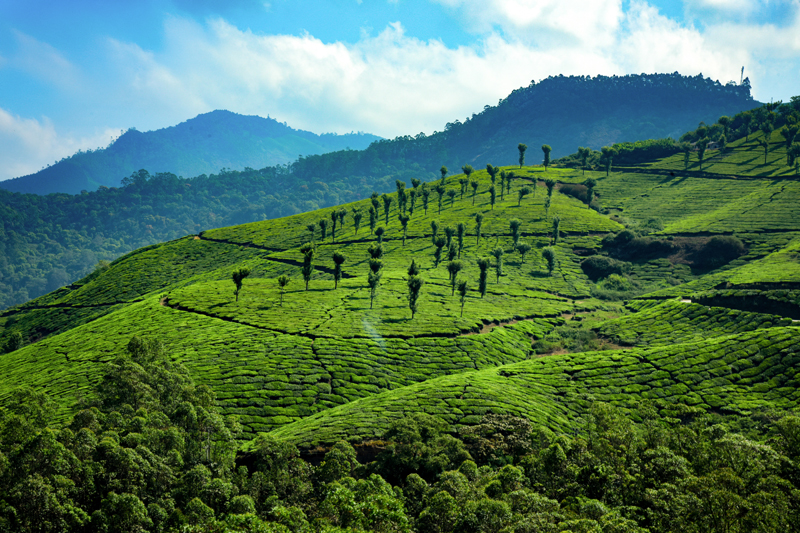
Photo © Dept. of Tourism, Govt. of Kerala
Munnar is South India's largest tea-growing region, and the landscape shows it — terraced estates roll across the hills for as far as you can see, broken up by shola forest pockets and cold-water streams. Eravikulam National Park, just outside town, is the last real stronghold of the Nilgiri tahr, an endangered mountain goat found only in this stretch of the Western Ghats; the park closes January to March for the tahr's calving season, so check before you plan a visit around it specifically.
The one thing worth knowing before you go: Munnar is genuinely crowded in peak season (December–January), and the tea-estate views that make it famous are best appreciated early in the morning before both the mist and the tour buses arrive. If you can visit in November instead of the December rush, you'll get nearly identical scenery with a fraction of the people.
Read the full Munnar guide →Alleppey — The Backwater Network
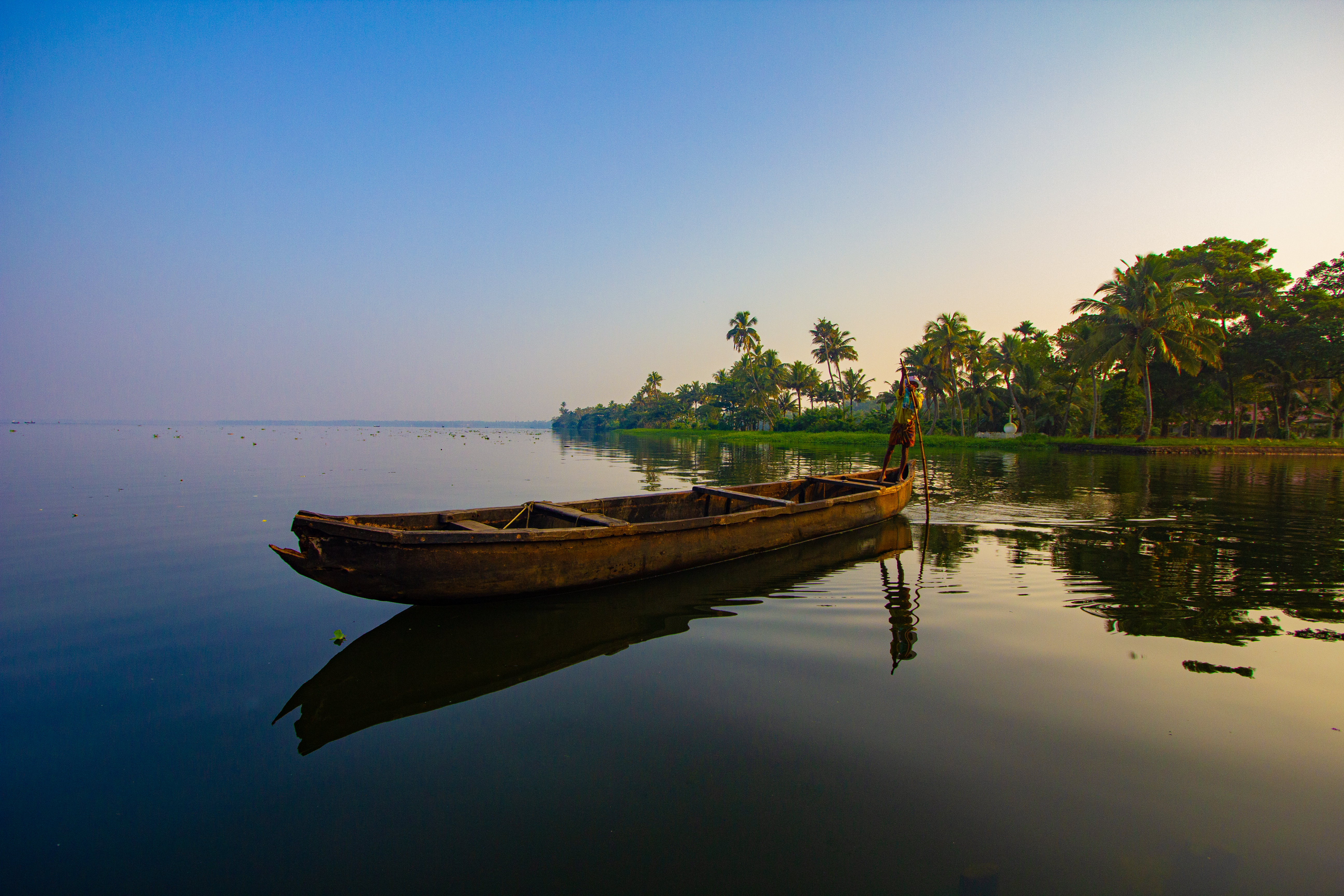
Photo © Dept. of Tourism, Govt. of Kerala
Alleppey is the entry point to Kerala's backwater network — 900 km of interconnected lagoons, canals and paddy-edged waterways, most famously explored aboard a Kettuvallam houseboat, a converted rice barge with a thatched roof and, on most modern versions, a small crew who cook onboard. The overnight houseboat experience is genuinely worth doing once; for a quieter, more intimate look at village life on the water, a narrow canoe through the smaller channels shows you things the houseboats simply can't reach.
The Nehru Trophy Snake Boat Race, held every August on Punnamada Lake, is worth timing a trip around if you can — it's one of India's more spectacular sporting spectacles, with 100-oarsman vessels racing in tight synchrony. For the ecology and village life behind the postcard, our full backwaters guide goes considerably deeper.
Read the full backwaters guide →Wayanad — Kerala's Tribal Highland Forest
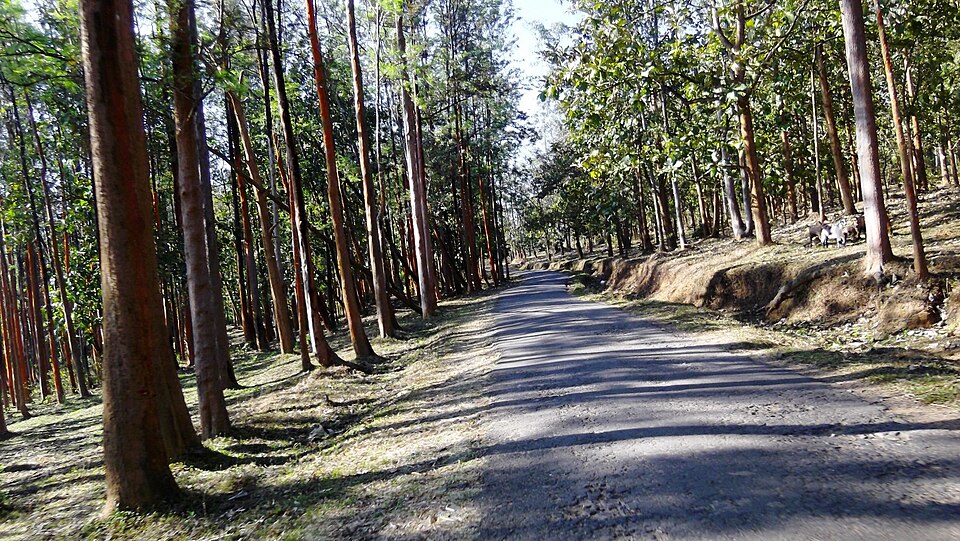
Photo © Dept. of Tourism, Govt. of Kerala
Wayanad sits where the Western Ghats meet Karnataka and Tamil Nadu, part of the 5,520 sq. km Nilgiri Biosphere Reserve — one continuous wildlife corridor linking three tiger reserves across state lines. Over 70% of the district is still forest, home to elephants, leopards, gaur and, if you're genuinely fortunate, a tiger. The Edakkal Caves hold rock engravings estimated at 6,000-plus years old, and Chembra Peak's heart-shaped lake at 1,800 m has become the district's signature image.
What sets Wayanad apart from most Kerala hill destinations is the tribal presence — roughly 18% of the district's population belongs to one of 36 recognised tribal communities, several of whom now run genuine, revenue-sharing forest homestays rather than performance-style "cultural tourism." Our full Wayanad guide covers this in real depth, including which operators are certified and how to choose responsibly.
Read the full Wayanad guide →Thekkady — Periyar Tiger Reserve
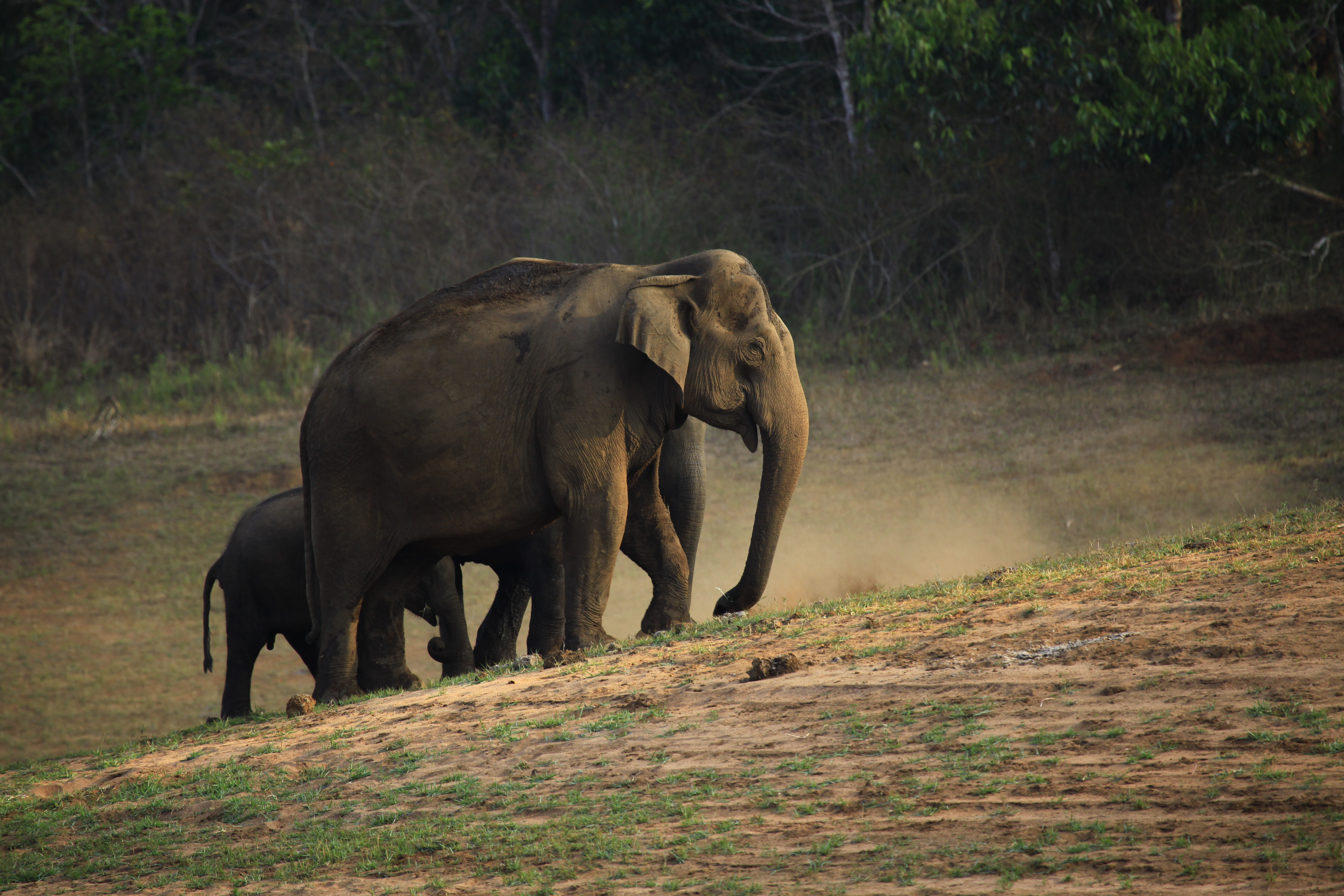
Photo © Dept. of Tourism, Govt. of Kerala
Periyar Tiger Reserve is built around a 26 sq. km lake created by the 1895 Mullaperiyar Dam, and the boat safari across it at dawn is one of the more reliable wildlife-viewing experiences in India — elephant herds coming down to drink, gaur at the treeline, occasionally a tiger's pugmarks if not the animal itself. The reserve's most distinctive feature is its Tiger Trail programme: former poachers, retrained as conservation guides, lead multi-day treks deep into the forest, a genuinely unusual model that's been cited internationally as a template for community-based conservation.
Kumily, the market town just outside the reserve, is Kerala's spice-trading hub — cardamom, pepper and cinnamon fill the air, and a plantation walk pairs naturally with a morning safari. If you're travelling here specifically for Sabarimala, it's worth knowing the temple sits inside this same reserve — we've written a separate, ecology-focused guide to that forest.
Read the full Periyar guide → Sabarimala's forest & conservation story →Kerala Coastline & Beaches
Kerala's 580 km coastline is far more varied than "beach holiday" suggests. Varkala's laterite cliffs drop 30 m straight into the Arabian Sea — a genuine geological rarity along the Indian coast, and the reason it's a designated National Geological Monument. Kovalam, further south, is the more classic crescent-beach resort town. Muzhappilangad, up in the north near Kannur, is Asia's longest drive-in beach. Fishing harbours like Neendakara in Kollam still run dawn auctions much as they have for generations, largely untouched by the resort economy further along the coast.
If you're choosing one stretch over another: Varkala rewards a few unhurried days (cliff walks, yoga, the sacred Papanasam spring beach at its base); Kovalam suits families and first-timers wanting infrastructure; the northern beaches near Kannur and Bekal suit travellers who'd rather skip the crowds entirely.
Read the full coastline & beaches guide →Fort Kochi — Where Five Centuries Overlap
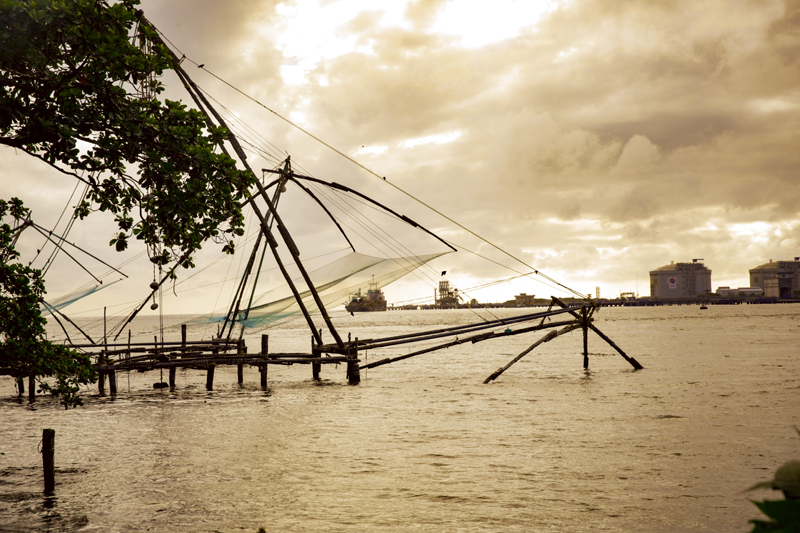
Photo © Dept. of Tourism, Govt. of Kerala
No other Kerala destination layers its history quite like Fort Kochi. The Chinese fishing nets on the waterfront, said to have arrived with traders from the court of Kublai Khan in the 14th century, still work the tide every evening. Mattancherry's 1568 Jewish Synagogue and the Dutch Palace's Ramayana murals sit within walking distance of each other in Jew Town, alongside antique spice traders whose shopfronts haven't changed much in decades. The Kochi-Muziris Biennale, held roughly every two years between December and April, turns the whole peninsula into a contemporary art venue.
It's compact and entirely walkable, which makes it a natural base for a day or two either side of a longer Kerala trip — most travellers combine it with Kochi's airport connections rather than visiting it as a standalone destination.
Read the full Fort Kochi guide →Kumarakom — Kerala's Model Eco-Village
Kumarakom is a cluster of small islands on Vembanad Lake, Kerala's largest, and it's better known internationally than its size would suggest — the UN World Tourism Organisation has cited its co-operative tourism model, where houseboat and homestay revenue stays with the local community rather than flowing to outside operators, as an example worth studying elsewhere. The Kumarakom Bird Sanctuary draws over 200 recorded species; migratory storks arrive from further afield between November and March, alongside resident kingfishers, egrets and herons year-round.
It sits within the same backwater ecosystem as Alleppey, just quieter and more focused on wildlife than on the classic overnight houseboat circuit — our backwaters guide covers the wetland ecology that underpins both places.
Read the backwaters & wetlands guide →Vagamon — The Quiet Highland
Vagamon sits about 45 km from Munnar but feels like a different country — sweeping meadows, pine groves and tea estates at 1,100 m, with none of Munnar's crowds. It's become India's most respected paragliding destination, thanks to consistent thermal winds over Thangalpara through the winter, and hosts an annual paragliding festival each December. The Murugan Hill trek and the Kurisumala Ashram, a working Cistercian monastery wrapped in morning mist, round out a quieter, slower version of Kerala's highland experience.
Our adventure tourism guide covers Vagamon's paragliding logistics — costs, operators, best months — alongside the rest of the Western Ghats' trekking and adventure circuit.
Read the adventure tourism guide →Kovalam — South Kerala's Beach Town
Kovalam's three connected crescent beaches — Lighthouse, Hawa and Samudra — are separated by rocky headlands and each has a slightly different character: Lighthouse Beach is the liveliest, with surf lessons and beachfront restaurants; Hawa is more family-oriented; Samudra, furthest north, is the quietest and lined with higher-end Ayurveda resorts. The red-and-white Vizhinjam Lighthouse at the southern tip can be climbed for a full coastal panorama, and the fishing harbour just south of it — one of the older ones on this coast — still launches boats at dawn.
It's the most infrastructure-heavy of Kerala's beach towns, which makes it a reasonable choice for a first visit or a family trip, if not the place to go looking for solitude.
Read the full Kovalam guide →Bekal & North Malabar — Kerala's Underexplored North
Most Kerala itineraries stop at Kozhikode, which leaves the entire northern stretch of the state — arguably its most culturally distinct region — largely unvisited. Bekal Fort, a 17th-century keyhole-shaped laterite fortification, is Kerala's largest, its ramparts giving views of the Arabian Sea on three sides. North Malabar is also the heartland of Theyyam, a ritual performance tradition where costumed performers are understood by the community to embody the deity itself — staged in open-air forest shrines, not on a theatre stage, roughly November through May.
This isn't a region to rush through on a day trip; Theyyam performances in particular follow a ritual calendar rather than a tourist schedule, and seeing one properly means planning around when a specific shrine is holding its festival.
Read the full Bekal & North Malabar guide →Silent Valley — India's Last Undisturbed Rainforest
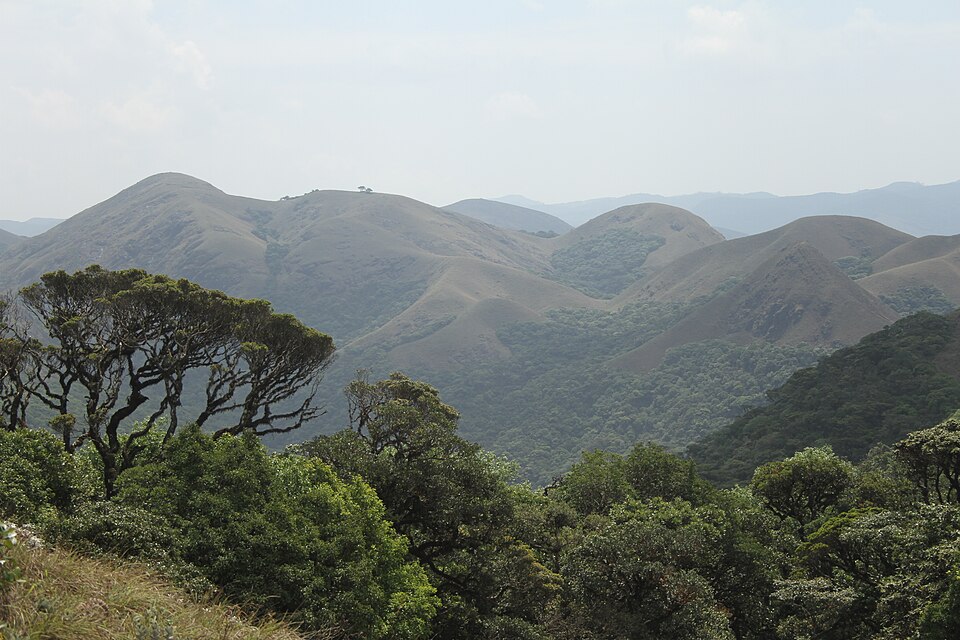
Photo: Davidvraju, CC0, via Wikimedia Commons
Silent Valley occupies a genuinely important place in Indian conservation history: a proposed hydroelectric dam on the Kuntipuzha river in the early 1980s would have flooded this tract of pristine rainforest, and the citizen-led campaign against it — one of India's earliest successful environmental movements — got the dam cancelled and the forest declared a national park in 1984. There's no mobile signal beyond the checkpoint, no road past Mukkali, and visitor numbers are deliberately capped at around 200 a day.
This is not a place for a casual half-day stop. A Forest Department permit and certified guide are mandatory, and the experience is defined by what's absent — traffic noise, crowds, artificial light — as much as by what's present: lion-tailed macaques, over 400 recorded bird species, and some of the last truly undisturbed lowland rainforest left on the subcontinent.
Read the full Silent Valley guide →Ponmudi — The Golden Peak
Ponmudi's name means "golden peak," and getting there is most of the point — around 300 hairpin bends climbing from Thiruvananthapuram through rubber plantations, cardamom estates and shola grassland to 1,100 m. What makes it genuinely distinctive is the butterfly diversity: over 300 recorded species, including the Southern Birdwing, India's largest butterfly, with a wingspan up to 19 cm. The Kallar river valley walk along the way offers natural swimming pools and a good chance of birdlife; Peppara Wildlife Sanctuary, a short distance further, adds sambar deer and the occasional leopard sighting for those with more time.
It works well as a day trip from Thiruvananthapuram, or as an easy add-on to a Kovalam or Varkala beach stay further down the coast.
Read the full Ponmudi guide →🌿 Ready to Turn This Into an Itinerary?
Whichever three or four of these you pick, book your stays and a guided day or two in advance — especially around Munnar, Alleppey and Fort Kochi in peak season (December–January).