There are mountains you climb. And then there are mountains that climb into you — that change how you understand the relationship between knowledge, landscape, and time. Agasthyarkoodam is the second kind. To trek this peak is to move through one of the world's most botanically concentrated landscapes, past communities who have kept plant knowledge alive for generations, and toward a summit where Hindu mythology, tribal custodianship, and conservation science converge in a single extraordinary place.
Located in the Neyyar Wildlife Sanctuary in Thiruvananthapuram district, Agasthyarkoodam — also known as Agasthyamala in Malayalam and Pothigai Malai in Tamil — stands at 1,868 metres as the highest peak in the Ashambu Hills, the southernmost range of the Western Ghats. It belongs to the Agasthyamala Biosphere Reserve, a UNESCO World Heritage Site that spans parts of Kerala and Tamil Nadu and encompasses the Neyyar, Peppara and Shendurney Wildlife Sanctuaries.
What sets this peak apart from every other trekking destination in Kerala is its astonishing botanical density. The forests here harbour over 2,000 species of medicinal plants — many endemic to this specific biosphere, found nowhere else on Earth. Among them is Arogyapacha, the "wonder herb" of the Kani tribe, whose revelation to scientists in 1987 produced India's most celebrated story of indigenous knowledge, pharmaceutical discovery, and benefit-sharing with a tribal community.
Location & Landscape
Where Is Agasthyarkoodam — Geography & Context
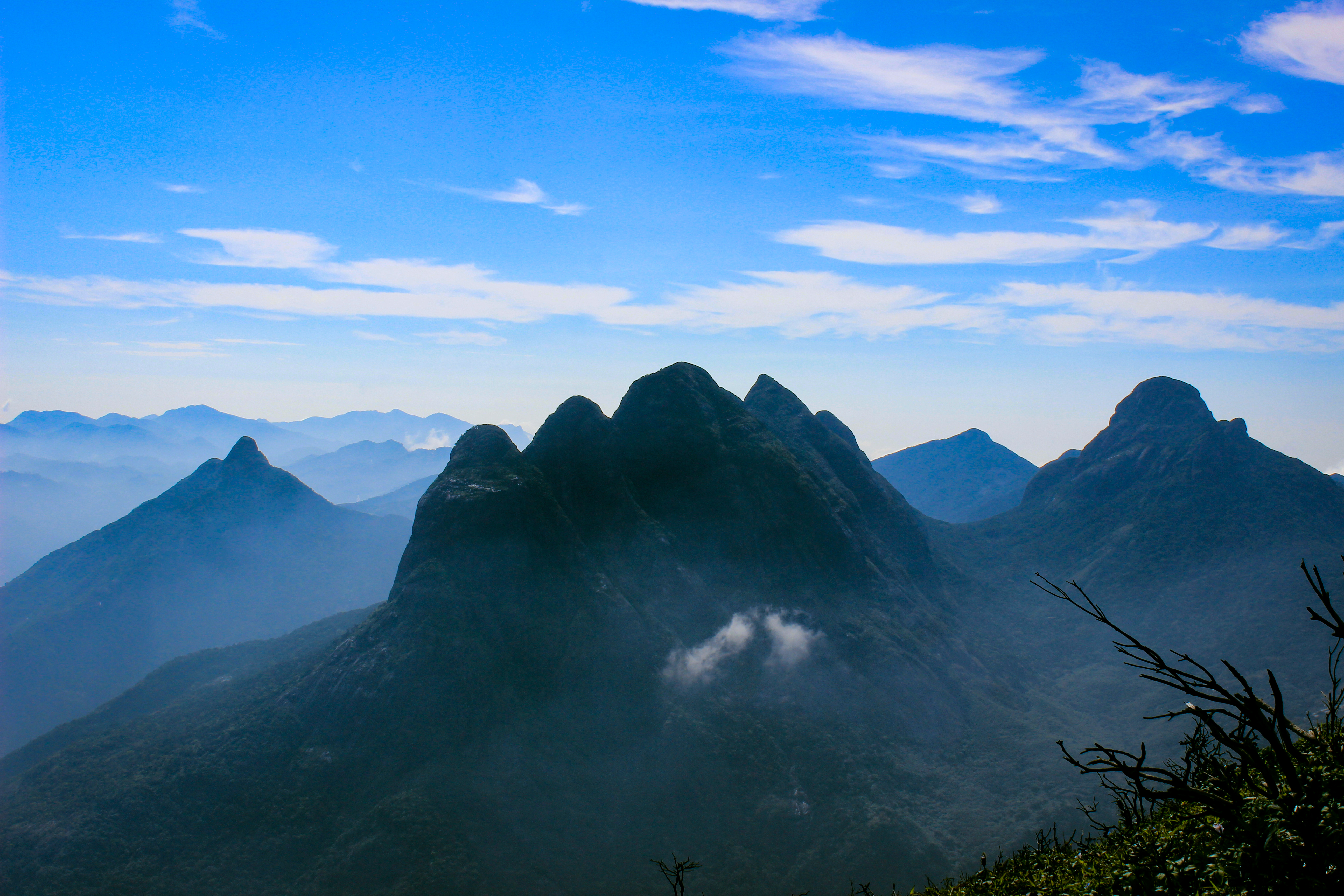
Agasthyarkoodam — the sacred peak of the southern Western Ghats. Courtesy: Department of Tourism, Govt. of Kerala.
Agasthyarkoodam sits on the Kerala–Tamil Nadu border, in the extreme south of the Western Ghats at approximately 8°39′N, 77°13′E. The peak is the highest elevation point in the Neyyar Wildlife Sanctuary and serves as the drainage head for the Neyyar River and its tributaries — the Mullayar and Kallar — which descend to supply water to Thiruvananthapuram city, just 50 km to the west.
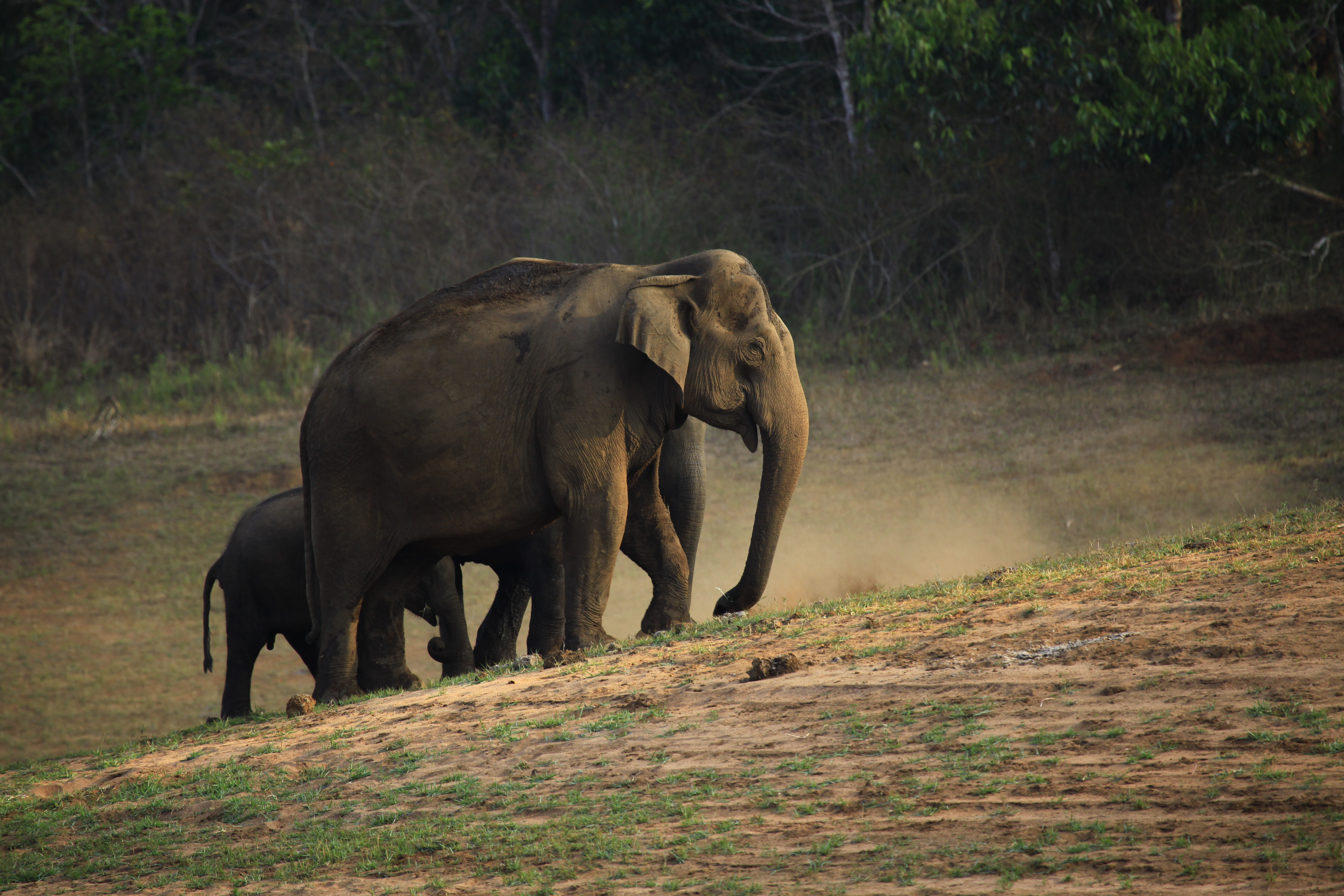
The Agasthyamala Biosphere Reserve covering the region spans approximately 3,500 km² across Kerala and Tamil Nadu, with a core zone of about 1,828 km². The reserve includes the Kalakkad–Mundanthurai Tiger Reserve on the Tamil Nadu side — one of that state's most significant protected areas. Together they form one of the most ecologically intact corridors in peninsular India, sheltering populations of tiger, Asian elephant, Nilgiri tahr, and leopard.
- Also Known As Agasthyamala · Agasthyakoodam · Pothigai Malai (Tamil)
- Altitude 1,868 metres (6,129 feet)
- District Thiruvananthapuram, Kerala
- Protected Area Neyyar Wildlife Sanctuary / Agasthyamala Biosphere Reserve
- Trek Season January to March only (Forest Dept. controlled)
- Base Camp Bonacaud (Brimore Estate area)
- Nearest Airport Thiruvananthapuram International (TRV) — 32 km
- UNESCO Status World Heritage Site (Western Ghats, 2012)
The forests on the slopes of Agasthyarkoodam transition through distinct vegetation zones with altitude: tropical moist evergreen forests at lower elevations give way to semi-evergreen and montane shola forests as you climb, with grassland patches emerging near the summit ridge. This ecological layering produces the extraordinary plant diversity that has made the region a global centre of botanical research.
Spiritual Significance
Sage Agastya & the Sacred Mountain
The mountain's name is inseparable from Hindu mythology. Agastya (also spelled Agasthya) is one of the Saptarishis — the seven great sages of classical Indian tradition, considered among the most revered figures in the Vedic and Puranic canon. According to tradition, Agastya chose this mist-shrouded peak in the southernmost Ghats as his place of extended meditation and learning. He is credited with transmitting Vedic knowledge southward across the Vindhya mountains and is considered a foundational figure in Tamil grammar and literature.
In Ayurvedic tradition, Agastya holds even greater significance — he is regarded as one of the foundational figures of Ayurvedic medicine, credited with codifying the knowledge of medicinal plants in the Southern Ghats. This attribution is deeply meaningful at Agasthyarkoodam, where the very landscape appears to justify the claim: the peak sits at the centre of one of the richest medicinal plant concentrations on Earth.
"Peaks such as Agasthyarkoodam were not approached casually. Entry required preparation, restraint, and ritual discipline. Access was limited not through physical barriers, but through cultural understanding: mountains demanded respect, not conquest."
— Kerala Nature Vibes · Nature as Deity in KeralaA small shrine at the summit holds an idol of Agastya Rishi. During the trekking season, pilgrims perform pujas here — creating a rare convergence of the physical act of trekking with genuine pilgrimage. For many visitors, especially Hindu pilgrims from Thiruvananthapuram and surrounding districts, reaching the summit carries spiritual weight alongside the achievement of altitude. The mountain is considered a kshetra — a sacred space — not merely a geographical high point.
Indigenous Custodians
The Kani Tribe — Guardians of the Herbal Mountain
Long before the forest department issued the first trek permit, long before the first botanist arrived with a specimen bag, the Kani tribe (also called Kanikaran) lived in and around the Agasthyamala hills in a relationship with the forest that can only be described as co-evolutionary. They are considered one of the oldest surviving forest-dwelling communities in India, their oral traditions, plant knowledge, and ecological understanding passed intact through generations.
Today approximately 400 Kani families live in settlements near the basins of the Karamanayar and Neyyar rivers, on the margins of the core forest area. Their relationship with the forest is governed by a knowledge system that identifies, classifies and utilises hundreds of plant species — for food, medicine, ritual, and material culture. The Kani's tribal physicians, known as Plathis, are the custodians of the deepest medicinal knowledge, carefully transmitted to selected successors within each lineage.
Several Kani members now work alongside the Kerala Forest Department as eco-development committee members, trek guides, and habitat monitors. Their participation is not merely logistical — it represents a hard-won recognition that the people who built this knowledge system over generations are its most qualified stewards. As guides, Kani members provide trekkers with an experience that no textbook or forest interpretation board can replicate: a living encounter with a knowledge tradition that the mountain itself shaped.
🏛️ The Kani and the Equator Prize
- In 2002, the Kerala Kani Community Welfare Trust received the Equator Prize from the United Nations Development Programme — a global honour for biodiversity conservation by indigenous communities.
- The award recognised the Kani's role in the discovery and benefit-sharing arrangement around Arogyapacha — a story that became a landmark in global discussions of indigenous intellectual property rights.
- The Trust, formed in 1997, includes representatives from 30 Kani settlements and manages community welfare initiatives alongside sustainable harvest monitoring.
- Despite this recognition, the community continues to face legal barriers around the collection of forest produce — a complex tension between conservation law and indigenous rights that remains unresolved.
The Wonder Herb
Arogyapacha — The Plant That Changed Indigenous Science
The story of Arogyapacha (Trichopus zeylanicus travancoricus) is one of the most remarkable convergences of tribal knowledge and modern pharmacology in Indian history. For generations, Kani tribespeople consumed the small black fruits of this plant during long, arduous journeys through the forest — it sustained their stamina, prevented fatigue, and was shared among their guides as a practical provision for demanding travel. The Plathis knew its properties intimately, but this knowledge had never left the forest.
In December 1987, Dr. Palpu Pushpangadan, then Director of the Jawaharlal Nehru Tropical Botanical Garden and Research Institute (JNTBGRI) in Palode, led an ethnobotanical survey team through the Agasthyamala hills. Their Kani guides were observed consuming small black fruits during the trek. When the scientists tasted the same fruits, they immediately experienced a surge of energy. After considerable persuasion, the guides revealed the source: Arogyapacha — a plant endemic to the shaded understorey of the Agasthyarkoodam biosphere.
Rigorous phytochemical, pharmacological and toxicological studies at JNTBGRI confirmed what the Kani had always known: Arogyapacha possesses significant anti-stress, anti-fatigue, antioxidant and immunomodulatory properties. This led to the development of Jeevani — a herbal formulation licensed to the Arya Vaidya Pharmacy of Coimbatore, hailed as an example of indigenous knowledge reaching the nutraceutical market through a formal legal agreement.
📌 The Benefit-Sharing Precedent: The agreement governing Jeevani's commercialisation was, at the time of signing, one of the first instances in India of a formal benefit-sharing arrangement between a research institution, a pharmaceutical company, and an indigenous tribal community. The Kani Trust received a share of the licence fee and a royalty on sales. This model was later cited in global biodiversity policy discussions and contributed to the framework of the Nagoya Protocol on access and benefit-sharing, adopted under the Convention on Biological Diversity in 2010.
The story does not end cleanly. Following commercialisation, the Arogyapacha plant was placed under forest protection status — meaning even the Kani themselves were legally restricted from harvesting it without permission. The community that had guarded this knowledge for generations found themselves navigating new legal constraints around what had been their traditional practice. Kani elders who were among the original guides who revealed the plant to scientists spent much of their lives advocating for the community's right to legally harvest and benefit from Arogyapacha — a chapter in the story that speaks to the ongoing tension between conservation law and indigenous rights.
⚠️ Important for Trekkers: Visitors to Agasthyarkoodam are strictly prohibited from collecting, uprooting or removing any plant material — including seeds, fruits, leaves or bark. This applies equally to Arogyapacha and all other plant species. The prohibition is not bureaucratic formality; it is the legal protection of an ecosystem that took millions of years to develop. Violations carry significant penalties under the Wildlife Protection Act.
Flora & Fauna
Biodiversity — A Living Library of Life
The Agasthyamala Biosphere Reserve is, by any measure, one of the most biodiverse landscapes on the planet. The concentration of species — particularly plant species — per unit area is exceptionally high by Indian standards. What follows is only a partial account.
Medicinal Plants — The Forest Pharmacy
The forests around Agasthyarkoodam harbour over 2,000 species of flowering plants, of which at least 50 are classified as rare and endangered. Many of these are endemic — meaning they exist nowhere else in the world outside this specific biosphere. The Agasthyamala hills are considered by botanists to be among the richest concentrations of medicinal plant species in India.
Arogyapacha
Trichopus zeylanicus travancoricusThe "wonder herb" of the Kani tribe — anti-fatigue, antioxidant, immunomodulatory. Endemic to the Agasthyarkoodam biosphere. Source of the herbal supplement Jeevani.
Chakkarakolli
Salacia oblongaTraditionally used by Kani healers for diabetes management. Modern pharmacology has examined its alpha-glucosidase inhibitory properties — relevant to blood sugar regulation.
Kallurukki
Rotula aquaticaIdentified by Kani guides as a traditional remedy associated with urinary calculus (kidney stones). Found along stream banks in the forest.
Ceropegia
Various Ceropegia spp.Multiple endemic Ceropegia species — lantern-shaped tuberous plants found only in the Western Ghats — grow in the forest floor. Highly vulnerable to collection.
Rare Orchids
Multiple generaThe biosphere harbours dozens of orchid species, several documented only here. Epiphytic orchids cling to the branches of montane forest trees at higher elevations.
Agasthyamala Balsam
Impatiens agasthyamalanaOne of several plant species named after the mountain. A touch-me-not relative found only in the high-altitude grassland margins of the Agasthyamala range.
Wildlife — The Forest's Hidden Residents
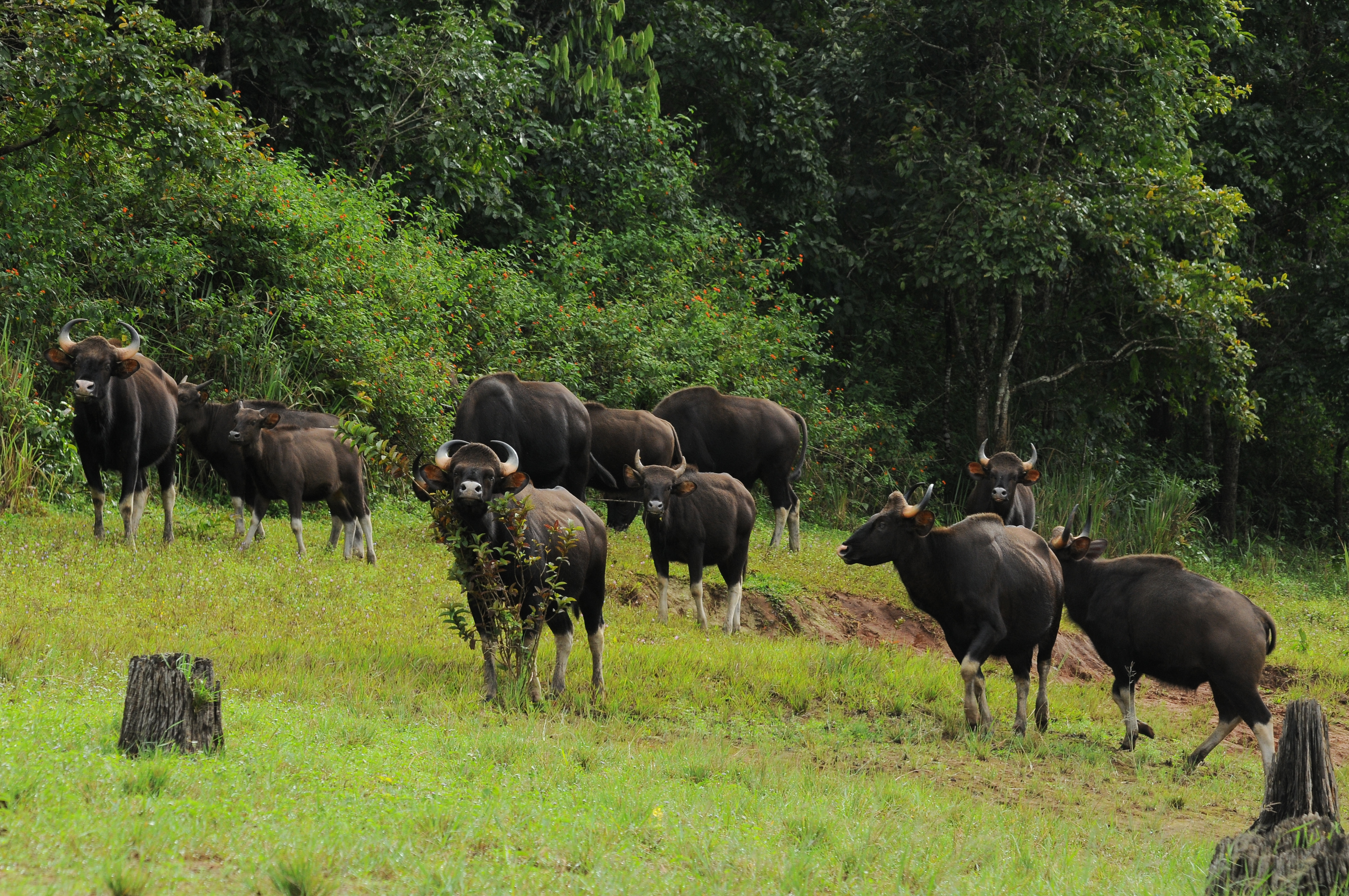
The Agasthyamala Biosphere Reserve links with the Kalakkad–Mundanthurai Tiger Reserve corridor across the Tamil Nadu border — an important connected habitat for large mammal movement in peninsular India. The wildlife here is as significant as the flora, though far less visible to trekkers due to the dense forest cover.
Bengal Tiger
Present in the reserve, though rarely encountered by trekkers. The corridor with Tamil Nadu is important for population connectivity.
Asian Elephant
Elephant herds move through the lower forest zones. Trail crossings are possible — guides are essential for safety.
Nilgiri Tahr
The endangered mountain goat of the Western Ghats occasionally appears on the exposed rocky ridges near the summit.
Leopard
Present throughout the biosphere. Mostly nocturnal; rarely seen by trekkers but tracks are occasionally observed.
Birds — 250+ Species
Malabar Whistling Thrush, Grey Junglefowl, Rufous Babbler, Nilgiri Flycatcher and multiple kingfisher species inhabit the trail zone.
Reptiles & Amphibians
Multiple endemic lizard and frog species have been described from this biosphere and are found nowhere else.
Trek Information
Trail Guide — The Trek to Agasthyarkoodam
The Agasthyarkoodam trek is classified as moderately difficult to difficult. It is not a technical climb and requires no specialist equipment, but significant prior trekking experience and good physical fitness are essential. The altitude, forest terrain, and distance make this considerably more demanding than most Kerala day treks.
Bonacaud Base Camp → Athirumala Rest House
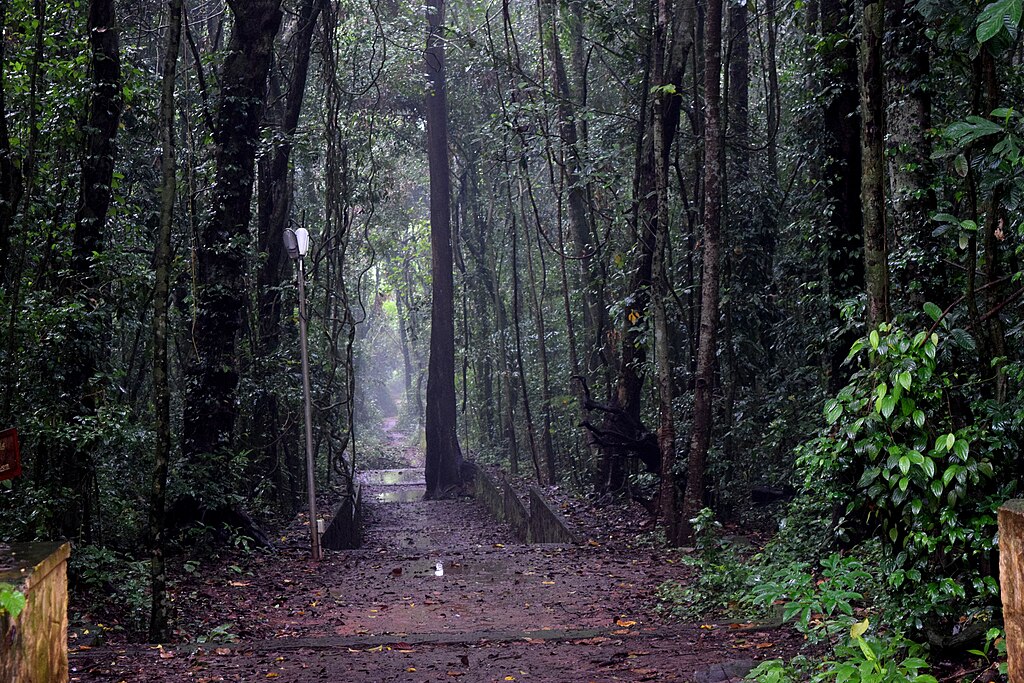
The trek begins from Bonacaud (Brimore Estate), about 50 km from Thiruvananthapuram. The path climbs through tropical evergreen forest, crossing streams and ascending steadily through increasingly dense vegetation. Bonacaud was historically a British-era tea garden station — remnants of the colonial plantation era are still visible. Athirumala hosts a forest rest house surrounded by a defensive moat — historically designed to protect against wild animal intrusion. This is the overnight camp.
Athirumala → Summit (1,868 m)
The summit push begins before dawn. The trail steepens significantly and emerges from dense forest into shola grassland near the ridge. The final approach crosses exposed terrain with panoramic views over the Ashambu Hills and the plains of Tirunelveli beyond. At the summit: the Agastya shrine, a small idol, and on clear days a view extending toward the Arabian Sea to the west and the Tamil Nadu plains to the east. This summit zone is considered by botanists to be among the most floristically significant areas in India.
Summit → Bonacaud (Return)
The descent follows the same route. Knees are tested on the long, steep sections. Trekking poles significantly reduce strain. The return forest walk in afternoon light reveals the forest differently — plants, bird calls, and light patterns change considerably from the morning approach. The group typically returns to Bonacaud by late afternoon.
🎒 Essential Gear for the Agasthyarkoodam Trek
- Sturdy trekking boots with good ankle support — the trail has loose rocks and wet roots
- Trekking poles — helpful for the steep descent from Athirumala to Bonacaud
- At least 3 litres of water per day — streams exist but water quality along the way is variable
- Lightweight warm layer — summit and pre-dawn Athirumala temperatures can drop noticeably in January
- Rainproof jacket — even in the dry season, short showers can occur in the forest zone
- Headlamp with spare batteries — the early summit push is in complete darkness
- High-energy trail food — there are no food stalls or shops anywhere on the route
- First aid kit including blister treatment, antiseptic, and oral rehydration salts
- Medical fitness certificate — required for the permit application
Permits & Planning
How to Get an Agasthyarkoodam Trek Permit
Agasthyarkoodam is among the most permit-restricted treks in India. The system is deliberately tight to protect the biosphere's fragile ecology. Foreign nationals are currently not permitted on the trek — only Indian citizens may apply. Demand consistently outpaces the daily quota, particularly for weekend dates in February.
| Month | Trek Open | Permit Availability | Weather | Recommended |
|---|---|---|---|---|
| January | Open | High demand — book early | Cool, clear skies, ideal visibility | Best |
| February | Open | Very high demand — weekends sell out quickly | Warm and dry, excellent summit views | Excellent |
| March | Partial | Season closes mid-March | Warmer, some haze building | Good |
| Apr–Dec | Closed | Not issued | Monsoon / wildlife breeding / conservation period | Not possible |
Step-by-Step Permit Process
Visit the Kerala Forest Department office at PTP Nagar, Thiruvananthapuram, or check the department's official online portal, as online applications have been gradually introduced.
Submit identity documents for all trekkers in your group (Aadhaar / voter ID / passport). Maximum group sizes are regulated — confirm the current limit with the department at the time of application.
Obtain a medical fitness certificate from a registered doctor confirming that each trekker is physically fit for strenuous trekking — this is a hard requirement, not optional.
Pay the trekking fee and conservation entry fee (fees are subject to periodic revision by the department). Retain your receipt — it must be shown at the Bonacaud entry checkpoint.
A government-approved guide is mandatory — you cannot enter the forest without one. Many Kani tribe members serve as certified guides. The department assigns guides, or you can request a Kani guide specifically.
Book well in advance for January and February weekends — permits for Saturday and Sunday dates typically exhaust quickly once released.
📌 A Note on Accuracy: Permit fees, quotas and application procedures are set and periodically revised by the Kerala Forest Department. Always confirm current fees, documentation requirements and exact opening dates directly with the Forest Department office in Thiruvananthapuram before planning your trip — these details can change from season to season.
Most trekkers fly into Thiruvananthapuram International Airport (TRV), then travel roughly 50 km to the Bonacaud base camp. Since permits often require an early-morning Forest Department check-in, staying overnight near Thiruvananthapuram or Bonacaud the night before is strongly recommended.
- 🏨 Compare stays near Thiruvananthapuram and Bonacaud on Booking.com — free cancellation on most properties makes it easy to plan around permit dates.
- ⭐ Check recent guest reviews of homestays and lodges on Tripadvisor before booking near the base camp.
- ✈️ Flight disrupted on the way to TRV? Compensair helps eligible travellers claim compensation for delays and cancellations, on a no-win-no-fee basis.
Kerala Nature Vibes may earn a small commission from bookings made through these links, at no extra cost to you. See our Affiliate Disclosure for details.
Ethics & Responsibility
Trekking Agasthyarkoodam Responsibly
Agasthyarkoodam is not a theme park trail. It is one of India's most significant biodiversity sites, the ancestral homeland of an ancient tribal community, and a sacred landscape for many devotees. The way you move through it carries real consequence. These principles are not suggestions — they are the minimum standard for anyone entering this ecosystem.
- Carry all waste out. There are no bins, no collection systems, and no disposal mechanism anywhere on the trail. Everything you bring in must leave with you — including food wrappers, empty bottles, and organic waste like peels and cores.
- Do not collect any plant material. This is a legal requirement under the Wildlife Protection Act. No seeds, fruits, leaves, bark, roots, or flowers — not even fallen material. The temptation around botanically significant species like Arogyapacha must be resisted absolutely.
- Stay on the designated trail. Off-trail movement destroys ground-level vegetation that may include rare endemic species. The damage from one person wandering off-trail is not recovered quickly — some communities of slow-growing forest plants may need years or decades.
- Maintain quiet near wildlife zones. The forest is a functioning habitat. Loud conversation, music, and shouting disturb feeding and breeding patterns. Quiet movement in the forest also improves your own chances of wildlife sightings.
- Follow your guide's instructions absolutely. Kani guides and Forest Department guides carry knowledge of current wildlife movements, trail conditions, and safety that no trekking app can match. In dense forest with elephant presence, this is not optional deference — it is basic safety.
- Respect the Agastya shrine. The summit site is a place of active worship. Remove footwear before approaching, maintain decorum, do not photograph devotees in prayer without consent, and avoid behaviour that disrupts the ritual context.
- Support Kani guides. Where possible, specifically request a Kani guide through the Forest Department. This directly supports these communities and helps sustain their role as forest custodians — a relationship the biosphere needs.
Frequently Asked Questions
Conclusion
Agasthyarkoodam — A Mountain That Demands Humility
Most peaks offer perspective. Agasthyarkoodam offers something rarer — perspective on perspective. Standing at its summit, you look out over a biosphere that contains extraordinary botanical diversity, sustained not by wilderness alone but by the accumulated knowledge of a people who learned, over generations, how to live with the forest rather than from it.
The Kani tribe, the shrine of Agastya, the Arogyapacha story, the permit system designed to restrict rather than promote access — all of these reflect the same core understanding: some places need protection more than they need publicity. The right way to visit Agasthyarkoodam is with a Kani guide, a limited-quota permit, and the genuine intention to leave the mountain exactly as you found it.
In an era of quick summits and adventure checklists, Agasthyarkoodam quietly insists on something different. It asks for preparation, patience, restraint, and respect. What it gives in return is generous in its own way: two days inside one of the Western Ghats' great living ecosystems, guided by people who have been its custodians for generations.