Embracing the Slow Movement of Healing
The global travel landscape keeps shifting, and by 2026 the direction is unmistakable. Wellness tourism is no longer a passing trend — it has become a genuine reckoning with how we spend our time and attention. Travellers are moving away from fast-paced, superficial itineraries toward restorative journeys that genuinely nurture the body, mind, and spirit for long-term well-being.1
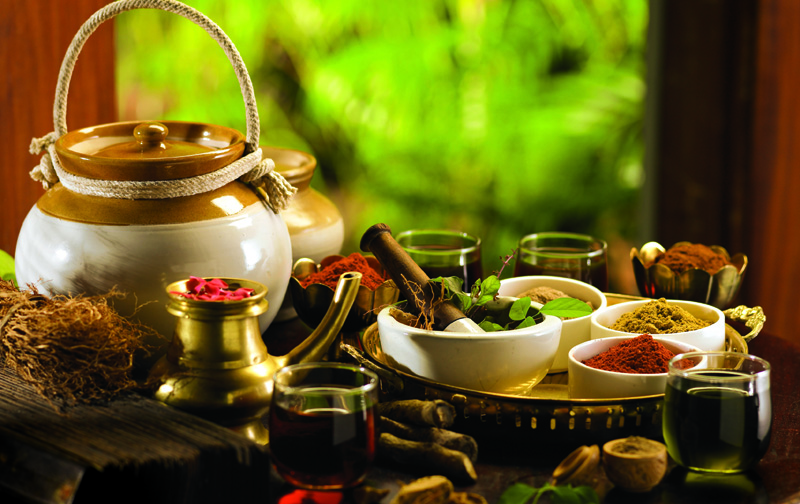
Ayurveda Medicines — the ancient raw materials of Kerala's healing tradition, sourced from the Western Ghats.
Courtesy: Department of Tourism, Govt of Kerala
This new era of travel prioritises authenticity, personalisation, and meaningful connection.2 Travellers are increasingly embracing Slow Travel — immersing themselves in destinations for extended periods to fully experience the culture and build genuine connections with the local environment and its people. India, leveraging its ancient healing heritage, is rapidly becoming a global beacon in this sector, actively promoted by governmental bodies highlighting its rich legacy in holistic health.
Kerala: Where Ancient Wisdom Meets Nature's Embrace
Within India, Kerala stands unparalleled — universally acclaimed as the "Land of Ayurveda."3 This distinction is earned through centuries of preserved, authentic practices supported by dedicated state initiatives and an unbroken lineage of hereditary Ashtavaidya physician families who kept classical knowledge alive across generations.
The unique ecosystem of Kerala — encompassing the serene backwaters, intense greenery, and extraordinary biodiversity of the Western Ghats — functions as a genuine catalyst for healing.4 The region is one of India's richest repositories of medicinal plants, with over 1,500 species used in Ayurveda.5 This is not incidental. The medicine grew here because the land produces it.
Understanding the Blueprint — Vata, Pitta & Kapha
The authority and success of Kerala Ayurveda rest upon its philosophical foundation — the Tridosha system.6 Every human being is governed by three biological energies derived from the five elements. Their balance ensures health; imbalance produces disease.7
Each Ayurvedic consultation in Kerala is tailored to the patient's Prakriti (constitutional type) and Vikriti (current imbalance), ensuring a genuinely individualised healing experience — not a standardised menu of treatments.8
Vata
Air + SpaceGoverns movement, breathing, nerve impulses, circulation. Imbalance: anxiety, insomnia, joint stiffness, constipation, scattered thinking.
Pitta
Fire + WaterGoverns digestion, metabolism, intellect, skin. Imbalance: inflammation, hyperacidity, anger, skin conditions, premature greying.
Kapha
Earth + WaterGoverns structure, lubrication, immunity, stability. Imbalance: obesity, lethargy, congestion, fluid retention.
The Western Ghats — Where the Medicine Grows
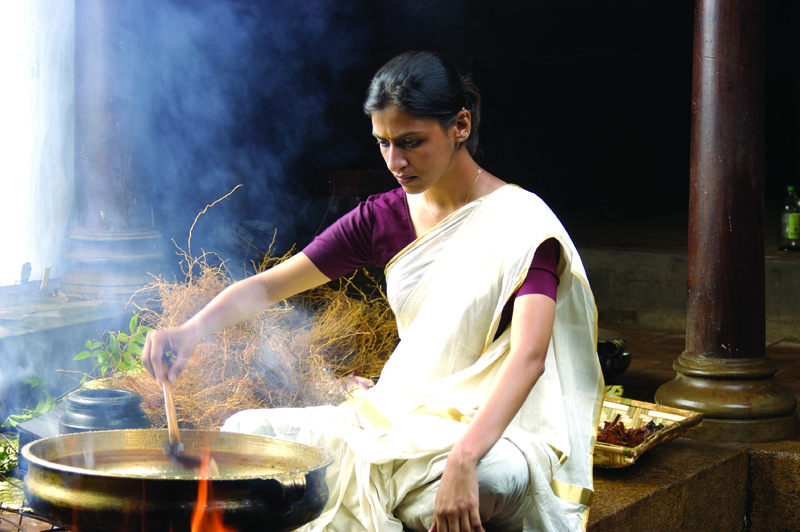
Preparation of Ayurveda Medicines — traditional hand-processing of herbs in a Kerala Ayurvedic pharmacy.
Courtesy: Department of Tourism, Govt of Kerala
The Western Ghats is one of the world's eight "hottest" biodiversity hotspots and the primary source of medicinal plants used in Kerala Ayurveda.9 More than 700 species of medicinal plants have been identified and catalogued from this region.10 Many formulations used in Kerala Ayurveda centres today are prepared from herbs grown within a day's travel of where they are administered — a living supply chain of extraordinary ecological and therapeutic significance.
The effectiveness of authentic Kerala Ayurveda is directly dependent on the ecological sustainability of these herbal resources. The best Ayurveda retreats maintain their own herb gardens or source from certified organic farms in the Ghats, making environmental conservation an active part of their therapeutic model.11
The Monsoon Magic — Aligning Healing with Natural Rhythms
Classical Ayurvedic texts — the Charaka Samhita, Ashtangahridayam, and Sushruta Samhita — unanimously identify the monsoon season (June–September) as the optimal period for Panchakarma detoxification and medicated oil therapies.12
🌧️ Why Monsoon is the Ideal Season — The Scientific Reasoning
- High humidity (75–90%) keeps skin pores maximally dilated, significantly increasing transdermal absorption of medicated sesame and herbal oils12
- Cool temperatures reduce sweating during oil therapies — oils remain on the skin surface longer and penetrate more slowly into the tissue13
- Dust-free air reduces the inflammatory burden on respiratory and lymphatic systems, making Nasya nasal therapy measurably more effective
- Karkidaka Masam (July–August, the final Malayalam month) is considered the most potent window — many classical centres reserve their most intensive programmes for this period
- Retreat prices are 30–50% lower than peak season; centres are significantly less crowded
Panchakarma — Five Actions, Lasting Balance
Panchakarma — literally meaning "five actions" — is not a massage programme. It is the body's definitive internal purification process: a therapy designed to eliminate accumulated wastes, clear blocked channels, and dislodge deeply embedded toxins (Ama), fundamentally re-establishing equilibrium among the Tridoshas.14
Requiring a minimum of 7 to 21 days, correctly administered Panchakarma eliminates toxins accumulated over years, recharges the body and mind, reduces chronic stress, enhances immune function, improves digestion, and establishes a new stable doshic baseline.15 It is a shift from symptomatic relief to comprehensive systemic renewal.
"Panchakarma is not a spa treatment. It is a medical procedure, as precise and consequential as surgery — conducted over days rather than hours, requiring the same level of clinical supervision, preparation, and post-operative care."
— Kerala Nature Vibes, Wellness Research NotesDecoding the Core Healing Treatments
The Panchakarma protocol integrates several specialised treatments developed within the Kerala Ayurvedic tradition, focused on maximum tissue penetration, neuromuscular renewal, and hormonal rebalancing. Each is individually prescribed by the vaidya after your dosha assessment — never selected from a menu.
Njavarakizhi (Navarakkizhi)
Medicated Rice Bolus Therapy — Unique to KeralaNavara rice — a specific therapeutic variety — is cooked with herbal powders, bundled into cloth boluses, dipped in warm medicated milk and oil, and applied rhythmically over the entire body by two therapists working in synchrony. The process induces therapeutic sweating, drives the preparation deep into tissue, and simultaneously nourishes the skin and nervous system.16
Particularly effective for pacifying Vata Dosha — prescribed for neurological disorders, arthritis, muscle degeneration, and post-stroke rehabilitation. Strengthens the nervous system, improves skin texture, and restores muscular tone. This therapy is not found in classical form anywhere outside Kerala.17
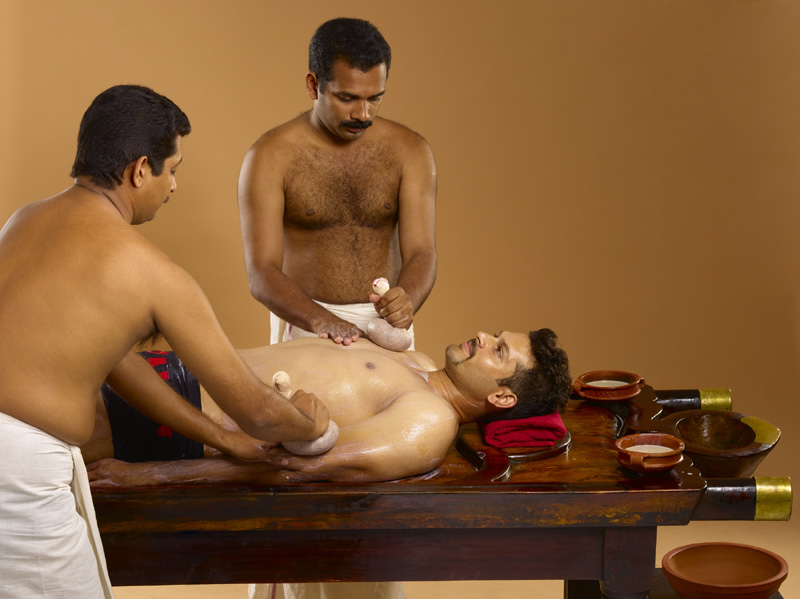
Navarakkizhi — medicated Navara rice bolus therapy, one of Kerala Ayurveda's most distinctive and powerful treatments for neurological and musculoskeletal conditions.
Courtesy: Department of Tourism, Govt of Kerala
Pizhichil (Thaila Dhara)
Synchronised Warm Oil Pouring — "Treatment of Kings"Two therapists dip linen cloths into warm medicated oil and squeeze them rhythmically over the patient's entire body in long, synchronised strokes — combining Snehana (oleation) and Swedana (sudation) simultaneously. The uninterrupted flow of warm medicated oil for 60–90 minutes achieves a depth of tissue penetration that no single-application massage can replicate.18
Indicated for neurodegenerative conditions, rheumatoid arthritis, degenerative joint disease, muscular dystrophy, and chronic fatigue. Thermal stimulation and deep oil absorption activate parasympathetic responses, measurably reducing cortisol and systemic inflammation.
Ksheeradhara
Medicated Milk Stream TherapyKsheeradhara uses medicated milk — processed with cooling herbs including Sandalwood (Chandana) and Vetiver (Ramacham) — poured in a continuous stream over the forehead or entire body. The lactic base enhances skin hydration and mental tranquillity while gently lubricating the cranial nerves.19
Especially effective for Pitta-related disorders: insomnia, hypertension, premature greying, burning sensations, and inflammatory skin conditions. While Shirodhara uses warm oil and acts neurologically, Ksheeradhara cools and calms — the distinction is clinically significant.20
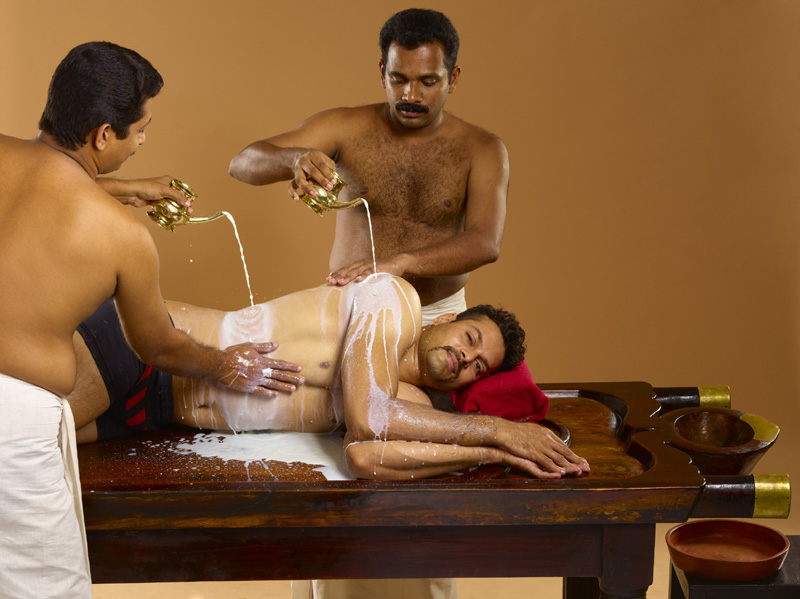
Ksheeradhara — the cooling, Pitta-pacifying milk stream therapy. Prescribed for insomnia, hypertension, premature greying, and inflammatory skin conditions.
Courtesy: Department of Tourism, Govt of Kerala
Shirodhara
Forehead Oil Stream Therapy — Stream of TranquillityA steady flow of warm medicated oil is continuously streamed onto the ajna point (the third eye centre) from a suspended vessel maintained at a precise height and flow rate. This rhythmic motion induces deep relaxation, balancing the hypothalamic-pituitary-adrenal (HPA) axis and measurably reducing stress hormones.21
Neurophysiological studies confirm that Shirodhara stimulates alpha brain-wave activity, enhancing mental clarity and emotional stability. Indicated for anxiety disorders, hypertension, chronic insomnia, post-traumatic stress, migraine, and cognitive fatigue.22
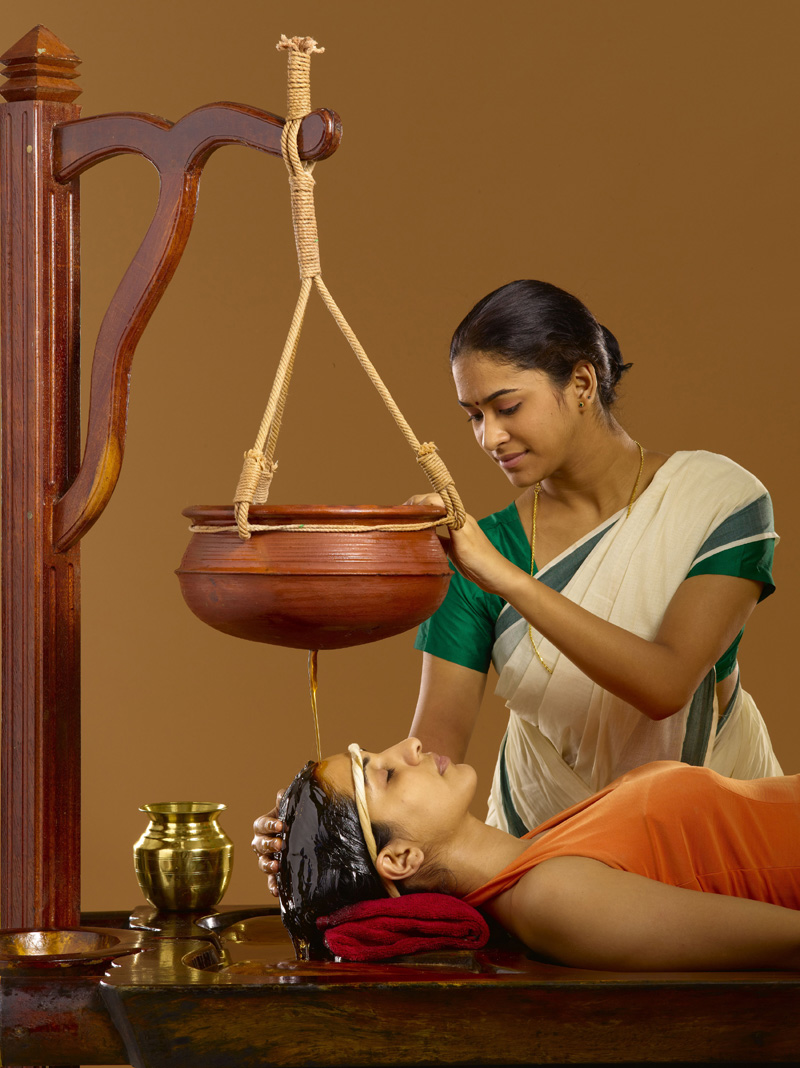
Shirodhara — the neurological oil stream therapy proven to stimulate alpha brain-wave activity and reduce cortisol. Prescribed for anxiety, insomnia, hypertension and migraine.
Courtesy: Department of Tourism, Govt of Kerala
Ilakkizhi (Elakizhi)
Herbal Leaf Bolus Sweating TherapyHeated boluses of fresh medicinal leaves — tied in cloth and soaked in warm medicated oil — are used to massage the body in rhythmic strokes. The leaves generate therapeutic heat through their own phytochemical activity combined with the medicated oil, stimulating circulation and inducing the sweating that mobilises toxins from peripheral tissues.23
The herbal blend typically includes Castor leaves (Eranda), Tamarind leaves (Puli), and Calotropis (Akanda), which act synergistically to reduce pain and inflammation. Indicated for musculoskeletal disorders, back pain, rheumatism, and sports injuries.24
Sarvanga Dhara
Whole-Body Medicated Oil Bath TherapySarvanga Dhara involves the continuous, synchronised pouring of warm medicated oil or medicated buttermilk over the entire body for 40–60 minutes by two therapists working in perfect coordination. Sustained thermal stimulation and uninterrupted oil application achieve penetration and nervous system regulation that no localised therapy can replicate.25
The gentle pressure and thermal stimulation activate parasympathetic responses, producing measurable calming effects on heart rate, blood pressure, and cognitive clarity. Recommended for stress-related hypertension, neuropathic pain, degenerative spinal conditions, and systemic inflammatory disorders.26
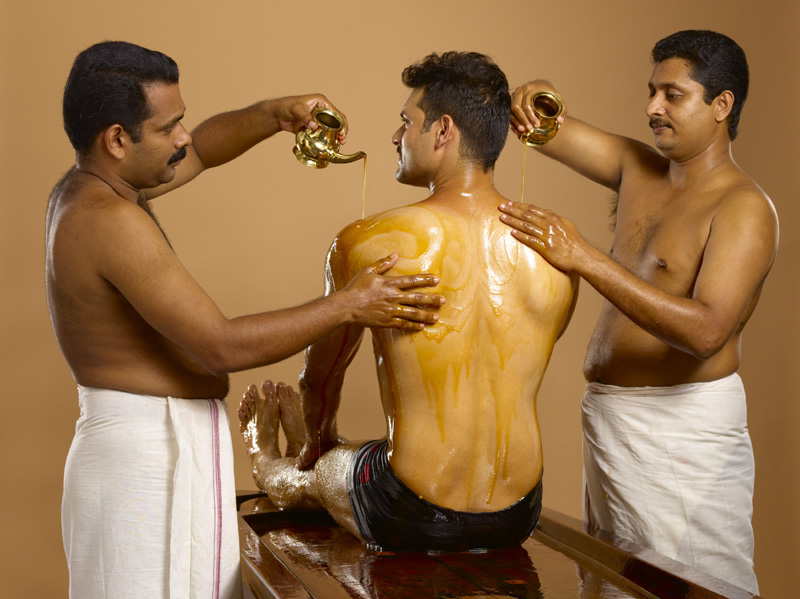
Sarvangadhara — the whole-body medicated oil bath conducted by two therapists in synchrony for 40–60 minutes. Prescribed for neuropathic pain, hypertension and degenerative spinal conditions.
Courtesy: Department of Tourism, Govt of Kerala
Beyond Oil Therapies — Yoga, Meditation & Sattvic Diet
The healing journey in an authentic Kerala Ayurveda retreat is profoundly holistic. Daily guided yoga sessions cultivate physical vitality and mental clarity that act synergistically with the purification therapies.16 The yoga prescribed is not generic asana — it is specifically sequenced to support the current treatment phase.
Similarly, Sattvic cuisine — pure, freshly cooked, vegetarian meals balanced according to the six Ayurvedic tastes — is prescribed medicine, not optional food service. Timings, portion sizes, specific ingredients, and serving temperatures are determined by the vaidya as part of the therapeutic protocol.18 The food and daily movement are integral medical tools, personalised to foster inner and outer harmony.19
Green Leaf Certification — The Gold Standard of Trust
Given that Ayurveda retreats fall into the YMYL category — Your Money or Your Life — verifiable clinical quality is non-negotiable.20 The Kerala Tourism Department, in partnership with the State Department of AYUSH, maintains a formal classification system: Green Leaf (highest standard) and Olive Leaf (secondary standard) certification for Ayurvedic centres.21
- Verified vaidya qualifications: BAMS degree minimum; MD Ayurveda preferred for Panchakarma supervision
- Regulated medicinal supply chain: Oils and preparations sourced from registered manufacturers or prepared in-house, reducing heavy metal contamination risk24
- Treatment room standards: Specific infrastructure for Dhara tables, treatment vessels, and sterilisation protocols
- Clinical consultation requirement: Individual patient consultation, Nadi Pariksha (pulse diagnosis), and written treatment prescription before any therapy begins22
⚠️ Heavy Metals & Quality Control — A Real Safety Concern
Certain Ayurvedic products sold over-the-counter or online have been found to contain lead, mercury, or arsenic at levels exceeding internationally safe limits.24 This risk is essentially eliminated at Green Leaf certified centres where the medicinal supply chain is regulated. Bring all current medications and recent lab results to your initial consultation — Ayurvedic preparations can interact with pharmaceutical drugs.25
🏨 Find & Book Your Kerala Ayurveda Retreat
Compare Green Leaf certified centres, wellness resorts, and heritage vaidya homes across Kerala.
Investment in Wellness — What to Budget for 2026
The financial commitment for an intensive, authentic Ayurvedic retreat varies significantly based on clinical specialisation, accommodation quality, and duration. Most deep treatment programmes require 7–14 nights minimum.37
| Retreat Tier | Cost Per Night (USD / INR) | Typical Duration | Key Features |
|---|---|---|---|
| Luxury Villas / 5-Star | $250–$600+ (₹20,000–₹50,000) | 7–21 Days | Private vaidya, personalised medical programme, luxury accommodation, Sattvic cuisine, yoga38 |
| Mid-Range / 4-Star | $100–$180 (₹8,000–₹15,000) | 7–14 Days | Certified doctor supervision, traditional therapies, comfortable lodging, daily yoga39 |
| Authentic Hospital / Budget | $40–$90 (₹3,000–₹7,000) | 7 Days minimum | Clinical focus, qualified vaidya, high therapeutic rigour, clean accommodation39 |
| Backwater / Houseboat | $70–$150 (₹6,000–₹12,000) | 3–7 Days | Nature immersion, Ayurvedic massage, locally sourced food, waterway setting39 |
✈️ Flights to Kerala's Four International Airports
Kochi (COK) · Thiruvananthapuram (TRV) · Kozhikode (CCJ) · Kannur (CNN). Compare fares and protect your journey.
Preparing Body & Mind — The Pre-Cure That Makes Panchakarma Work
The effectiveness of Panchakarma is profoundly dependent on preparation undertaken in the weeks before arrival — known as Purvakarma (pre-cure). This period maximises the mobilisation of Ama (accumulated toxins) and ensures the body is fully receptive when the intensive treatment phase begins, especially during Snehapana (progressive medicated ghee intake).40
| Area | Recommended Practice (1–2 Weeks Prior) | Why It Matters |
|---|---|---|
| Dietary Adjustment | Pure vegetarian diet — freshly cooked, easily digestible (rice, vegetables, dal). No meat, heavy foods, or reheated meals.40 | Prepares digestive fire (Agni) and ensures optimal Snehapana response |
| Hydration | Warm water only (ginger, tulsi infusions). Avoid cold drinks and iced beverages.40 | Keeps Srotas (internal channels) open for better herbal absorption |
| Stimulant Elimination | No coffee, tea, alcohol, or nicotine for 3–5 days prior.40 | Reduces nervous system strain; eases transition into detoxification |
| Routine & Sleep | Sleep by 10 PM; wake at sunrise. Reduce screen exposure in evenings.40 | Aligns circadian rhythm with the body's natural nocturnal detox cycle |
The Initial Consultation — What to Bring
The Ayurvedic consultation is a holistic diagnostic dialogue — pulse reading, tongue assessment, eye and skin examination, and a detailed enquiry into daily routine, diet, sleep, stress, and emotional patterns — conducted before any treatment is prescribed.41 Bring all relevant medical documents, a list of current medications, and recent lab results. Certain Ayurvedic preparations interact with pharmaceutical drugs.42
For pre-retreat orientation, the 1-Night, 2-Day Ayurveda Retreat in Fort Kochi on Viator offers an accessible introduction combining authentic treatments, yoga, and guided nutrition counselling. Light, breathable clothing is ideal for yoga and meditation sessions; many resorts provide organic cotton treatment garments, so pack minimally.
Ensuring Your Retreat Gives Back
Slow Travel in Kerala — Depth over Speed
Slow Travel aligns perfectly with the therapeutic rhythm of an intensive Ayurvedic retreat. By committing to an extended stay (7–21 days), travellers create the time necessary for genuine immersion — building real connections with the landscape, practitioners, and the community that makes the medicine possible.30
Supporting the Community Web
Ethical and regenerative tourism ensures that spending directly benefits the local community and ecosystem.32 In Alappuzha, Kumarakom, and Kollam, the Ayurveda tourism economy sustains livelihoods — from herb farmers and pharmacy workers to yoga teachers and village artisans. By selecting resorts that source from local herbal farms and employ from surrounding communities, you help preserve the therapeutic tradition and the cultural ecosystem that carries it.33
Curated Retreat Categories for 2026
-
Category I: Personalised Backwater Healing (Alappuzha / Kumarakom)
Retreats in the backwater belt focus on deeply customised treatment journeys (7–21 days) for stress, autoimmune concerns, orthopaedic issues, and metabolic disorders.26 The tranquil waterways of Alappuzha and Kumarakom provide an ideal natural environment for healing and transformation.27
Compare stays via Booking.com and check reviews on TripAdvisor.
-
Category III: Clinical Hospital-Grade Ayurveda
If therapeutic outcome over luxury is your priority — AYUSH-certified Ayurvedic hospitals within calm natural settings, with NABH accreditation where available.29 Protect your travel via AirHelp and Compensair.
🌿 Regenerative Initiatives — Beyond Sustainability
Regenerative travel actively contributes to environmental restoration. In Kerala, examples include eco-friendly houseboats, mangrove-regeneration schemes, and backwater pollution control projects.35 By selecting a retreat that merges therapeutic authenticity, ecological integrity and community value, you not only heal yourself — you help heal the place, preserving the foundations of Ayurveda for future travellers.
Deepen your experience with immersive cultural activities — guided village walks around Kochi or Kannur — available through Viator.36
Common Questions — Answered
Carrying Kerala's Tranquillity Home
A journey to Kerala for authentic Ayurveda transcends the boundaries of wellness travel — it becomes a transformative investment in physical vitality, mental equilibrium, and ecological awareness. The synergy of Kerala's medicinal biodiversity, ancient therapeutic systems, and restorative monsoon climate cultivates an atmosphere for profound renewal that exists nowhere else on Earth in this combination.
What travellers ultimately bring home is not merely relief from ailments, but a heightened state of awareness — a deeper understanding of balance, discipline, and connection to life's natural rhythms. By choosing Green Leaf–certified retreats and responsible operators rooted in regenerative tourism, visitors ensure their experience not only uplifts their own well-being but also strengthens Kerala's living heritage — preserving its wisdom and landscapes for those who will walk these paths in the years ahead.
Academic & Institutional Sources
- Global Wellness Institute (2025). Wellness Tourism Economy 2024.
- World Travel & Tourism Council. Wellness Travel Trends 2025.
- Kerala Tourism Department (2024). Ayurveda: The Science of Life. keralatourism.org/ayurveda
- IISc Centre for Ecological Sciences (2023). Western Ghats Biodiversity and Medicinal Plants.
- Ministry of AYUSH (2022). Medicinal Plants of India — Western Ghats Region. nmpb.nic.in
- Charaka Samhita, Sutrasthana. Translated P.V. Sharma (Chaukhambha Orientalia, 2014).
- Sharma, R.K. & Dash, B. (2009). Caraka Samhita. Chowkhamba Sanskrit Series.
- Menon, K.K. (2021). Personalised Ayurveda and Modern Wellness. Journal of Ayurveda and Integrative Medicine.
- UNESCO (2023). World Heritage — Western Ghats. whc.unesco.org/en/list/1342/
- IISc WGBIS Database (2024). Medicinal Plants of the Western Ghats.
- Kumar, P. & Nair, V. (2020). Conservation of Medicinal Plants in the Western Ghats. Indian Journal of Traditional Knowledge.
- Somatheeram Ayurvedic Health Resort (2024). Monsoon — The Best Time for Ayurveda. somatheeram.org
- Athreya Ayurveda (2023). Why Monsoon is the Perfect Time for Panchakarma. theathreya.com
- Charaka Samhita, Sutrasthana 15: The Panchakarma Concept. Translated P.V. Sharma (2014).
- Sharma & Dash (2009). Caraka Samhita Vol III on Panchakarma Therapy.
- Nair et al. (2021). Phytotherapeutic Principles of Njavarakizhi. Journal of Ayurveda and Integrative Medicine.
- Somatheeram Ayurveda Group (2024). Njavarakizhi Therapy. somatheeram.org
- Vaidyaratnam Oushadhasala (2023). Pizhichil or Thaila Dhara in Panchakarma. vaidyaratnam.in
- National Ayurveda Research Institute for Panchakarma (2023). Clinical Applications of Ksheeradhara. Ministry of AYUSH.
- Menon, S. (2020). Ayurvedic Head Pouring Therapies for Psychosomatic Relief. Indian Journal of Traditional Knowledge.
- Tiwari et al. (2018). Physiological Impact of Shirodhara on Stress Response. Ayu Journal Vol 39(3).
- Rajbhoj et al. (2022). EEG Analysis of Shirodhara and Cortisol Reduction. Journal of Ayurveda and Integrative Medicine.
- Vaidya C. (2019). Elakizhi: The Leaf Bolus Therapy of Kerala Ayurveda. Journal of Traditional and Folk Medicine.
- Kerala Ayurveda Ltd. (2024). Elakizhi Therapy. keralaayurveda.biz
- Kerala Ayurveda Research Society (2023). Sarvanga Dhara: Thermal Oil Bath for Systemic Rejuvenation.
- Rajan et al. (2021). Physiological Responses to Ayurvedic Oil Stream Therapies. Ayu Vol 42(2).
- Amal Tamara Ayurvedic Resort. Personalized Wellness and Medical Ayurveda Retreats. 2023.
- Kerala Tourism. Backwater Ayurveda Escapes. 2024.
- CGH Earth Group. Eco-Conscious Luxury and Ayurvedic Healing Resorts. 2023.
- Somatheeram Ayurveda Village. Authentic Panchakarma and Clinical Programs. 2023.
- Slow Travel principles. International Spa Association, 2025.
- Extended-stay travel and wellness immersion. WHO Wellness Tourism Report, 2024.
- Regenerative tourism practices in Kerala. Kerala Tourism Board, 2025.
- Community & herbal economy in Ayurveda tourism. Kerala Ayurveda Board, 2024.
- Impact of responsible retreat choices. UNWTO, 2024.
- Kerala eco-restoration and regenerative travel. Kerala Tourism Board, 2025.
- Viator. Cultural & Wellness Travel Experiences in Kerala. 2025.
- Cost breakdown guide for 2025 Kerala retreats. Kerala Ayurveda Board, 2025.
- Luxury retreat features. Kerala Ayurveda Board, 2025.
- Mid-range, budget and houseboat retreat features. Kerala Ayurveda Board, 2025.
- Purvakarma / Pre-Cure preparation. Kerala Ayurveda Research Institute, 2025.
- Holistic consultation before Panchakarma. Journal of Ayurveda Practice, 2023.
- Medical documentation and treatment requirements. AYUSH Kerala, 2023.
Affiliate Disclosure: Some links on this page earn a small commission at no cost to you. See our Affiliate Disclosure for full details. Medical content is for informational purposes only — consult a qualified vaidya before beginning any Ayurvedic treatment programme.