Why Kerala
One of Asia's Premier Birdwatching Destinations
There are places in the world where birds exist in such concentration and variety that experienced ornithologists describe the experience in almost involuntary superlatives. Kerala is one of them. The state's position at the southwestern tip of the Indian peninsula — where the Western Ghats drop steeply to the Arabian Sea through a vertical kilometre of habitat — creates an extraordinary compression of ecological zones that supports well over 500 species of resident and migratory birds in an area roughly the size of Switzerland.
What makes Kerala genuinely exceptional for global birders is not just the species count. It is the combination of three things that rarely coincide: density of endemics (approximately 24 bird species restricted to the Western Ghats and found nowhere else on earth), habitat diversity (lowland evergreen forest, montane shola forest, high-altitude grassland, freshwater wetlands, coastal mangroves, paddy field mosaics and brackish backwaters all within a day's drive of each other), and accessibility (world-class airports at Kochi and Thiruvananthapuram, good infrastructure, and a mature birding guide community).
The ornithologist Dr. Salim Ali — who spent a career studying birds across the entire Indian subcontinent — declared the lowland forest at Thattekkad near Kothamangalam as the richest bird habitat in peninsular India, comparable only to the eastern Himalayas. That assessment, made in the 1930s, holds broadly true today. And Thattekkad is just one of seven major birding hotspots across Kerala that between them provide access to the full spectrum of the state's avifaunal wealth.
- 500+ species of resident and migratory birds documented in Kerala
- 24 bird species endemic to the Western Ghats (BirdLife International)
- 4 Ramsar-listed wetlands: Vembanad-Kol, Ashtamudi, Kole Wetlands (Thrissur-Ponnani) and Lake Sasthamkotta
- 241+ species at Thrissur-Ponnani Kole Wetlands alone — a Ramsar site and Important Bird Area
- 300+ species in 25 sq. km at Thattekkad — the smallest but most bird-dense sanctuary in Kerala
- 320+ species at Periyar Tiger Reserve across its diverse high-range habitats
The Science
Why the Western Ghats Are a Global Birding Priority
The Western Ghats — the mountain chain running 1,600 km along India's west coast, of which Kerala forms the southernmost and most ecologically significant section — was designated a UNESCO World Heritage Site in 2012, one of the world's eight "hottest hotspots" of biological diversity by Conservation International, and a priority Endemic Bird Area by BirdLife International. These designations reflect a biological reality: the Ghats have been biologically isolated for tens of millions of years, generating levels of endemism that rival island ecosystems.
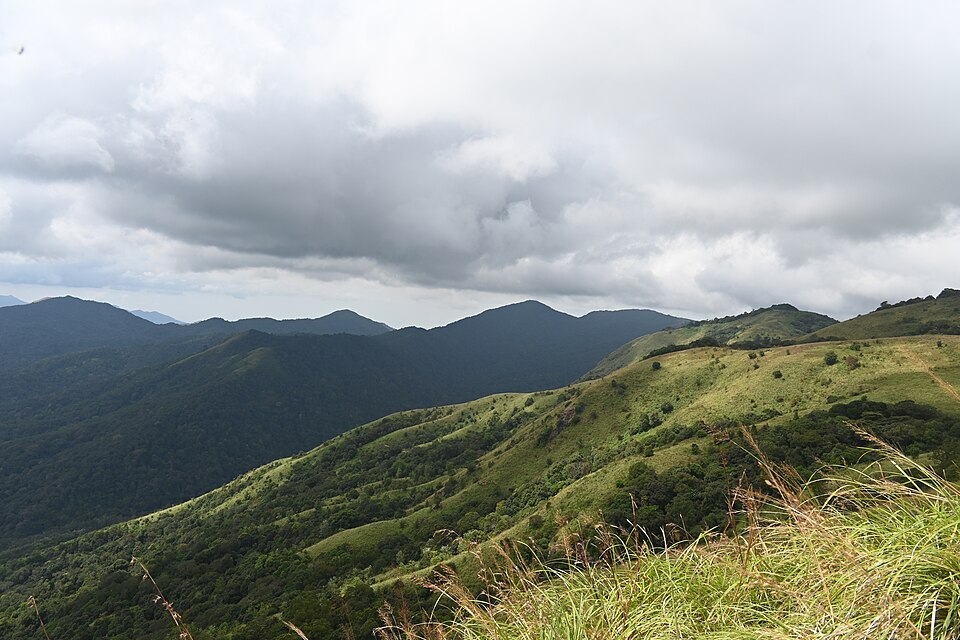
The altitude gradient in Kerala's section of the Ghats is particularly steep — the land rises from sea level to 2,695 metres (Anamudi, South India's highest peak) within roughly 75 km, creating compressed bands of habitat type within a small geographic area. Lowland evergreen forest below 500 m transitions to semi-evergreen, then moist deciduous, then montane shola-grassland mosaic above 1,800 m. Each zone supports a distinct bird community, and the transitions between zones are especially rich — a pattern ornithologists call an "ecotone effect." Many of Kerala's endemic birds are restricted to specific elevation bands, making multi-elevation birding itineraries far more productive than single-site visits.
The rain-shadow effect adds further complexity: while the west-facing slopes receive 2,000–5,000 mm of annual rainfall, the eastern slopes around Chinnar receive less than 700 mm, producing dry forest communities with their own distinctive bird fauna — including species like the White-naped Woodpecker, Blue-bearded Bee-eater and Painted Spurfowl that are absent from wetter forest types elsewhere in the state.
Thattekkad is, in my opinion, the richest bird habitat in peninsular India. The variety of birds to be seen here in a few hours' walk is remarkable — a dense, diverse low-land evergreen forest that is unlike anything else I have encountered south of the Himalayas.
Dr. Salim Ali — "Birdman of India" — from his Travancore-Cochin ornithological survey, 1930s24 Endemics
The Endemic Birds of Kerala's Western Ghats
The 24 bird species recognised by BirdLife International as endemic to the Western Ghats — restricted entirely to this mountain chain — represent one of the most concentrated endemism events among any mountain range outside oceanic islands. For international birders, ticking the Western Ghats list is the primary objective of a Kerala birding trip. Here are the most sought-after species and where to find them:

Where to Go
7 Premier Birdwatching Hotspots in Kerala
If a birder goes to only one place in Kerala, it should be Thattekkad. Its 25 sq. km of lowland evergreen forest on the northern bank of the Periyar River — declared a sanctuary in 1983 on Dr. Salim Ali's recommendation — packs more species diversity per unit area than anywhere comparable in South India. The combination of river-edge forest, teak plantation remnants, bamboo groves and freshwater reservoir creates micro-habitats that support resident Western Ghats endemics alongside a remarkable range of forest specialists. Pre-dawn walks (5–7 AM) along the interior trails produce the most concentrated bird encounters of any site in Kerala.
🎯 Key Target Species
- Sri Lanka Frogmouth (roost sites known to guides)
- Malabar Trogon, Malabar Grey Hornbill
- White-bellied Treepie, Wayanad Laughingthrush
- Crimson-backed Sunbird, White-bellied Blue Flycatcher
- Indian Pitta, Malabar Parakeet, Rufous Babbler
- Bourdillon's Nightjar, Oriental Bay Owl (night)
📌 Practical Notes
- Book tribal bird-walk guides through the forest office in advance
- Salim Ali Bird Trail — self-guided option for independent birders
- Hornbill Bungalow (Forest Dept) for overnight stays
- Best 5–7 AM; afternoons less productive
- 60 km from Kochi, 30 km from Kothamangalam
Periyar Tiger Reserve is Kerala's most famous wildlife sanctuary and also one of its most productive birding destinations — its 925 sq. km spans multiple elevation zones, producing a correspondingly wide range of bird communities. The high-range forests support montane endemics while the reservoir shores and grasslands attract raptors and waterbirds. The eco-tourism programme here is among the most sophisticated in India, with boat safaris, border hiking, bamboo rafting and tribal heritage programmes all offering different angles on the birdlife.
🎯 Key Target Species
- Nilgiri Flycatcher, Nilgiri Wood Pigeon
- Grey-headed Fish Eagle, Black Baza
- Rufous-bellied Eagle, Crested Serpent Eagle
- Indian Pitta, Blue-winged Parakeet
- Malabar Parakeet, White-bellied Treepie
- Oriental Darter, Black-necked Stork (reservoir)
📌 Practical Notes
- Early morning boat safari on Periyar Lake — excellent raptor observation
- Border hiking programme: 900–1,300 m elevation, outstanding forest birding
- Nature walk at dawn — 5 km guided trail inside the reserve
- Kottakudy watch tower for open-area raptor observation
Munnar's birding is fundamentally different from lowland Kerala — this is high-altitude shola-grassland territory, with its own unique assemblage of endemic birds found nowhere else in the Western Ghats. The Rajamala area within Eravikulam National Park hosts the Nilgiri Pipit in open grassland and the Black-and-Orange Flycatcher at shola margins. The Bodi Ghats — a steep forested section along the route south of Munnar toward Tamil Nadu — is famous among expert birders for the rare Yellow-throated Bulbul, Sirkeer Malkoha and other dry-zone species that spill over the rain-shadow edge.
🎯 Key Target Species
- Nilgiri Pipit, Nilgiri Wood Pigeon
- Black-and-Orange Flycatcher, Nilgiri Flycatcher
- White-bellied Shortwing (1,500+ m shola)
- Yellow-throated Bulbul (Bodi Ghats)
- Painted Bush Quail, Broad-tailed Grassbird
- Nilgiri Thrush, Black Eagle (over ridges)
📌 Practical Notes
- Rajamala — entry via Eravikulam NP permit (advance booking required)
- Lockhart Gap — roadside shola birding at 1,600 m, free access
- Bodi Ghats — 2 hrs south; arrange a full-day specialist guide
- Chinnar Wildlife Sanctuary for dry-forest endemics (60 km from Munnar)

The Kole Wetlands — a mosaic of waterlogged paddy fields, channels and seasonal floods in the Thrissur and Malappuram districts — are one of Kerala's most ecologically significant bird habitats and the state's most important staging point for trans-continental migratory birds. Declared a Ramsar wetland and an Important Bird Area by BirdLife International, the Kole system hosts 241+ species including globally threatened waterbirds whose populations are declining elsewhere. Studies have documented it as a "stepping stone" habitat for birds migrating between Central Asia, Siberia and south-tropical Africa — a role whose maintenance depends entirely on the continued integrity of the wetland ecosystem.
🎯 Key Target Species
- Spot-billed Pelican, Oriental Darter
- Black-headed Ibis, Painted Stork
- Greater Spotted Eagle (winter), Cinereous Vulture
- Black-bellied Tern, Black-necked Stork
- Northern Pintail, Garganey, Eurasian Wigeon
- Multiple sandpiper and godwit species (migration)
📌 Practical Notes
- Best viewed from elevated bunds (embankments) early morning
- Thrissur DTPC can arrange guided wetland birding excursions
- Peak diversity October–February (winter migrants present)
- 65 km from Kochi; combine with Thattekkad in a 2-day circuit
Kumarakom Bird Sanctuary sits on the eastern shore of Vembanad Lake — Kerala's largest lake and part of the Vembanad-Kol Ramsar wetland that extends across Kottayam, Alappuzha and Ernakulam districts. Decade-long waterbird counts have documented over 81 waterbird species and peak single-day counts exceeding 31,000 individual birds. The sanctuary's combination of freshwater, brackish and mangrove habitat types creates a range of microhabitats that attract both freshwater and coastal waterbird species alongside winter migrants. For most visitors arriving in Kerala on a combined backwater-birding itinerary, Kumarakom is the natural wetland birding base.
🎯 Key Target Species
- Indian Cormorant, Little Cormorant, Darter
- Purple Heron, Grey Heron, Night Herons
- Common Kingfisher, Stork-billed Kingfisher
- Jacana, Moorhen, Purple Swamphen
- Greater Flamingo (occasionally recorded)
- Numerous duck species in winter (Nov–Feb)
📌 Practical Notes
- Early morning canoe entry into the sanctuary is the most productive approach
- Houseboat birding on Vembanad adds wading bird and open-water species
- Combine with Pathiramanal island (migrant warblers, Oct–Nov)
- 12 km from Kottayam town; well served by houseboat operators
Wayanad's forest system — connected to Nagarhole and Bandipur in Karnataka and Mudumalai in Tamil Nadu through the Nilgiri Biosphere Reserve — is the most extensive contiguous forest block accessible to birders in Kerala. Its mix of moist deciduous, semi-evergreen and evergreen forests supports a full complement of lowland and mid-altitude Western Ghats endemics. The Pakshipathalam cave system within the Brahmagiri range adds the rare Edible Nest Swiftlet to any list, alongside an exceptional range of high-altitude grassland species on the Brahmagiri plateau.
🎯 Key Target Species
- Malabar Grey Hornbill, Malabar Pied Hornbill
- Edible Nest Swiftlet (Pakshipathalam caves)
- Malabar Parakeet, White-bellied Treepie
- Changeable Hawk Eagle, Crested Hawk Eagle
- Brown-backed Needletail, Indian Swiftlet
- Great Hornbill (in deeper forest sections)
📌 Practical Notes
- Tholpetty Range: jeep safaris at dawn, excellent forest edge birding
- Muthanga Range: elephant-dominated, strong raptor and large bird activity
- Pakshipathalam requires Forest Dept permit and guide — book in advance
- Mananthavady town is the best birding base in Wayanad
Chinnar is Kerala's most ecologically distinct birding destination — a dry, semi-arid landscape of thorn scrub and dry deciduous forest in the rain-shadow of the eastern Western Ghats that supports species completely absent from the wet forests that dominate the rest of the state. The contrast with Munnar (60 km to the west) is dramatic: open rocky terrain, scattered thorn trees, babbling rivers with exposed sand bars, and birds adapted to aridity rather than moisture. For birders completing a comprehensive Kerala list, a day at Chinnar is essential.
🎯 Key Target Species
- White-naped Woodpecker, White-bellied Drongo
- Blue-bearded Bee-eater, Blue-faced Malkoha
- Jungle Bush Quail, Painted Spurfowl
- Indian Skimmer (Chinnar River sand bars)
- Grey-headed Starling, Tawny-bellied Babbler
- Spot-breasted Fantail, Indian Paradise Flycatcher
📌 Practical Notes
- All treks with EDC tribal guides — book at Munnar Forest Info Centre
- River trekking along the Chinnar River — sand bar birding for skimmers
- Overnight stay in tree house or log house available
- September to May is best; accessible even in summer when other sites are hot
Winter Visitors
Migratory Birds — Kerala's Annual Winter Influx
From October to March, Kerala's wetlands, backwaters and coastal zones host a substantial influx of migratory birds travelling the Central Asian Flyway — one of the world's great bird migration routes, connecting breeding grounds in Siberia, Central Asia and Eastern Europe to wintering areas in South and Southeast Asia. Kerala sits at the southern terminus of this flyway, making it a critical refuelling and wintering destination for birds that have travelled 5,000+ km.
The Vembanad wetland alone has recorded counts exceeding 31,000 individual waterbirds in a single day, with over 81 waterbird species documented across a decade of mid-winter counts. Kerala's four Ramsar wetlands — Vembanad-Kol, Ashtamudi Lake, Kole Wetlands and Lake Sasthamkotta — collectively form a critical network of winter habitat for these long-distance travellers.
| Season | Period | Best For | Key Locations |
|---|---|---|---|
| Pre-monsoon | Feb–Apr | Breeding plumage, forest birds active, Nilgiri Tahr with young | Munnar, Thattekkad, Periyar |
| Southwest Monsoon | June–Sep | Limited forest access; good for resident breeders in accessible areas | Lowland sites, garden birds |
| Post-monsoon | Oct–Nov | First migrants arrive; freshly watered wetlands full; excellent visibility | Kole Wetlands, Kumarakom, Vembanad |
| Peak Winter | Dec–Feb | Maximum species diversity; migrants + residents; optimal weather | All sites, especially wetlands |

A quality field guide transforms a good birding day into an exceptional one. Whether you are preparing for a first Kerala visit or building your reference library for the Western Ghats, the right book makes every species more visible — not just to the eye, but to the mind. Explore a curated selection of the best birdwatching books for India and Kerala, including the Grimmett & Inskipp Birds of the Indian Subcontinent, the Helm Field Guide to India's birds, specialist Western Ghats checklists, and photography titles featuring Kerala's endemic species.
🛒 Browse Bird Books on Amazon → Affiliate link — purchases through this link support Kerala Nature Vibes at no extra cost to you.Planning Your Trip
Essential Tips for Birdwatching in Kerala
When to Start
The most productive birding window is 6 AM at a minimum, 5 AM ideally. Forest birds are vocally and visually active in the first 2–3 hours after sunrise. By 9–10 AM, activity drops markedly in forest environments. The best birding days in Kerala are those that begin before first light, when nocturnal species (frogmouths, nightjars, owls) can still be heard and the forest is at its most acoustically rich.
What to Wear
Dress in muted, non-reflective earth tones — khaki, olive, brown. Avoid white, bright blues or oranges. Lightweight moisture-wicking fabric is essential in Kerala's humidity. Carry a light rain layer even in dry months — the Western Ghats can produce localised rain at any elevation. Closed-toe shoes with grip are better than sandals on forest trails; leech socks are useful from September to December at forest sites.
The Importance of Local Guides
This cannot be overstated. A local guide at Thattekkad who knows exactly where the Sri Lanka Frogmouth pair roosted the previous night transforms the encounter from improbable to certain. Kerala has a mature community of expert local birding guides — many trained through the Forest Department's eco-tourism programme — whose ecological knowledge and language of bird vocalisations represents decades of accumulated field experience. At sites like Thattekkad, Chinnar and Periyar, Forest Department-assigned tribal guides carry additional conservation knowledge that no visiting naturalist can replicate.
Cornell Lab of Ornithology's eBird is the single most useful digital tool for birding in Kerala — the site's Kerala hotspot pages aggregate real-time sighting data from thousands of birders, allowing you to see exactly which species were recorded at Thattekkad last week and at what times. The Merlin Bird ID app (also from Cornell Lab) includes sound identification that works well for Kerala's bird calls — a useful supplement to a field guide.
Before visiting any site, check eBird's "Explore a Location" page for your destination — filter by the current month for the most relevant species list. The Kerala Nature Vibes guide to eco-tourism destinations maps directly to eBird's hotspot structure.
Kit List
Essential Birdwatching Gear Checklist for Kerala
Responsible Birding
Responsible Birdwatching in Kerala's Protected Forests
Kerala's birds exist in ecosystems under genuine pressure — habitat loss at forest margins, wetland drainage, pesticide use in paddy cultivation and climate-driven changes in monsoon patterns all affect bird populations. When visiting Kerala as a birdwatcher, the choices you make as a visitor have measurable conservation consequences.
- Use Forest Department-assigned and EDC tribal guides — their income from birding tourism is a direct conservation incentive; your engagement makes forest protection economically rational for the communities that live at its edge
- Do not use playback calls to attract birds at most sites — it causes genuine stress to territorial birds and disrupts breeding behaviour, especially for species already under pressure like the Sri Lanka Frogmouth and White-bellied Shortwing
- Stay on marked trails at all Forest Department sites — off-trail movement disturbs ground-nesting species and erodes the soil structure that supports forest regeneration
- Carry out all waste — plastic and food waste at birding sites attracts corvids and other species that then outcompete smaller forest birds for resources
- Report sightings on eBird — your observations contribute to the citizen science database that Kerala's Forest Department uses to monitor bird population trends
- Support local birding economies — staying at forest-edge guesthouses, hiring local guides, buying locally produced food and purchasing non-timber forest products from VSS community outlets all direct tourism revenue toward the people whose livelihoods depend on a healthy forest
Common Questions