Why Go Beyond the Circuit
The 90 Percent of Kerala That Tourism Forgets
Kerala's tourism map has been drawn with a heavy hand. A handful of places — Munnar, Alleppey, Thekkady, Athirappilly, Kovalam — appear on virtually every itinerary, absorb the bulk of foreign and domestic visitors, and increasingly show the pressures of that concentration. Roads are congested, forest trails overcrowded, and some of the ecological systems that made these places worth visiting in the first place are under genuine stress.
Yet Kerala's total forest estate covers more than 29 percent of the state's land area, administered by the Kerala Forest Department across 57 divisions and more than 60 designated eco-tourism sites. These sites — managed by Eco-Development Committees (EDCs) and Vana Samrakshana Samithis (VSS) at the community level — represent some of the most ecologically significant, least-visited and most carefully managed natural areas in South India.
EDCs and VSS units are community organisations formed by the Forest Department at the boundaries of protected forests, with members drawn primarily from tribal communities and fringe-area families whose livelihoods once depended on forest extraction. By integrating them into eco-tourism management — as guides, cooks, caretakers and conservation monitors — the Forest Department converts former extraction pressure into conservation incentive. When the forest's survival is the community's income, the community protects the forest.
The twelve destinations in this article are defined by a specific criterion: they receive significantly less media coverage than Kerala's mainstream destinations, their primary attraction is ecological rather than infrastructural, and they are managed directly by the Forest Department, KFDC (Kerala Forest Development Corporation), or community-level EDC/VSS units. None are mainstream circuit destinations. Several are virtually unknown outside Kerala. All are worth the effort to reach.
The most interesting wildlife encounters in Kerala do not happen at viewpoints on the Munnar road. They happen at the end of a five-hour forest walk with a guide who knows every animal corridor by name, on a trail that receives a hundred visitors a month instead of ten thousand.
Kerala Forest Department Eco-Tourism Programme documentationEach destination below includes its location, what makes it ecologically distinctive, the forest and wildlife context, available activities, community involvement structure, best visiting season and responsible travel notes. Booking contacts and permit requirements are noted where relevant.
All sites listed are operational eco-tourism projects managed by or affiliated with the Kerala Forest Department. Verify current access and booking details with the respective Forest Division before planning a visit, as operational schedules can change seasonally.
Destination 01
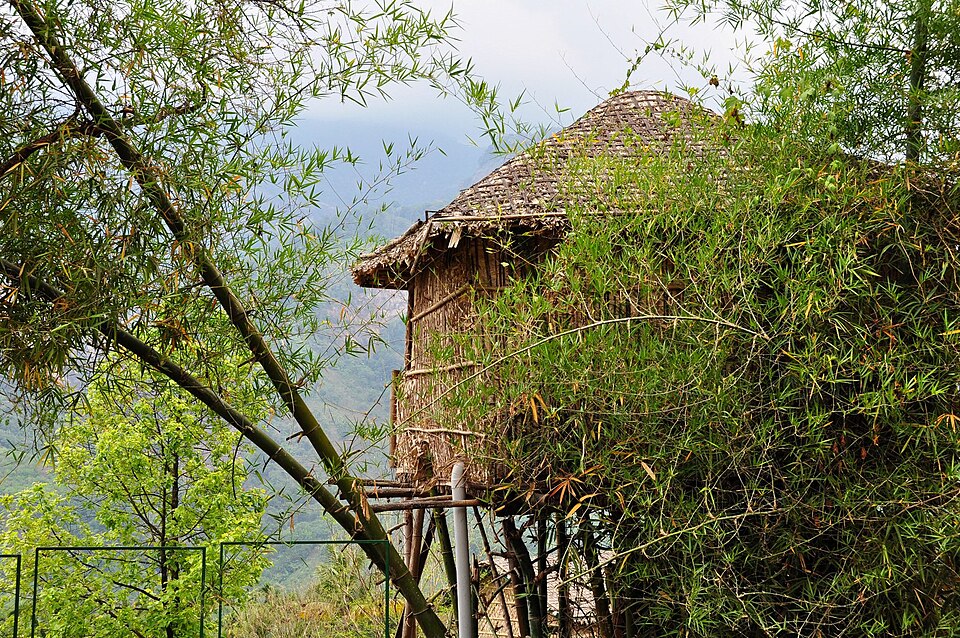
Chinnar occupies a fundamentally different ecological position from virtually every other wildlife destination in Kerala. While the rest of the state is defined by wet, dense Western Ghats forests, Chinnar sits in the rain-shadow region on the eastern slopes — a dry, semi-arid landscape of thorny scrub, dry deciduous forest, riparian gallery forest, rocky outcrops and open grasslands that receives less than 700 mm of rainfall annually. It is, in ecological terms, a different country entirely from the tea-garden highlands 60 km to the west.
This uniqueness makes Chinnar Kerala's most ecologically underappreciated wildlife sanctuary. Its 90 sq. km contains habitat types found nowhere else in the state. The two perennial rivers — the Pambar and the Chinnar — sustain a riparian corridor that supports extraordinary vertebrate diversity in an otherwise semi-arid landscape. The sanctuary also contains megalithic burial sites — dolmens, menhirs and cairn circles dating to the Iron Age — that can be visited on guided cultural treks, making this the only Wildlife Sanctuary in Kerala with integrated archaeological interpretation.
🌿 Ecological Importance
- Kerala's only significant dry forest ecosystem — rain-shadow Western Ghats
- Grizzled Giant Squirrel: India's most endangered squirrel, endemic to this region
- Indian star tortoise population — rarely found in Kerala elsewhere
- 144 animal species, 225+ bird species, 1,000+ flowering plants
- Tufted grey langur, slender loris, leopard, elephant, gaur
- Extensive sandalwood (Santalum album) forest — rare and protected
🥾 Eco-Tourism Activities
- River trekking along the Chinnar River — a genuinely distinctive experience
- Cultural site trek to Iron Age dolmens and menhirs
- Nature trail to elevated watchtower for wildlife watching
- Trek to Thoovanam Waterfall through dry forest corridors
- Overnight stay in tree house, log house or forest hut
- Medicinal plant interpretation trail and garden
- Camping at Vasyappara with pre-dawn birding
👥 Community Participation
Eco-tourism at Chinnar is jointly managed by the Forest Department and Eco-Development Committees (EDCs) comprising members of the Muthuvan and Hill Pulaya tribal communities. Eleven tribal hamlets are located within the sanctuary; EDC members serve as licensed guides, bringing ecological knowledge that took generations to accumulate. Revenue from eco-tourism forms a significant portion of these communities' legal income, replacing extraction.
📅 Best Time to Visit
September → May · Peak: Oct–Feb
Chinnar's dry forest is accessible and at its most wildlife-active from September to May. The sanctuary remains open during summer (March–May) when most Kerala hill destinations are uncomfortably warm — the dry forest is cooler and better for wildlife-spotting. Avoid June–August (heavy monsoon in some areas, trail closures).
🧭 Responsible Travel Tips
- Book all activities at the Forest Information Centre in Munnar or contact the Chinnar Wildlife Sanctuary office directly — permit required
- All treks must be conducted with an EDC-assigned tribal guide — do not attempt independent forest entry
- River trekking means wading through the Chinnar River — waterproof shoes essential, no single-use plastic at the riverbank
- The sandalwood forest sections are strictly off-trail — follow your guide's exact path
Destination 02
In the 1930s, Dr. Salim Ali — India's most celebrated ornithologist — conducted bird surveys in the princely states of Travancore and Cochin. His survey of a small patch of evergreen lowland forest on the northern bank of the Periyar River near Kothamangalam produced a remarkable finding: he described this forest as the richest bird habitat in peninsular India, comparable in bird density and diversity only to the eastern Himalayas. The Thattekkad Bird Sanctuary — declared in 1983 on his recommendation and officially renamed the Salim Ali Bird Sanctuary — honours that assessment.
With just 25 sq. km, it is Kerala's smallest protected forest. Yet the diversity packed into this compact area results from Thattekkad's unique ecological position: a lowland (<200 m) evergreen forest peninsula between the north and south branches of the Periyar River, creating an insular microhabitat that has preserved forest bird communities largely absent from the larger highland sanctuaries. Species recorded here include the Sri Lanka Frogmouth, Malabar Trogon, Crimson-throated Barbet, Indian Pitta, White-bellied Blue Flycatcher and the rare Bourdillon's Long-eared Indian Nightjar.
🌿 Ecological Importance
- First bird sanctuary in Kerala; named for India's foremost ornithologist
- 300+ bird species in 25 sq. km — exceptional density for a lowland forest
- Critically placed lowland forest — a habitat type largely lost across Kerala
- Sri Lanka Frogmouth, Malabar Trogon, Grey-headed Fish Eagle
- Bhoothathankettu Dam reservoir adds wetland and riparian microhabitat
- Periyar River corridor links sanctuary to larger forest systems
🥾 Eco-Tourism Activities
- Salim Ali Bird Trail — self-guided trekking programme through forest interior
- Pre-dawn bird walks with tribal guides — optimal 5–7 AM window
- Boating on Bhoothathankettu reservoir for water bird observation
- Night birding programme for owls and frogmouths (by arrangement)
- Three-story watchtower accommodation inside the sanctuary
- Hornbill Bungalow stay (Forest Dept inspection bungalow at entrance)
👥 Community Participation
Tribal guides — members of indigenous communities from the forest fringe — manage all birding treks under the Kerala Forest Department's eco-tourism programme. Their knowledge of bird vocalisations and forest micro-habitats is genuinely extraordinary and constitutes ecological knowledge unavailable in any field guide. Bookings and guide assignments are managed by the Thattekkad forest office and DTPC Ernakulam.
📅 Best Time to Visit
October → March · Peak: Nov–Jan for migrants
October to March for the richest birdwatching — resident species supplemented by winter migrants. Pre-dawn (5–7 AM) sessions are significantly more productive than afternoon visits. The forest is good year-round for residents; avoid visiting during peak monsoon July–August when trails are difficult.
Destination 03
The Brahmagiri range in North Wayanad forms part of the ecological boundary between Kerala and Karnataka, and its highest accessible point — Pakshipathalam at 1,740 m — is a formation of massive boulders containing deep, interlinked cave systems that are among the most unusual wildlife habitats in the Western Ghats. The caves support large colonies of the Edible Nest Swiftlet (Aerodramus unicolor) — whose hardened-saliva nests are harvested commercially in parts of Asia — along with numerous other cave-dwelling bird species, bats and small mammals.
The Kerala Forest Ecotourism website documents a full eco-tourism programme here: tent stays on the Brahmagiri plateau (erected on steel platforms with bio-toilets), a 6 km guided trek from the plateau to the Pakshipathalam caves, and a further 4 km forest section to the inner cave complex. The trek passes through moist deciduous forest, open grassland, rocky hillocks and narrow rocky passages — a route that changes character dramatically every few hundred metres and remains genuinely challenging throughout.
🌿 Ecological Importance
- Part of the Nilgiri Biosphere Reserve — India's largest biosphere reserve
- Cave system hosting Edible Nest Swiftlet — rare in a continental Indian context
- Brahmagiri grasslands: high-altitude shola-grassland mosaic with Nilgiri endemics
- Papanasini River originates at Brahmagiri — sacred river feeding Thirunelli temple
- Asian fairy-bluebird, paradise flycatcher, Malabar trogon, Giant Malabar Squirrel
- Border forests connect to Brahmagiri Wildlife Sanctuary (Karnataka) and Nagarhole
🥾 Eco-Tourism Activities
- Plateau tent camping at Brahmagiri (KFEC-operated steel platform tents)
- 6 km guided forest trek from Brahmagiri to Pakshipathalam caves
- Bird watching from Garudankunnu watchtower — panoramic forest views
- Bouldering and rock exploration at the natural cave complex
- Night wildlife observation from the plateau
- Alternative cross-border route from Irupu Falls (Karnataka side)
👥 Community Participation
The Brahmagiri eco-tourism programme is managed by the North Wayanad Forest Division (Begur range). Certified local guides — many from surrounding tribal communities familiar with the forest's wildlife and historical significance — are assigned to all groups. The District Tourism Promotion Council (DTPC) Wayanad arranges vehicles, guides and camping equipment on request.
📅 Best Time to Visit
October → April · Coldest: Dec–Jan
October to April for trekking — trails are clear post-monsoon, grasslands green, and wildlife more visible. December and January see very cold nights on the Brahmagiri plateau (sometimes near 5°C) — carry thermal layers. The trek to the inner caves is closed during heavy rain.
Destination 04
At 2,640 metres, Meesapulimala is the second highest peak in the Western Ghats after Anamudi. Its name — derived from meesa (moustache) and puli (leopard) — describes the profile of the mountain as seen from the southwest, where the peak line resembles the silhouette of a crouching big cat with heavy whiskers. Unlike Anamudi — which requires restricted-zone permits and is generally inaccessible for recreational trekking — Meesapulimala is managed by KFDC as a structured overnight trekking programme that is genuinely accessible while remaining environmentally controlled.
The standard approach involves a jeep ride from Munnar to the base camp (near Silent Valley) and an ascent via Rhodo Valley — a high-altitude Shola-grassland corridor famous for its dense Rhododendron nilagiricum (Nilgiri rhododendron) stands that flower spectacularly from January to March. The base camp, at approximately 1,830 m, offers what many visitors describe as some of the most extraordinary stargazing available anywhere in South India — the high altitude, low humidity and minimal light pollution create exceptional conditions for naked-eye astronomy.
🌿 Ecological Importance
- Second highest peak in the Western Ghats — high-altitude shola-grassland biome
- Rhododendron nilagiricum — endemic Nilgiri rhododendron, flowers Jan–Mar
- Nilgiri Tahr habitat — this endangered mountain ungulate uses these grasslands
- Anaimalai-Palani Hills biogeographic junction — high endemic plant richness
- Views of Kolukkumalai (world's highest organic tea garden), Anaiyirangal Lake
- Shola forest patches — some of the most intact remaining high-altitude Shola
🥾 Eco-Tourism Activities
- Overnight tented base camp stay (KFDC, up to 40 persons per night)
- Pre-dawn summit trek to Meesapulimala peak — 2 hrs from Rhodo Valley
- Sky Cottage programme — cliff-edge cottage with transparent ceiling
- Rhodo Mansion stay — elephant-trench-protected forest stay with campfire
- Off-road jeep ride from base camp to Rhodo Valley (4 km)
- Sunrise and sunset viewing from the exposed ridgeline
👥 Community Participation
Entirely operated by the Kerala Forest Development Corporation (KFDC) — a government undertaking that manages community-based eco-tourism across forest areas in Munnar, Thiruvananthapuram and Wayanad. Forest community workers (including Sri Lankan repatriates' descendants settled in KFDC forest areas) and local tribal families serve as camp staff, guides and caretakers. All packages include meals sourced and prepared locally.
📅 Best Time to Visit
October → April · Rhodo bloom: Jan–Mar
October to April is best. For the rhododendron bloom, January to March is exceptional. Summit treks are done pre-dawn (4 AM start) to reach the peak for sunrise — carry thermal layers even in summer as temperatures above 2,500 m can drop suddenly. Booking through kfdcecotourism.com is mandatory.
Destination 05
Arippa is one of the most ecologically specific eco-tourism destinations in Kerala. The KFDC-managed site near Kulathupuzha is famous among specialists for two things: its exceptional avifauna (270+ bird species have been identified, making the Arippa–Ammachiyambalam corridor one of the most productive birdwatching stretches in the state's south) and for providing one of the few accessible windows into Myristica freshwater swamps — among the most ancient and biodiverse wetland forest types on Earth.
Myristica swamps are tropical freshwater swamp forests dominated by species of the family Myristicaceae — the nutmeg family, which represents some of the most primitive flowering plants in the evolutionary record. The trees grow in permanently waterlogged soil on stilt roots, their dense root mats creating a unique microhabitat for amphibians, reptiles and birds. Kerala holds one of the most significant remaining Myristica swamp areas in Asia; Arippa's proximity to the Kulathupuzha forest range allows guided access to this habitat. KFDC has also recently begun integrating tribal art performances by local indigenous communities into Arippa's overnight nature stay programme — a cultural dimension that distinguishes it from purely ecological sites.
🌿 Ecological Importance
- Myristica freshwater swamps — evolutionarily ancient tropical wetland forest
- 270+ bird species including Malabar hornbill, warblers, rare flycatchers
- Mixed evergreen and dry deciduous forest — unusual mosaic in south Kerala
- Adjacent to Western Ghats forest range — high mammal connectivity
- Part of the Agasthyamala Biosphere Reserve watershed
- Tiger and leopard sign documented in the adjacent forest
🥾 Eco-Tourism Activities
- Trek to Myristica freshwater swamp — guided, permit required
- Pre-dawn birdwatching on the Arippa–Ammachiyambalam corridor
- Overnight stay at Jyothirmayi Guest House (KFDC forest bungalow)
- Trek into Sankhili Forest (easy gradient, excellent canopy birds)
- Tribal art performance programme (recently added by KFDC)
- Guided walks to tribal villages in the forest fringe
👥 Community Participation
A community-based eco-tourism programme of KFDC — the Jyothirmayi bungalow is run by local community workers, guided forest walks are led by certified naturalists and tribal community members trained by the Forest Department. The recent introduction of tribal art performances brings forest-fringe communities directly into the tourism experience rather than treating them only as ecological assets.
📅 Best Time to Visit
October → April · Pre-dawn birding: Nov–Feb
October to April for birding. The Myristica swamp trek is best from November to February when the forest floor is accessible and amphibian diversity is highest. Overnight stays are limited to six persons per KFDC package — book early at arippa.kfdcecotourism.com.
Destination 06
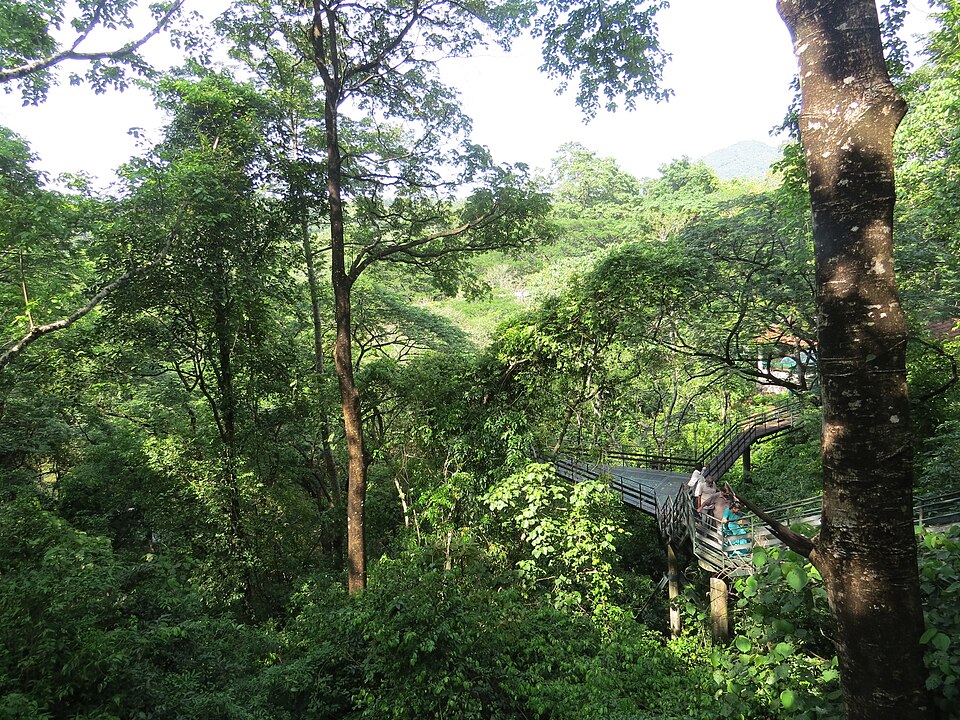
Thenmala holds a unique place in Indian conservation history: it is officially India's first planned eco-tourism destination, recognised by the World Tourism Organisation as one of the country's premier eco-friendly projects. Established at the foothills of the Western Ghats in Kollam district, adjacent to the Shendurney Wildlife Sanctuary, Thenmala was designed from the outset around the principle that tourism infrastructure should serve ecological conservation rather than exist in parallel to it.
The destination is divided into three distinct zones — Culture, Adventure and Leisure — each with a specific ecological or cultural orientation. Ten eco-tourism spots fall within the Thenmala system, covering the hill ranges of Thiruvananthapuram, Pathanamthitta and Kollam districts. The Malayalam name literally means "Honey Hill" — reflecting the area's historically important honey production from the endemic forests. High-quality forest honey from the Thenmala area remains a significant non-timber forest product today, and its continued quality depends directly on the health of the surrounding forest ecosystem.
🌿 Ecological Importance
- Adjacent to Shendurney Wildlife Sanctuary — part of Agasthyamala Biosphere Reserve
- Butterfly safari area — rich Lepidoptera diversity typical of transition forests
- High-quality honey production from endemic forest flora
- Kallada River system supports freshwater fish diversity
- Transition zone between dry deciduous and wet evergreen forests
- World Tourism Organisation-recognised eco-planning model
🥾 Eco-Tourism Activities
- Butterfly safari in the Adventure Zone
- Boating on Shendurney Wildlife Sanctuary reservoir (wildlife spotting)
- Riverside trekking and nature trails
- Tree-top huts and forest camping
- Rock climbing, rappelling, river crossing and valley crossing
- Nakshatravanam (birth-star garden) and cultural interpretation
- The 13-arch British-era stone bridge (Pathimoonnu Kannara Palam)
👥 Community Participation
Managed by the Thenmala Ecotourism Promotion Society (TEPS) — a government body — in coordination with VSS units at the sanctuary fringe. Community involvement includes honey production, non-wood forest product sales, and employment in adventure activity operations. The TEPS model has influenced eco-tourism planning across Kerala and several other Indian states.
📅 Best Time to Visit
September → March · All-season accessible
Thenmala is accessible throughout the year and functions as a year-round eco-tourism facility — unusual among Kerala's forest destinations. The butterfly safari is most productive in post-monsoon months (September–November). The adjacent wildlife sanctuary's boating is best in the dry season (November–April).
Destination 07
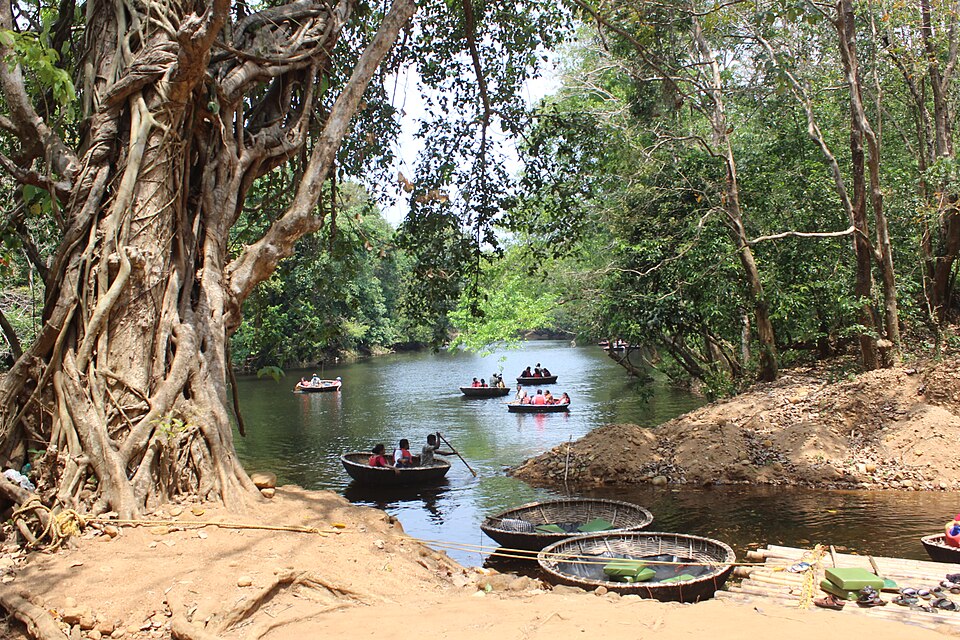
Adavi occupies a picturesque forest patch of approximately 5 km of river frontage on the Kallar River — a Pamba tributary in Pathanamthitta district — 10 km from the Konni Forest Range headquarters. The eco-tourism project was jointly launched by KTDC (Kerala Tourism Development Corporation) and the Department of Forests and Wildlife, making it one of the few destinations in the state co-managed by the two principal tourism and conservation agencies.
Adavi's distinctive offering is coracle riding — one of the first such facilities in Kerala, using the traditional circular bowl-boats historically employed by fishing communities on Kerala's forest rivers. The bamboo huts erected on the river banks, the accessible half-day trek routes through evergreen forest to destinations like Kurichi, Chavarpandy and Peruvally, and the nearby Konni Elephant Training Centre (one of Kerala's important elephant rehabilitation and training stations) collectively make Adavi a well-rounded forest eco-tourism package unusual for its district.
🌿 Ecological Importance
- Kallar River — Pamba tributary supporting freshwater fish and riparian forest
- 5 km river frontage forest — mixed evergreen on Pamba watershed hillslopes
- Corridor between Konni forest range and larger Pathanamthitta forest system
- Elephant movement zone — Konni range is a significant elephant habitat
- Riverside forest in Pathanamthitta — a district otherwise dominated by plantations
🥾 Eco-Tourism Activities
- Coracle (bowl-boat) riding on the Kallar River
- Bamboo raft experience on river section
- Half-day trek to Kurichi, Chavarpandy and Peruvally forest areas
- One-day trek to Kattathi, Kottampara and Aluvamkudy
- Visit to Konni Elephant Training Centre (elephants, mahouts, bathing)
- Bamboo hut overnight stay on the Kallar River bank
- Jeep safari and bus tour through the forest range
👥 Community Participation
Adavi's eco-tourism is jointly managed by the Konni Forest Division and KTDC. Local VSS and forest fringe community members are employed as guides, cooks and maintenance staff at the river camp. The Konni range also runs a plastic-waste recycling centre that converts visitor packaging into recycled products — and non-timber forest product outlets provide an additional community income stream.
📅 Best Time to Visit
October → May · River: Nov–Apr
October to May. The coracle and bamboo raft programme operates best from November to April when the Kallar River is at manageable levels post-monsoon. The Elephant Centre is open year-round. The site closes on Mondays (08:30 AM–05:30 PM on open days).
Destination 08
Peruvannamuzhi is a village 60 km from Kozhikode where the Kuttiyadi Irrigation Project dam creates a reservoir set directly against the Malabar Wildlife Sanctuary — one of Kerala's less-visited protected areas covering portions of Kozhikode, Malappuram and Palakkad districts. The eco-tourism project at Peruvannamuzhi, inaugurated in 2008 and managed by the Pannikkottur VSS under the Thenmala Forest Development Agency, represents an unusual combination of reservoir tourism and wildlife sanctuary access that creates a distinctive visitor experience.
What makes Peruvannamuzhi genuinely significant for ecologists is the Janakikadu forest adjacent to the reservoir — documented to contain over 680 species of rare plants, making it one of the most plant-species-rich accessible forests in North Kerala. The Malabar Wildlife Sanctuary forest behind it supports brown palm civet, Nilgiri langur, elephants, tigers, leopards and gaurs, alongside 90+ recorded bird species. The reservoir's uninhabited islands offer rare opportunities for island ecology observation in a freshwater lake context.
🌿 Ecological Importance
- 680+ rare plant species in Janakikadu forest — exceptional botanical richness
- Part of Malabar Wildlife Sanctuary — Kozhikode's primary protected forest
- Brown palm civet, Nilgiri langur, white-bellied blue flycatcher
- 90+ bird species including Malabar parakeet, grey-headed bulbul
- Reservoir with uninhabited islands — rare freshwater island ecology
- Elephant corridor crossing the western Ghats foothills in this region
🥾 Eco-Tourism Activities
- Bamboo rafting on the reservoir
- Speed boat and row boat cruises to the uninhabited islands
- Trekking into Janakikadu forest with guides
- Animal rehabilitation centre visit
- Crocodile and tortoise pond observation
- Bird sanctuary and snake park
- Bathing facility in the forest river
👥 Community Participation
Managed by Pannikkottur VSS (Vana Samrakshana Samithi) under the Kerala Forest Department's Thenmala Forest Development Agency framework. VSS members from the forest fringe communities manage day-to-day operations, guide trekking programmes and staff the various nature interpretation facilities. The project was funded by Kerala Tourism with ₹13.07 crore at inception.
📅 Best Time to Visit
October → May · Best: Nov–Mar
October to May. November to March offers the best combination of cool weather, full reservoir levels and active birdlife. The plant diversity in Janakikadu is visible year-round. Nearest airport is Calicut International Airport (25 km from Kozhikode, then 60 km to the site).
Destination 09
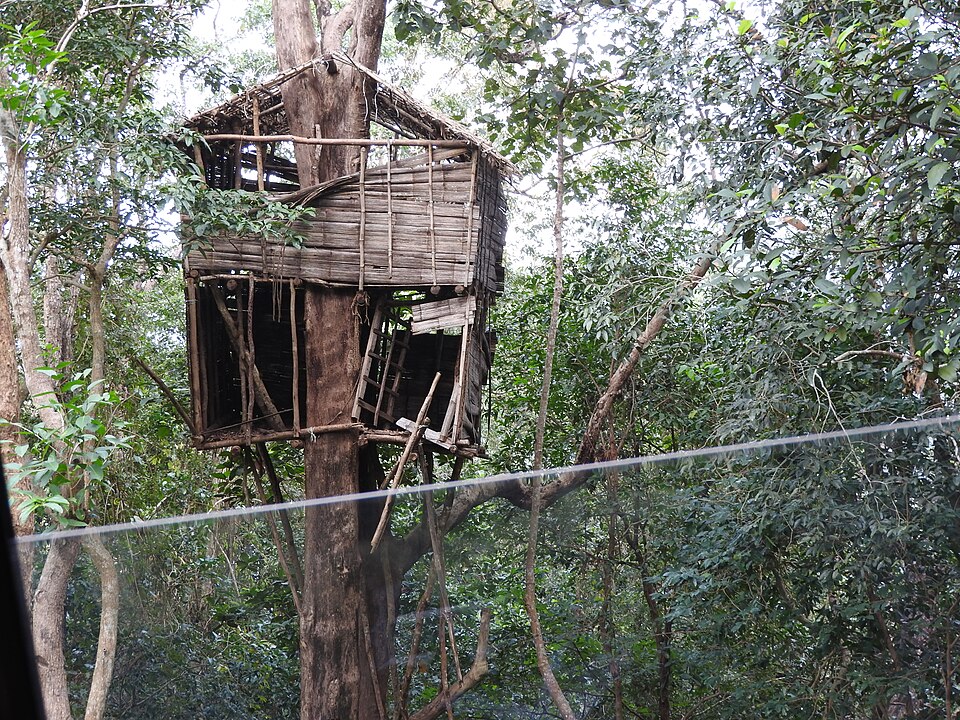
Peppara Wildlife Sanctuary occupies 53 sq. km of the Agasthyamala Biosphere Reserve — a UNESCO Man and Biosphere Programme site recognised in 2001 and one of the most intensively studied biodiversity systems in South Asia. The sanctuary takes its name from the Peppara Dam (1983) whose reservoir forms its most visible feature, but the ecological significance of Peppara extends far beyond its water body: it forms the critical northern buffer of the Agasthyamala Biosphere Reserve and is bordered on the northeast by the Kalakkad-Mundanthurai Tiger Reserve of Tamil Nadu.
The ecology of Peppara is defined by three major forest types — tropical evergreen, moist mixed deciduous and semi-evergreen — across which 13 tribal settlements maintain a traditional forest coexistence that is itself a conservation asset. The sanctuary's most unusual trekking programme leads to Pandipathu — a high-altitude plateau on the Agasthyamala ridge used by large gaur herds for grazing. The route from Peppara to Pandipathu covers dense forest, streams and an elevation gain of several hundred metres; early morning arrivals at the plateau are rewarded with gaur herds numbering sometimes in the dozens, with the distant peaks of Tamil Nadu visible beyond.
🌿 Ecological Importance
- Part of UNESCO Agasthyamala Biosphere Reserve (2001) — 3,500 sq. km total
- Lion-tailed macaque, Nilgiri tahr, Nilgiri langur, leopard, sloth bear
- Vateria indica (white dammar) — vulnerable tree species, significant population
- White-bellied treepie, Malabar trogon, Malabar grey hornbill
- Karamana River originates in the Agasthyamala range — a critical water source
- Border with Kalakkad-Mundanthurai Tiger Reserve (TN) — major wildlife corridor
🥾 Eco-Tourism Activities
- Pandipathu trek — to the gaur plateau on the Agasthyamala ridge
- Nature walks and guided forest trails
- Birdwatching at the reservoir and forest edge
- Boating on the Peppara reservoir
- Wildlife photography from dam viewpoints
- River swimming (Peppara and Kallar Rivers, believed to have medicinal properties)
👥 Community Participation
The 13 tribal settlements within Peppara are central to the sanctuary's eco-tourism philosophy. The VSS units formed from these communities manage forest protection, contribute traditional ecological knowledge to visitor interpretation, and participate in anti-poaching patrol programmes. Bookings are handled by the Thiruvananthapuram Wildlife Division (8547602951).
📅 Best Time to Visit
October → May · Gaur sighting: Nov–Mar
October to May. The Pandipathu gaur sightings are most reliable in November to March when the herds concentrate on the higher plateau. Being 50 km from Thiruvananthapuram, Peppara is accessible as a day trip from the state capital — unusual for a wildlife sanctuary of this ecological quality.
Destination 10
Declared in 2011, Kottiyoor Wildlife Sanctuary (30.38 sq. km) in Kannur district is Kerala's 23rd Wildlife Sanctuary and one of its youngest. It forms part of the Nilgiri Biosphere Reserve and connects the Aralam Wildlife Sanctuary (Kannur) to the Wayanad Wildlife Sanctuary through the Brahmagiri Valley — a critical wildlife corridor for elephants, leopards and gaur moving between the two protected areas.
The Kottiyoor area is also culturally remarkable: the Kottiyoor Temple (Akkare Kottiyoor Shrine) — a sacred Shaiva site on the west bank of the Bavali River — holds its annual Kottiyoor Utsavam festival for 27 days in the monsoon season (June–July) in an open-air riverside forest clearing, without any permanent structure. The absence of permanent architecture in a primary forest setting, the river crossing that pilgrims make to reach the shrine, and the traditional role of specific forest-fringe communities as ritual custodians all reflect an unusually deep integration of sacred geography and forest ecology. The trekking route to Palukachippara — a distinctive three-peaked hill formation at 2,347 ft — adds an adventure dimension to a destination that combines wildlife, culture and landscape.
🌿 Ecological Importance
- Part of Nilgiri Biosphere Reserve — India's largest biosphere reserve
- Critical elephant and leopard movement corridor (Aralam to Wayanad)
- Bavali River — tributary of Valapattanam River, flowing through sanctuary
- Evergreen, semi-evergreen, deciduous forests and grasslands
- Seasonal butterfly diversity — significant Lepidoptera richness in transition zones
- Connected to Bandipur National Park (Karnataka) on the northern edge
🥾 Eco-Tourism Activities
- Palukachippara trek — to the three-peaked hill formation above Kottiyoor
- Bavali River nature walks through the forest margins
- Birdwatching — Forest Department-controlled safari into the reserve
- Pilgrimage walk to Akkare Kottiyoor Shrine (seasonal, June–July)
- Forest camping (by Forest Department permit)
- Wildlife photography at established viewpoints in the sanctuary buffer zone
👥 Community Participation
The Kottiyoor Wildlife Sanctuary is governed by the Kannur Forest Department (Aralam Wildlife Division). Local communities — whose ritual responsibilities at the Kottiyoor Utsavam have been formally recognised for generations — serve as cultural guides and logistical support during the festival season. Forest-fringe VSS units manage eco-tourism programmes and conduct anti-encroachment patrols.
📅 Best Time to Visit
November → April · Festival: Jun–Jul
November to April for trekking and wildlife. The Kottiyoor Utsavam (June–July monsoon season) brings an extraordinary fusion of pilgrimage, river crossing and monsoon forest atmosphere — but visitor access to the sanctuary itself is limited during the festival. Contact the Aralam Wildlife Division in advance for current programme availability.
Destination 11
The Mankulam Forest Division in Idukki district covers an area of undulating high-range forest in the Southern Western Ghats, characterised by what the official eco-tourism documentation describes as "innumerable perennial waterfalls" — Narakakuthu, Kozhiyalakuthu, Nakshathrakuthu, Kozhivalankuthu, Perumbankuthu and others, several of which remain formally undocumented. This proliferation of waterfalls reflects the geological reality of the Mankulam terrain: hard crystalline rock beds with steep drainage gradients that catch monsoon rainfall and release it year-round.
The ecological centrepiece of Mankulam is the Anakulam area — a stream crossing and mineral lick to which elephant herds reliably descend to drink and supplement their diet with minerals from the streambed. The Mankulam Nature Appreciation Centre (website: mankulamnac.in) runs an interpretive hiking programme specifically designed as "protection-oriented eco-tourism" — one that explicitly frames wildlife observation as a conservation support activity rather than a recreational one, with proceeds supporting the Forest Division's protection operations.
🌿 Ecological Importance
- High-range Southern Western Ghats forest — rich endemic flora and fauna
- Anakulam mineral lick — reliable elephant congregation site for photography
- Multiple perennial waterfalls — rare year-round surface water in high-range terrain
- "Miracle Pond" — a naturally occurring hilltop pond fed through rock fissures
- Cardamom, coffee and areca nut cultivation in adjacent community land
- Elephant, gaur, leopard, wild boar, sambar, and rich bird community
🥾 Eco-Tourism Activities
- Interpretive hiking programme — Forest Division-designed conservation-oriented trek
- Elephant watching at Anakulam mineral lick
- Waterfall trails to Narakakuthu, Nakshathrakuthu and others
- Birdwatching along the undulating forest trial (programme emphasis)
- "Miracle Pond" visit — hilltop natural spring pond
- Forest photography with resident naturalists
👥 Community Participation
The Mankulam Nature Appreciation Centre operates under the direct management of the Divisional Forest Officer, Mankulam — explicitly described as a programme designed "to improve the livelihood of the dependant people" in the surrounding communities. The eco-tourism plan was developed to convert potential extraction pressure into protection incentive. Contact: Mob. +91 8547 601 566.
📅 Best Time to Visit
October → April · Waterfalls: Sep–Dec
October to April for trekking. Waterfalls are at their maximum between September and December — immediately post-monsoon. Elephant sightings at Anakulam are most reliable in the dry season mornings (December–March). The interpretive programme requires advance booking through the Mankulam Forest Range Office.
Destination 12
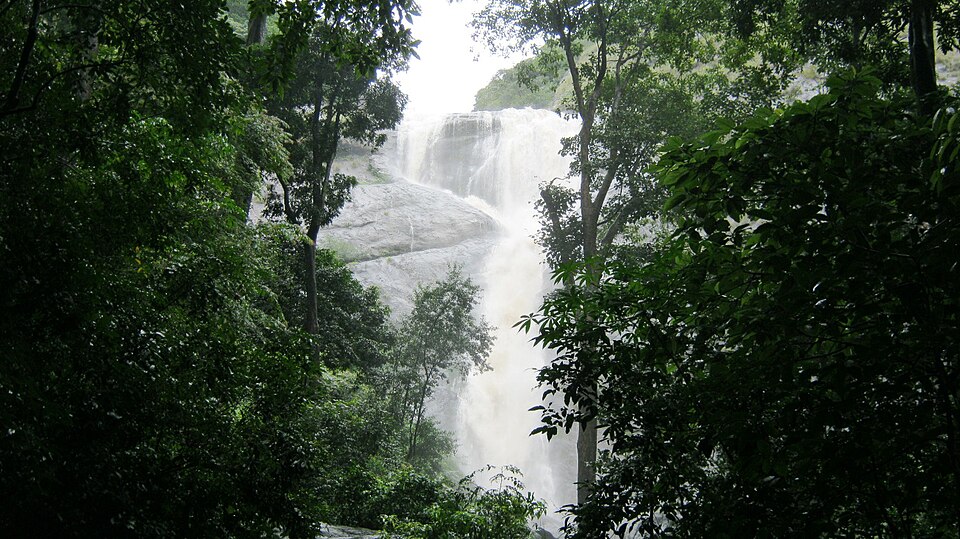
Two adjacent VSS-managed destinations in the Achencoil and Punalur forest range of Kollam district — Palaruvi Waterfall and the Manalar–Kumbhavurutty trek — form a coherent forest experience of considerable depth. Palaruvi, managed by the Palaruvi VSS under the Thenmala Forest Development Agency, receives approximately one lakh visitors per year — making it one of the most-visited VSS eco-tourism sites in the state. The waterfall's setting in evergreen forest with accessible forest trails and the VSS-operated community kitchen (serving traditional Kerala food using locally grown Arienkavu valley spices) provides a model of how VSS eco-tourism can support conservation without sacrificing visitor experience.
Manalar–Kumbhavurutty in Achencoil is the more demanding counterpart: a two-day forest trek managed by the Manalar–Kumbhavurutty VSS that carries visitors through deep evergreen forest to high-altitude grasslands and a spectacular waterfall. The route passes through sandal tree-bearing forest — a rare encounter given the severe poaching pressure on Indian sandalwood across most of its range. The trek offers a genuine overnight forest camp experience in a landscape that receives far fewer visitors than its quality warrants.
🌿 Ecological Importance
- Evergreen and sandal-tree forest in the Achencoil range — rare sandalwood stands
- Palaruvi falls set in continuous evergreen forest — Western Ghats lowland ecology
- Manalar–Kumbhavurutty high-altitude grasslands — rare open-canopy habitat in south Kerala
- Part of the Agasthyamala biosphere watershed
- Tiger and leopard presence documented in the forest range
- Arienkavu valley spice diversity — a living cultural-botanical system
🥾 Eco-Tourism Activities
- Palaruvi waterfall visit with forest trails (Palaruvi VSS)
- Community kitchen experience — traditional Arienkavu spice cuisine
- Trekking to sandal tree-bearing forest sections
- Manalar–Kumbhavurutty 2-day trek to highland grasslands and waterfall
- Forest camp overnight in VSS-managed facility
- Guided nature walks on evergreen forest trails
👥 Community Participation
Both destinations are operated by VSS (Vana Samrakshana Samithi) units under the Thenmala Forest Development Agency — Kerala Forest Department's community forestry wing. VSS members from Arienkavu and Achencoil forest fringe communities serve as guides, cooks and camp managers. The community kitchen at Palaruvi is a particularly successful model of food-based cultural enterprise integrated into eco-tourism.
📅 Best Time to Visit
October → April · Trek: Nov–Mar
October to April. Palaruvi is accessible year-round (one lakh annual visitors) but most pleasant in cool months (November–February). The Manalar–Kumbhavurutty two-day trek is best in November to March when highland grasslands are clear and the overnight camp is comfortable. Contact the Thenmala Forest Division for current trek permits.
Summary
Comparison: All 12 Eco-Tourism Destinations
| Destination | District | Management | Forest Type | Top Experience | Best Season | Difficulty |
|---|---|---|---|---|---|---|
| 1. Chinnar WS | Idukki | Forest Dept + EDC | Dry deciduous / Thorn scrub | River trekking · Grizzled Squirrel | Sep–May | Moderate |
| 2. Thattekkad (Salim Ali) | Ernakulam | Forest Dept + Tribal guides | Lowland evergreen | Birdwatching · Sri Lanka Frogmouth | Oct–Mar | Easy |
| 3. Brahmagiri–Pakshipathalam | Wayanad | North Wayanad Forest Div | Moist deciduous + Grassland | Cave system · Brahmagiri plateau | Oct–Apr | Strenuous |
| 4. Meesapulimala (KFDC) | Idukki | KFDC | Shola forest + High grassland | 2,640 m summit · Rhodo Valley | Oct–Apr | Strenuous |
| 5. Arippa (KFDC) | Kollam | KFDC Community | Mixed evergreen + Myristica swamp | Myristica swamp trek · 270+ birds | Oct–Apr | Easy–Mod |
| 6. Thenmala | Kollam | TEPS (Govt) | Transition forest | Butterfly safari · Adventure zone | Year-round | Easy |
| 7. Adavi–Konni | Pathanamthitta | KTDC + Forest Dept | Mixed evergreen (Kallar River) | Coracle riding · Elephant Centre | Oct–May | Easy |
| 8. Peruvannamuzhi | Kozhikode | Pannikkottur VSS | Malabar WS buffer evergreen | Bamboo raft · 680+ plant species | Oct–May | Easy |
| 9. Peppara WS | Thiruvananthapuram | Forest Dept + VSS | Evergreen + moist deciduous | Pandipathu gaur trek | Oct–May | Moderate |
| 10. Kottiyoor WS | Kannur | Aralam Wildlife Division | Evergreen + deciduous | Palukachippara trek · Forest shrine | Nov–Apr | Moderate |
| 11. Mankulam NAC | Idukki | Mankulam Forest Division | High-range mixed forest | Anakulam elephant watching | Oct–Apr | Moderate |
| 12. Palaruvi + Manalar | Kollam | VSS / Thenmala FDA | Evergreen + Sandal forest | 2-day VSS trek · Community kitchen | Oct–Mar | Mod–Strn |
Common Questions
Frequently Asked Questions
Final Thoughts
The Case for Conservation-Oriented Travel in Kerala
Kerala's most-visited destinations did not become famous by accident — they offer genuine beauty, good infrastructure and experiences that are worth having. But the concentration of visitor pressure on a handful of sites while the majority of the state's forest estate goes virtually unvisited is both ecologically and economically inefficient.
The sixty-plus eco-tourism sites managed by Kerala's Forest Department through EDC and VSS community mechanisms represent one of the most thoughtful attempts in India to resolve the fundamental tension between forest conservation and rural livelihood. The model works when visitors actually use it. A tribal guide at Thattekkad who leads a birding group earns more from a four-hour morning walk than from a week's alternative income — and in doing so acquires a financial interest in the continued health of the forest that no regulation alone can create. The Mannan community at Periyar, the Muthuvan guides at Chinnar, the VSS kitchen staff at Palaruvi — these are not ornamental features of a tourist experience. They are the actual conservation mechanism.
Choosing to visit Chinnar instead of Thekkady, Thattekkad instead of Athirappilly, Arippa instead of Kovalam does not mean accepting a lower-quality experience — in most cases, it means accepting a higher-quality one, in terms of ecological depth, wildlife density, personal encounter and conservation significance. What it requires is the willingness to do a little more preparation, accept that some trails require permits and guides, and travel to places whose names are not yet on the curated itinerary of every Kerala travel blog.
Kerala's lesser-known eco-tourism destinations are not waiting to be discovered — they are waiting for the kind of traveller who books permits in advance, carries a reusable water bottle, tips guides fairly and comes back a second time with a friend. That traveller, multiplied across these twelve sites and the forty-odd others run by Kerala's Forest Department, is the most effective conservation tool the state has.