This article is about the forest and the ecological story around Sabarimala — not the ritual and logistics of undertaking the pilgrimage itself. For the 41-day Vratham, the Irrumudi, the 18 sacred steps, virtual queue booking and the full season calendar, our sister site has a dedicated, regularly updated guide: Sabarimala Pilgrimage Guide — Kerala Temple Guide.
Overview
A Temple Inside a Tiger Reserve
It's easy to describe Sabarimala purely in devotional terms — the deity, the steps, the season. But the geography matters just as much: the entire complex sits inside Periyar Tiger Reserve, a 925 sq. km stretch of Western Ghats forest that would be a significant conservation story even if no temple existed there at all. Every one of the 15 to 50 million people who pass through this landscape each season is, whether they think about it or not, moving through one of South India's most biodiverse protected areas.
This piece sets the ritual and logistical side of the pilgrimage aside — that ground is already well covered elsewhere — and looks instead at what's actually growing, living and being protected (or strained) in the forest itself: the wildlife, the conservation history, the older tradition of sacred groves that this landscape belongs to, and how Sabarimala's scale measures up against the world's other great pilgrimage gatherings.
Periyar Biodiversity
The Reserve Sabarimala Sits Inside
Periyar Tiger Reserve occupies the Cardamom Hills of the southern Western Ghats, ringed by ridgelines that climb to around 1,700 m, with the reserve's highest point, Kottamala Peak, reaching 2,019 m. Two of Kerala's most important rivers — the Periyar and the Pamba, the very river Sabarimala pilgrims bathe in before their ascent — both originate within this forest. The reserve's evergreen and semi-evergreen stands, moist deciduous belts and montane grasslands support an unusually layered botanical record: nearly 1,965 flowering plant species, including 143 orchid varieties and the only conifer native to South India, Podocarpus wallichianus.
The animal numbers are equally striking. Periyar holds an estimated 60-plus mammal species, 265 recorded bird species, 36 reptile species, 12 amphibian species, 35 fish species and over 160 species of butterflies — among them the rare, range-restricted Travancore Evening Brown, found almost nowhere else. The Southern Birdwing, India's largest butterfly with a wingspan up to 19 cm, is also on record here.
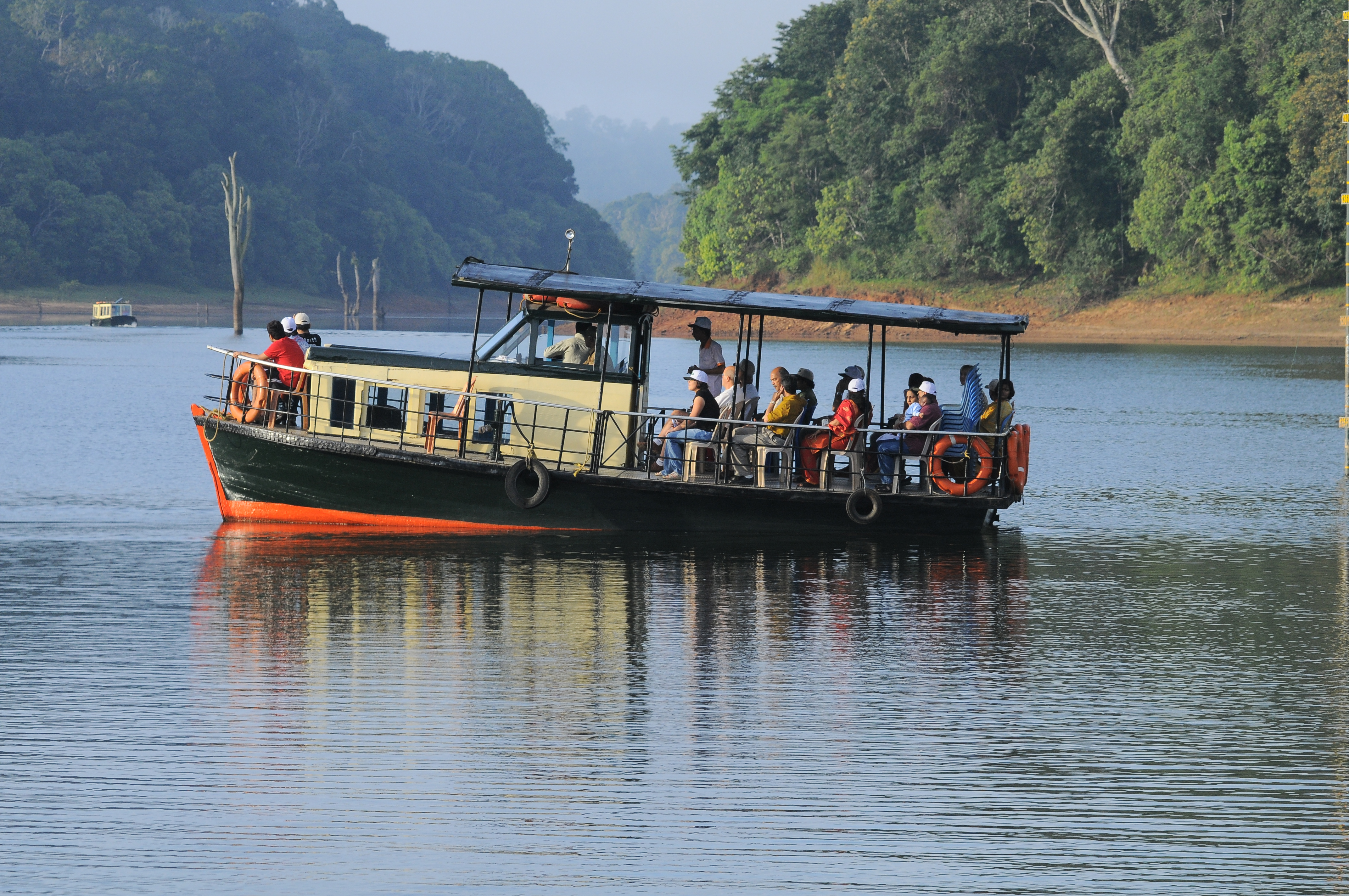
The lake itself — a 26 sq. km stretch of water formed by the 1895 Mullaperiyar Dam — has become the reserve's ecological centrepiece as much as its scenic one. Its shoreline draws large mammals down to drink at dawn and dusk, which is why a dawn boat safari or bamboo raft on Periyar Lake, some 65 km from Sabarimala at Thekkady, remains one of the most reliable wildlife-viewing experiences anywhere in the Western Ghats.
Forest Conservation
A Century of Protecting This Landscape
The forest around Sabarimala has a conservation history that predates the modern temple infrastructure by decades. The surrounding area was first notified as reserve forest in 1899 by the Maharaja of Travancore, following the construction of the Mullaperiyar Dam in 1895. In 1934, Maharaja Chithira Thirunal Balarama Varma declared it a protected game reserve, checking the spread of tea plantations into forest interior. The sanctuary joined independent India's wildlife-sanctuary list by 1950.
The decisive turning point came in 1978, when the reserve was brought under Project Tiger, India's national programme to protect the Bengal tiger — bringing dedicated legal protection, funding and international attention. Its 350 sq. km core zone was notified as a National Park in 1982, and in 1992 the reserve was added to Project Elephant in recognition of its importance as elephant habitat. More recently, the Periyar Foundation's eco-development model — which retrains former poachers as guides and patrol staff, and channels tourism revenue back to the indigenous Mannan community — has become a widely cited example of conservation built around local livelihoods rather than exclusion.
Protecting this landscape isn't a single policy but a layered set of practical efforts:
- Anti-poaching patrols staffed substantially by reformed former poachers from local communities
- Watershed protection — the reserve's forests feed both the Periyar and Pamba rivers, and the Idukki dam downstream generates a meaningful share of Kerala's electricity
- Seasonal waste-management and buffer-zone management during the Sabarimala pilgrimage's peak footfall
- Community-linked eco-tourism revenue that gives the Mannan tribe a direct stake in the forest's survival
None of this makes the forest immune to pressure. A pilgrimage season that funnels tens of millions of people along forest trails and riverbanks — even with waste carried out and buffer zones respected — represents a genuinely large seasonal load on trails, water sources and wildlife corridors. Conservation here is an ongoing balancing act between religious access and ecological limits, not a settled achievement.
Wildlife Along the Trail
What Actually Lives Along the Pamba–Sannidhanam Route
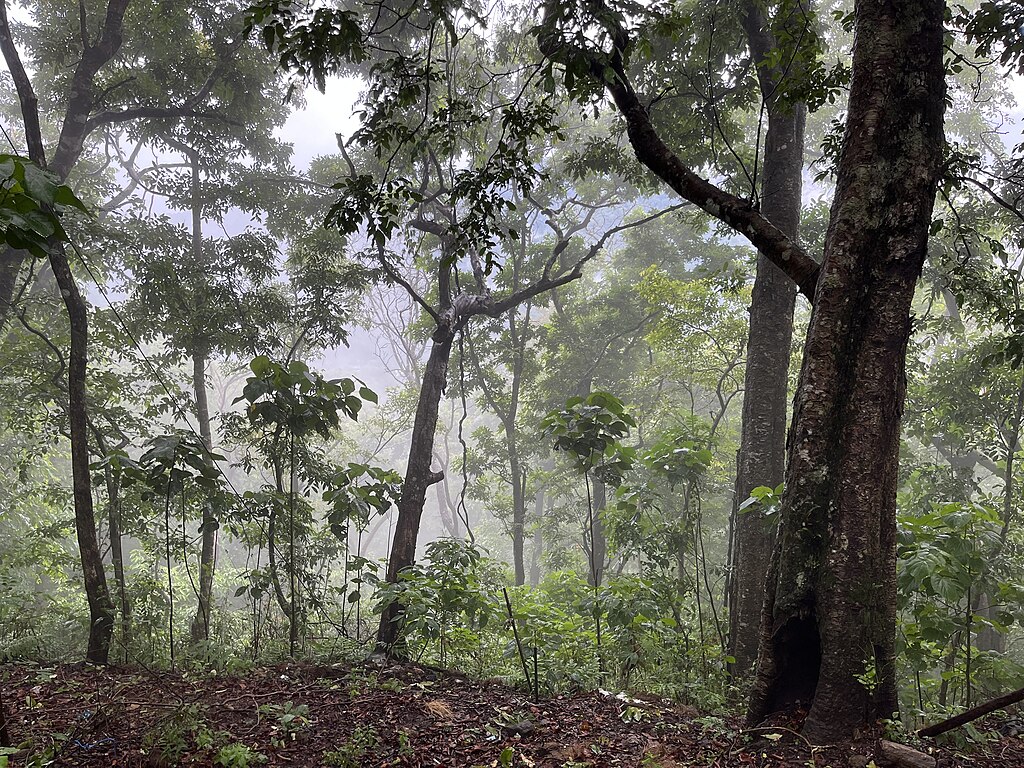
The 4.5 km trail pilgrims and visitors walk from Pamba to Sannidhanam is a working section of this same tiger reserve, not a separate corridor cut through it. The forest closing in around the path from Neelimala onward is the same evergreen and semi-evergreen cover documented in reserve-wide biodiversity surveys.
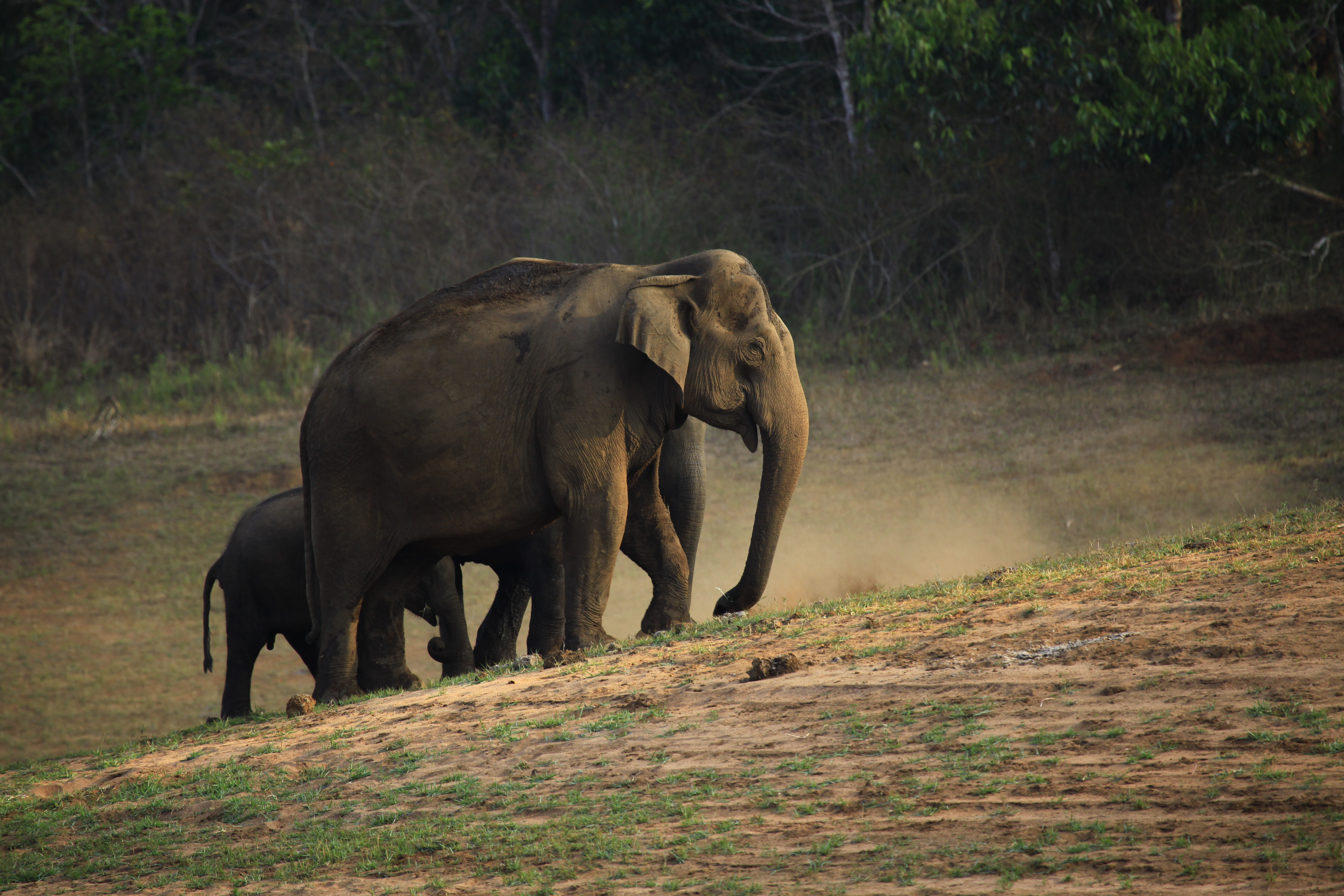
Bonnet macaques, sambar and barking deer, and langurs are regularly encountered along the route. Wild elephants occasionally cross the main path — the standard, non-negotiable response is to stop, stay silent and hold a wide distance until the animal moves on, exactly as guides advise elsewhere in the reserve. Leopards are present but rarely seen, being largely nocturnal. Birders who keep half an eye on the canopy edge tend to come away with a longer list than the "pilgrimage route" framing suggests, and the trail sits within the same butterfly-rich zone that has made Periyar a documented hotspot for Lepidoptera.
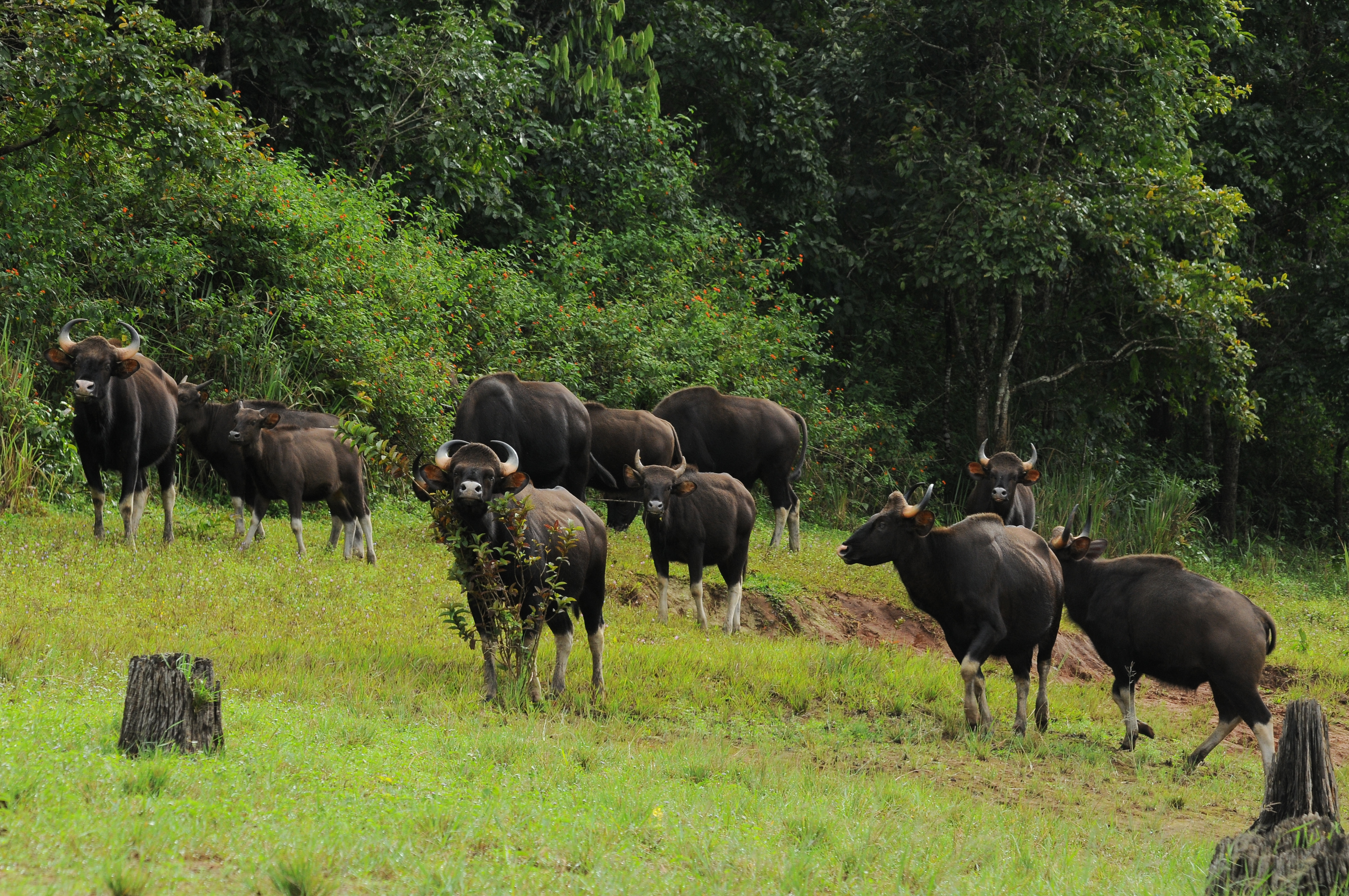
Stop moving. Stay silent. Keep at least 30 m of distance, more for elephants. Never attempt to move around an elephant on the trail — wait for it to leave on its own. Report any injured or distressed animal to the nearest forest checkpoint rather than approaching it.
Sacred Ecology
The Older Idea Behind the Forest — Sanctity as Conservation
Kerala has a much older and smaller-scale version of what protects Sabarimala's forest: the Kavu, or sacred grove. Scattered across the Malabar Coast, a Kavu is a patch of forest — anywhere from a few square metres to over 20 hectares — set aside for a deity, a serpent spirit or an ancestral guardian, and left deliberately undisturbed under religious taboo rather than formal forest law. A 2025 statewide survey recorded 10,742 such groves across Kerala, covering roughly 1,209 hectares; earlier Forest Department estimates, using a narrower definition, counted around 1,500 ecologically significant ones.
The largest and most studied of these, Iringole Kavu near Perumbavoor, spans about 50 acres and has been found to hold plant-species diversity comparable to natural Western Ghats evergreen forest, including 18 species endemic to the southwestern Ghats and a resident population of the critically endangered Malabar civet. What protected it wasn't a fence or a warden — it was centuries of belief that disturbing the grove would bring misfortune on the community responsible for it.
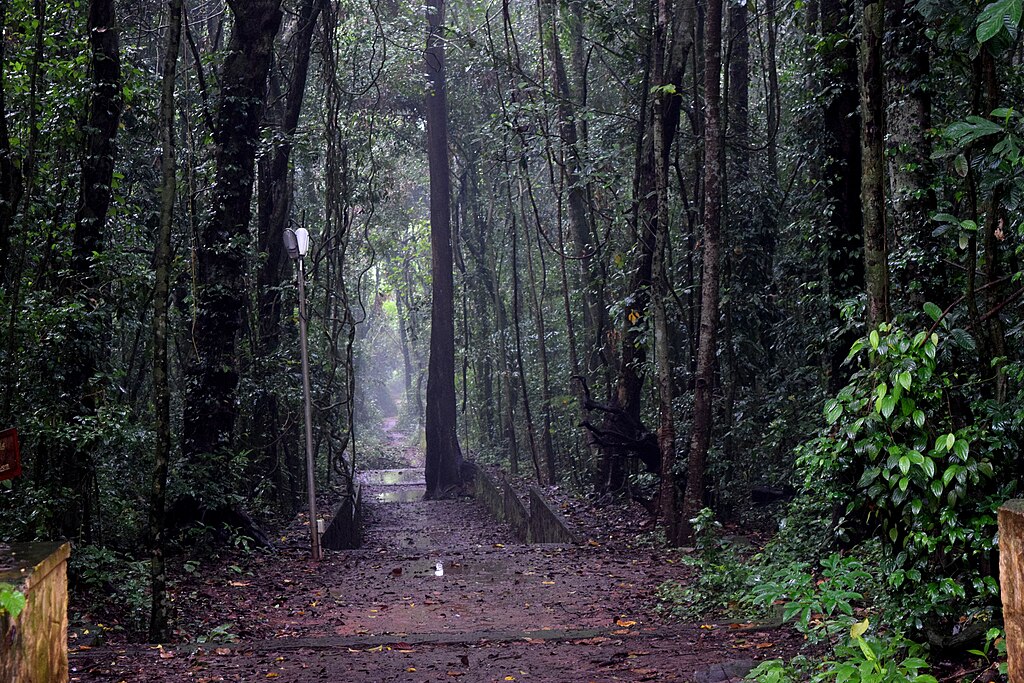
Sabarimala operates on a related principle, just at a vastly larger scale. Where a Kavu is protected because a single village believes disturbing it invites calamity, Sabarimala's surrounding tiger reserve has been shielded, in part, because its sanctity as pilgrimage ground made large-scale clearing or settlement culturally unthinkable for generations — reinforcing, rather than competing with, the legal protections that arrived later through Project Tiger. The line between "temple" and "forest" was never especially sharp in this part of Kerala; researchers of Kerala's sacred-grove tradition have made the same point about groves generally — that the forest and the shrine were treated as one and the same, not as separate things placed side by side.
The comparison isn't perfect. Kavus survive on the strength of an intimate, small-scale, often single-family relationship with a specific patch of trees; Sabarimala's forest is managed today mostly through state conservation apparatus, with sanctity functioning more as long-term cultural insulation than as the day-to-day mechanism of protection. But both are examples of the same underlying phenomenon: religious meaning acting, deliberately or not, as an ecological safeguard — and Kerala's own Kavus, which have lost an estimated 80% of their forest cover since the 1970s as land values rose and belief eroded, are also a caution about how fragile that safeguard can be once the surrounding economic pressure grows large enough.
Pilgrimage Landscape
Reading Sabarimala as a Landscape, Not Just a Site
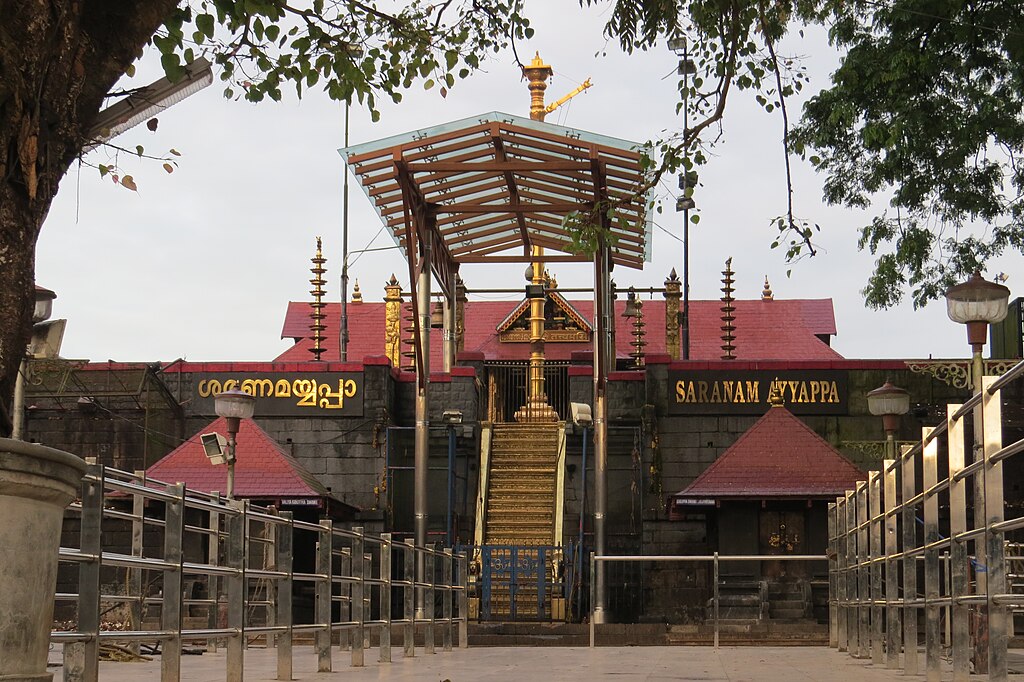
Pilgrimage-studies scholars often distinguish a "sacred site" — a fixed point, like an altar or a shrine — from a "pilgrimage landscape": the entire terrain a pilgrimage moves through, where the journey itself carries as much meaning as the destination. Sabarimala is unambiguously the second kind. The mandatory stop at Erumeli's Vavar shrine, the ritual bath in the Pamba, the 4.5 km climb through forest, and the final ascent of the 18 steps form a single continuous spatial narrative — geography doing theological work, not just providing the setting for it.
This pattern — a mountain or forest ascent structured as a spiritual journey — recurs across very different religious traditions worldwide: pilgrims climbing Croagh Patrick in Ireland, the 88-temple circuit of Japan's Shikoku Henro walked through forested countryside, or China's sacred mountain pilgrimages up Emei Shan and Tai Shan. What distinguishes Sabarimala within that broader category is the sheer scale of people moving through a landscape this ecologically sensitive at once — a UNESCO-recognised Western Ghats biodiversity hotspot carrying a human tide numbered in the tens of millions across a few winter weeks.
The forest was never separate from the temple — in Kerala's own tradition of nature worship, the two were understood as one and the same.
A recurring theme in Kerala's sacred-ecology scholarshipSpiritual Tourism in Global Context
Where Sabarimala Sits Among the World's Mega-Pilgrimages
Set against the handful of pilgrimages that operate at true mass scale, Sabarimala is large but not the largest — and the comparison is instructive for what it says about crowd management, infrastructure and ecological load.
| Pilgrimage | Typical Scale | Setting | Notable Feature |
|---|---|---|---|
| Sabarimala (Mandala–Makaravilakku) | ~15–50 million per season | Forest hill shrine, Periyar Tiger Reserve | Interfaith route via Erumeli's Vavar shrine; entirely inside a tiger reserve |
| Kumbh Mela (Maha Kumbh, 2025) | Over 600 million cumulative bathing visits, 45 days | River confluence, Prayagraj | Officially the largest human gathering ever recorded; occurs on a 12-year (or 144-year "Maha") cycle |
| Hajj | ~1.8–2 million annually (fixed national quotas) | Mecca, Saudi Arabia | Capped by government-allocated quotas per country, unlike Sabarimala or Kumbh Mela's open attendance |
| Camino de Santiago | ~450,000+ certified arrivals per year | Multi-route overland walk, Spain | Weeks-long journey; scale is spread across an entire year rather than a short season |
| Shikoku Henro (88 Temples) | Estimated 100,000+ pilgrims annually | Circular island route, Japan | Deliberately unhurried pace; often walked over several weeks |
"Spiritual tourism" or "faith-based tourism" is also, distinctly, a global industry category — a fast-growing segment of international travel, though market-research estimates of its size vary enormously between firms (from the low billions to several hundred billion dollars, depending on what's counted), which is itself a sign the category is still loosely defined. What the estimates agree on directionally is growth: rising interest in combining pilgrimage with cultural and wellness travel, increased government investment in pilgrimage infrastructure (India's own PRASAD scheme among them), and a younger cohort of travelers approaching sacred sites with a hybrid faith-and-heritage motivation rather than a purely devotional one.
Sabarimala fits that global pattern in one respect and breaks from it in another. Like the Hajj and the Kumbh Mela, it is overwhelmingly a domestic-and-regional gathering rather than an international tourism draw — most who make the journey are already part of the tradition. But unlike almost every other site on this list, its entire physical setting is a protected tiger reserve, which puts a distinctly ecological version of the sustainability question — usually framed around crowd safety or sanitation at Hajj and Kumbh Mela — front and centre here as well: at what point does mass devotion outstrip what a specific, finite forest can absorb?
🗺 Planning a Trip Into This Landscape
Comparing stays and guided tours around Thekkady and the wider Periyar region is easiest with a broad, independent listings platform.
Affiliate link — we may earn a small commission at no extra cost to you.
Trip Basics
The Practical Essentials, Briefly
Since the ritual and step-by-step logistics are covered thoroughly on our sister site, here is only the minimum a nature-focused visitor needs: the season runs Mandala–Makaravilakku from roughly mid-November to mid-January (2026–27 dates are still provisional — confirm at sabarimalaonline.org), with quieter monthly-pooja and Vishu-season openings the rest of the year. Pamba is the last vehicle point before a 4.5 km, 450 m-elevation forest trek to Sannidhanam; Nilakkal, 29 km short of Pamba, is where private vehicles stop and free shuttles take over. Nearest airport: Kochi (COK), about 150 km. Nearest railhead: Chengannur, about 65 km.
Season dates, the 41-day Vratham, Irrumudi preparation, Neyyabhishekam, virtual queue booking steps and a complete practical checklist are covered in depth at keralatempleguide.com's Sabarimala Pilgrimage Guide — worth reading alongside this article if you're undertaking the pilgrimage itself rather than visiting for the forest and landscape.
Extend Your Trip
More of This Ecosystem Worth Seeing
Frequently Asked Questions