The Story Behind the Stones
Thalassery Fort -- Where Spice, Power and Resistance Collide
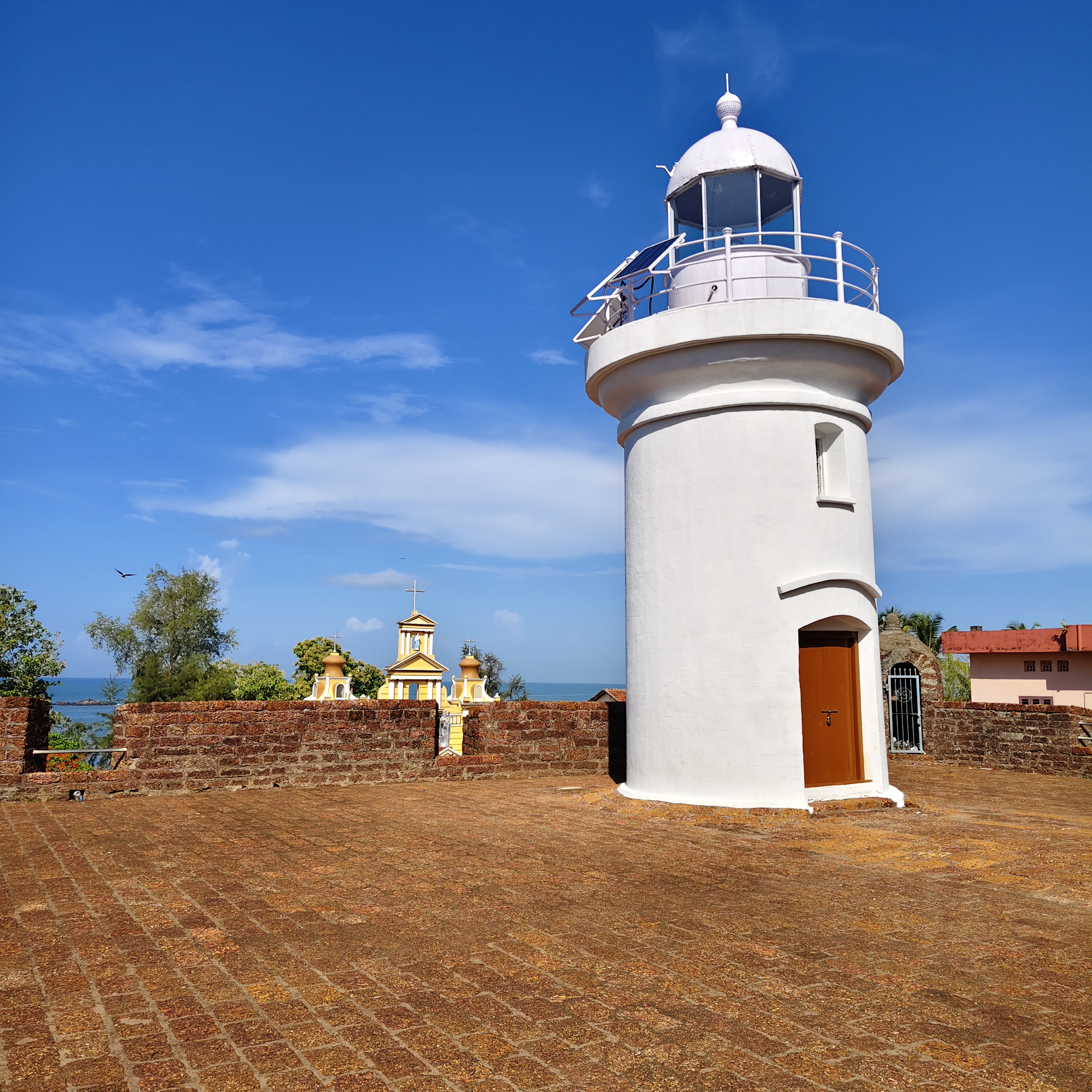
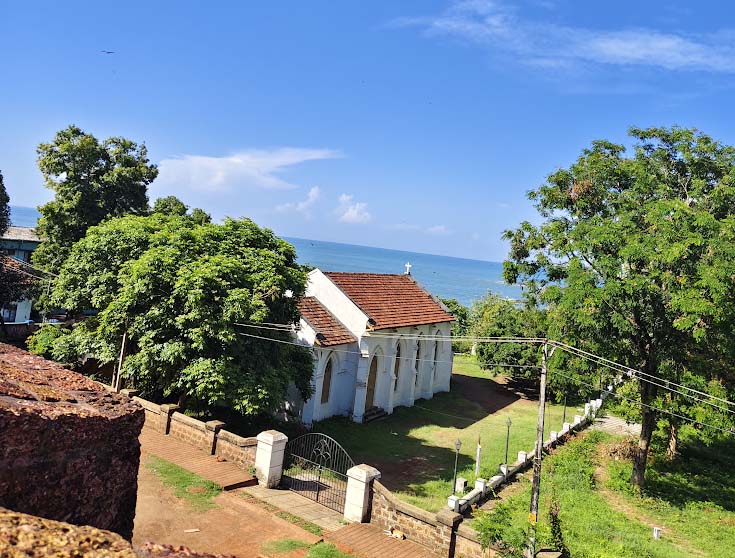
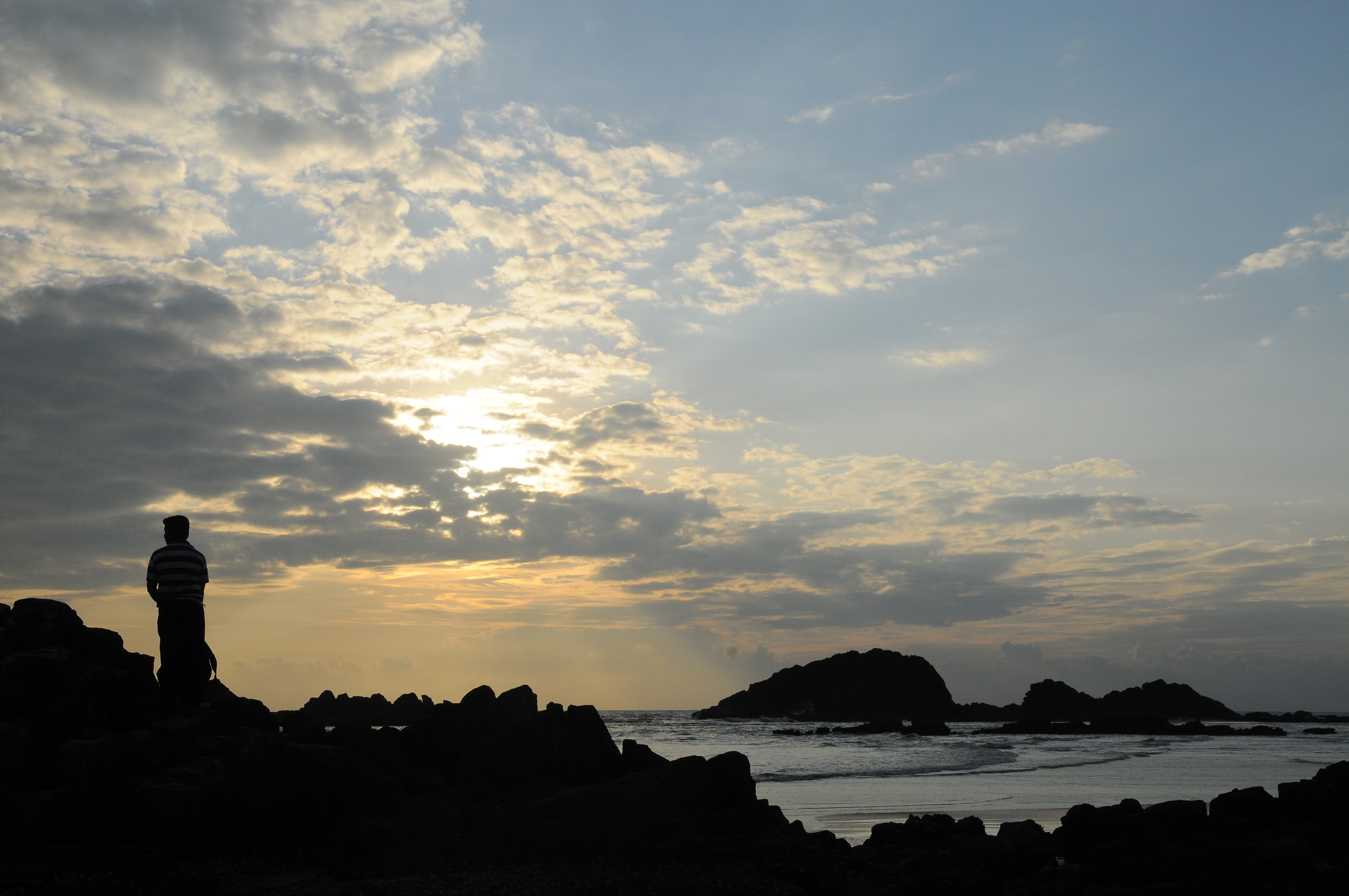
Stand at the edge of Thalassery Fort's northern bastion on a clear October morning and you understand immediately why the British chose this place. Ninety feet below, the Arabian Sea breaks against laterite rock with a restless persistence that has not changed in three centuries. To the south, the town of Thalassery spreads in every direction, its rooftops and minarets and church towers pressing outward from a core that the British helped build. Behind you, the Western Ghats rise in green walls toward Wayanad and beyond. Everything is visible from here. Everything important -- ships approaching from Arabia and the Persian Gulf, dhows bearing pepper from the Malabar ports, the roads that the British would later carve through the hills to carry their armies -- was once monitored from exactly this cliff.
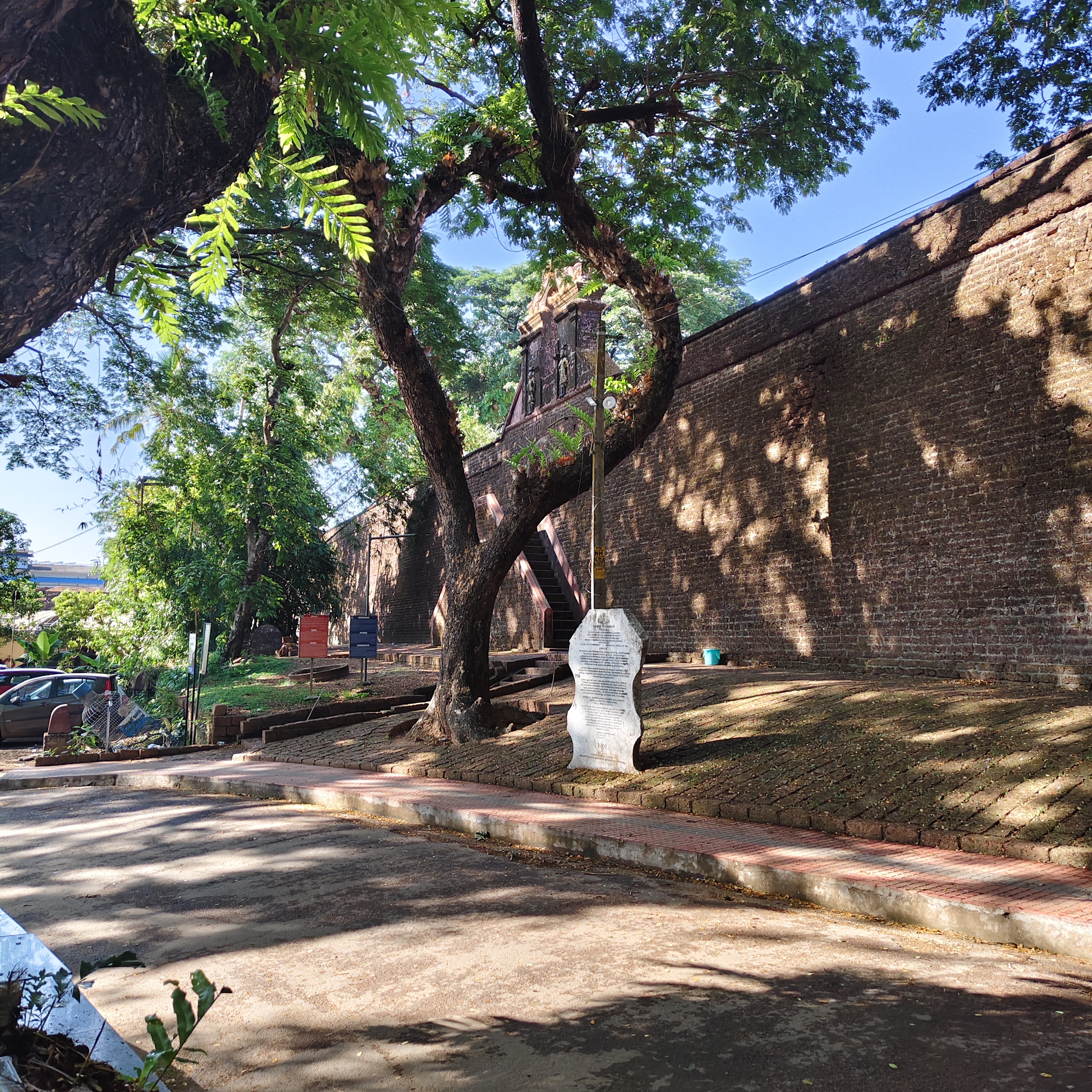
Thalassery Fort (also known as Tellicherry Fort, from the colonial anglicisation of the name) is one of the most historically layered sites on the entire Malabar Coast. Its laterite walls have absorbed the calculations of spice merchants, the strategies of military generals, the whispered conspiracies of political officers, and the quiet administrative routines of a colonial bureaucracy that ruled this coast for nearly two centuries. Today, managed by the Archaeological Survey of India (ASI) since 1999, it receives students and history enthusiasts and curious travellers -- most of whom leave having seen only the surface of a story that goes much deeper than its well-maintained garden suggests.
"Thalassery Fort was the cornerstone of British strategy in Malabar -- not just for military operations but for controlling spice exports and asserting colonial order across the region."
-- K.K.N. Kurup, History of the Tellicherry Factory (1985)Origins: Factory, Fort and Foothold
The story begins not with construction but with commerce. In 1683, the British East India Company established a trading factory at Thalassery -- a small fortified warehouse on a rocky promontory that gave the Company its first reliable foothold on the northern Malabar Coast. The site was chosen with care: a natural promontory provided defensive elevation, a natural harbour allowed ships to anchor close to shore, and the proximity to the spice-rich Western Ghats hinterland (only a few days' journey by trail) meant that pepper, cardamom, nutmeg, cinnamon and timber could flow to the coast with relative ease.
The Company established its factory at Thalassery with the permission of the Kolathiri rulers of northern Kerala -- the traditional sovereigns of the Malabar region -- who saw commercial and political advantage in trading relations with the Europeans. This early relationship was cooperative rather than coercive: the Company needed access to the spice trade, and the Kolathiris needed the revenue and diplomatic leverage that European trade connections provided.
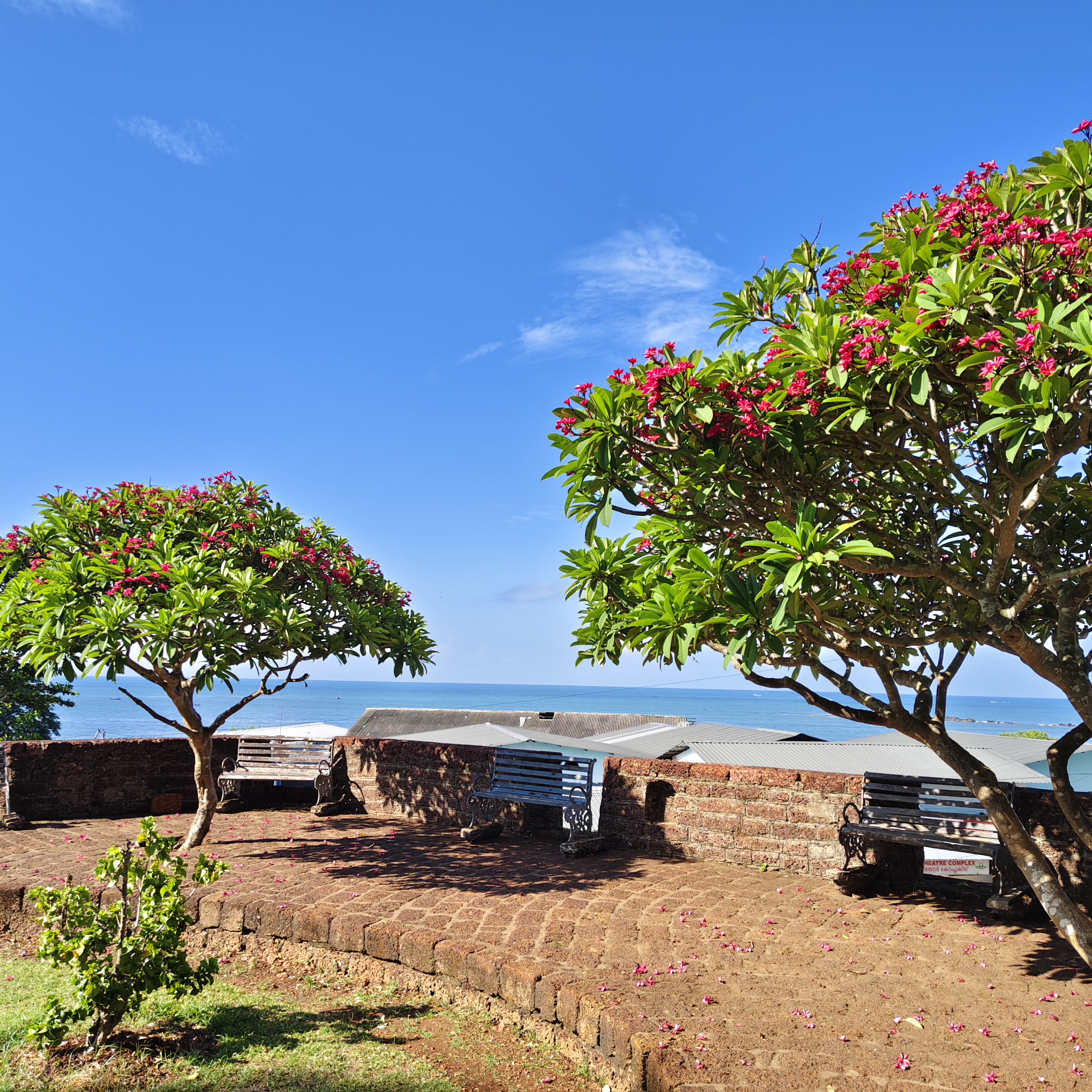
By 1708, however, the Company's calculations had changed. Growing competition from the Dutch and French, increasing friction with local rulers, and the strategic necessity of projecting military power along the coast drove the British to fortify the site properly. The wooden trading post was replaced with a substantial laterite structure -- square in plan, with flanking bastions at each corner, massive perimeter walls rising ten metres, and a single heavily reinforced entrance set at the top of the main wall rather than at ground level (a design decision that made the fort extraordinarily difficult to assault). This is the structure that survives today, albeit restored and modified over the subsequent three centuries.
Construction: Laterite, Lime and Legend
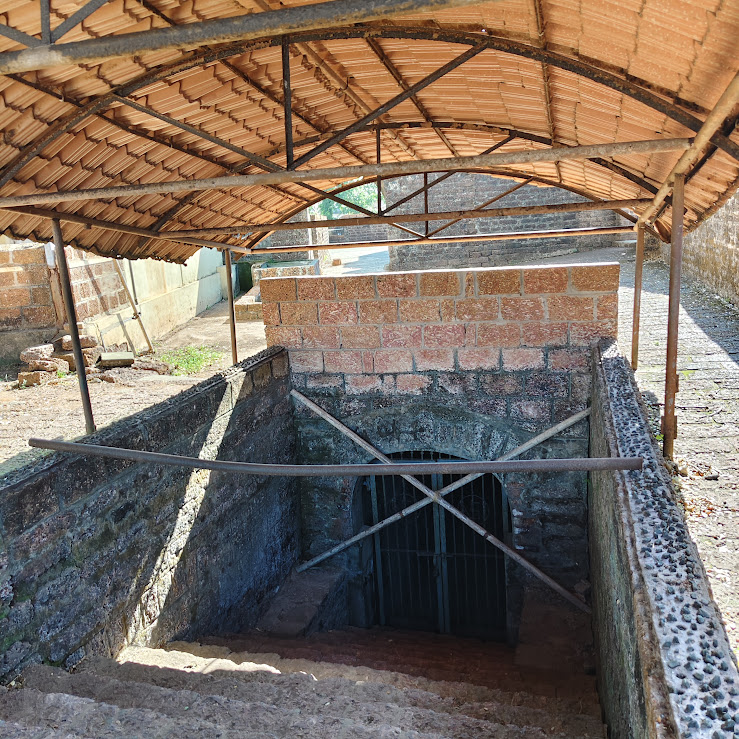
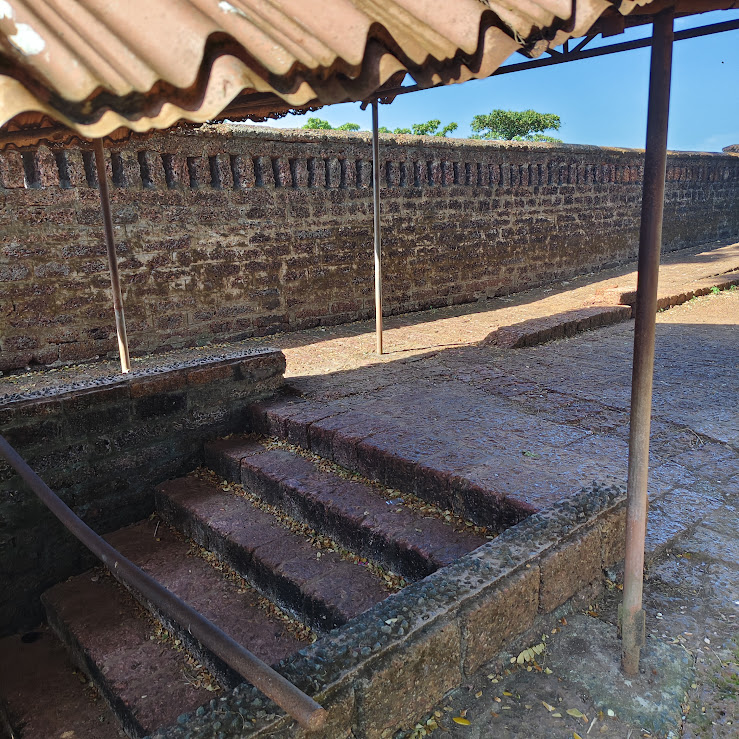
Thalassery Fort was built primarily from laterite -- the iron-rich reddish rock that forms the geological surface of much of coastal Kerala. Laterite is uniquely suited to construction in the tropical Malabar climate: it hardens on exposure to air, tolerates monsoon rainfall without significant erosion, and can be cut with relative ease when freshly quarried but becomes extremely durable once dried. The fort's walls, bastions, underground chambers and tunnel were all constructed from laterite blocks, giving the structure its characteristic warm red appearance that deepens in the evening light.
An oft-repeated local tradition holds that the fort's mortar was prepared from a mixture of quicklime, egg white and jaggery (raw cane sugar) -- a recipe not unique to Thalassery but common to several historic structures along the Malabar and Konkan coasts. Whether entirely accurate or partly legendary, this recipe points to a genuine pre-cement construction practice in which organic binding agents -- proteins from egg whites, sugars from jaggery -- were incorporated into lime mortar to improve adhesion, plasticity and water resistance. Several laboratory analyses of historic Malabar structures have confirmed that organic matter in the mortar is consistent with this tradition.
"The fort at Tellicherry became a forward operating base during the prolonged engagements with the Kottayam chieftain -- essential to British supply lines and troop coordination across the Malabar interior."
-- William Logan, Malabar Manual (1887)The Spice Economy: Pepper, Cardamom and the Minting of Power
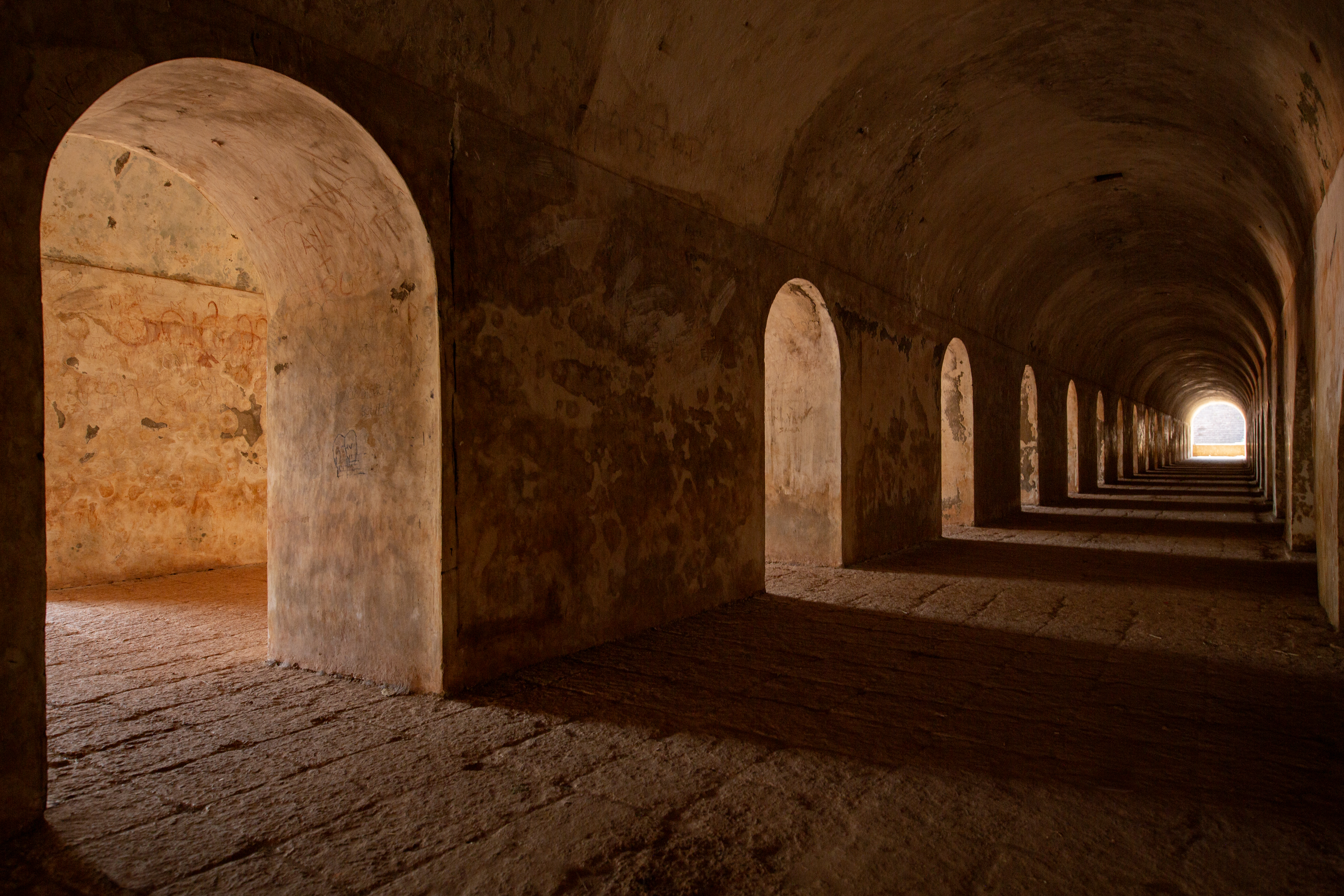
For most of its early existence, Thalassery Fort was not primarily a military installation -- it was an industrial complex in the service of commerce. The fort's most economically significant spaces were its underground chambers, where vast quantities of pepper and cardamom were stored between collection from the interior trading posts and loading onto Company ships in the harbour below. Pepper from the forests of Wayanad and Kozhikode, cardamom from the high-altitude plantations of the Idukki hills -- both commanded extraordinary prices in European and Arabian markets, and their careful storage, weighing and documentation were the fort's most routinely important functions.
These same underground chambers also served as the fort's mint. The East India Company operated a coin press at Thalassery between 1799 and 1805, issuing the Pagoda -- a gold coin used in commercial transactions throughout the Malabar region. The minting of currency was among the most powerful assertions of sovereign authority a colonial trading company could make: it meant that the Company was not merely conducting commerce on the Malabar Coast but replacing the existing economic order with one of its own design. The physical weight of Company gold, pressed in the underground chambers of Thalassery Fort, was the most concrete expression of what British colonialism meant in practice.
Resistance and the Fort's Military Role
Pazhassi Raja, Arthur Wellesley and the Conspiracy in the Chambers
Kerala Varma Pazhassi Raja -- known as the Lion of Kerala and one of India's earliest anti-colonial resistance leaders -- is the figure who gives Thalassery Fort its most historically significant chapter. The ruler of the Kingdom of Kottayam (in the present-day Wayanad region), Pazhassi Raja launched two prolonged guerrilla campaigns against British authority in Malabar: the First Pazhassi Revolt (1795--1797) and the Second Pazhassi Revolt (1800--1805). His forces, comprising Nair and Kuruma tribal fighters, used the dense forests of the Western Ghats with extraordinary tactical sophistication -- disrupting British supply lines, ambushing patrols, and retreating into terrain where European military doctrine was entirely useless.
Thalassery Fort was the nerve centre of the British response. During both revolts, the fort served as the primary logistics, communications and command base for British military operations in the Malabar interior. Reinforcements and arms arriving by sea were landed at Thalassery harbour and moved through the fort before distribution to forward positions. Intelligence on Pazhassi Raja's movements was collated here. According to multiple historical accounts, Major General Arthur Wellesley -- the future first Duke of Wellington and victor of Waterloo -- visited Thalassery Fort and used it as a planning base for operations against the Kottayam chieftain.
Whether the specific claim that Wellesley "conspired in the underground chambers" to capture Pazhassi Raja is literally accurate or embellished by subsequent retelling, the substantive historical fact is clear: Thalassery Fort was the administrative and military hub through which British power in northern Malabar was projected, sustained, and ultimately imposed. Pazhassi Raja was killed in 1805 -- not in a military engagement but through intelligence-driven pursuit in the forests near Mananthavady, Wayanad, in what historians have identified as an operation substantially coordinated from the Malabar coast command structure of which Thalassery Fort was the key node.
The Road Scarifier -- A Hidden Colonial Relic
The Iron Machine That Built an Empire's Roads
Among the most surprising and under-appreciated objects in Thalassery Fort is an iron contraption preserved near the fort's interior wall -- a colonial-era road scarifier that represents a dimension of British imperial strategy that is rarely discussed in popular history.
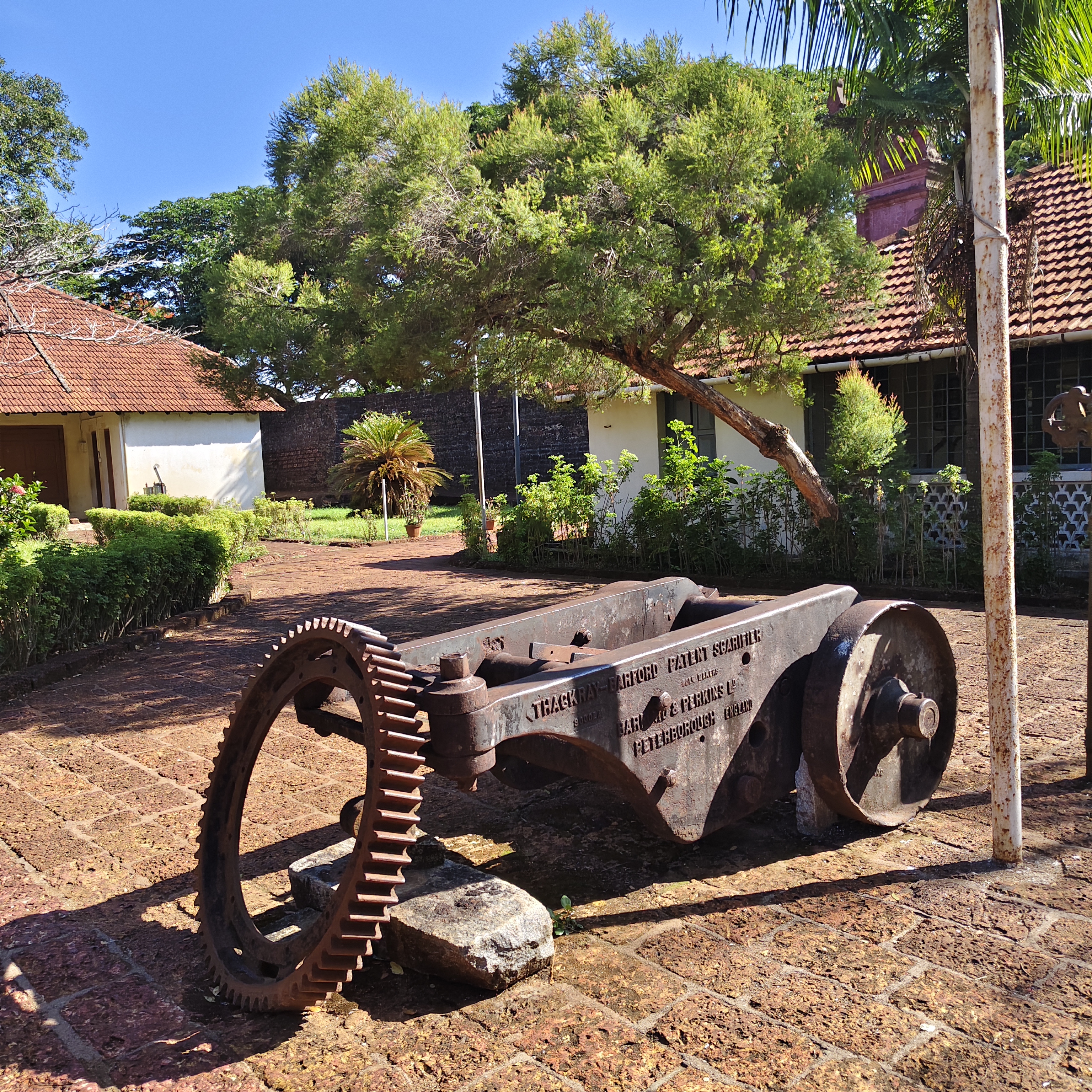
A road scarifier is a construction machine that functions by churning up the hardened surface of roads using rows of toothed blades or tines, loosening compacted laterite or earth so that new road material can be laid efficiently. In the 19th century, these machines were drawn by draft animals or operated manually using gear levers and rotating arms. They were essential tools of the British colonial road-building programme in India -- a programme whose military logic was inseparable from its civil engineering character.
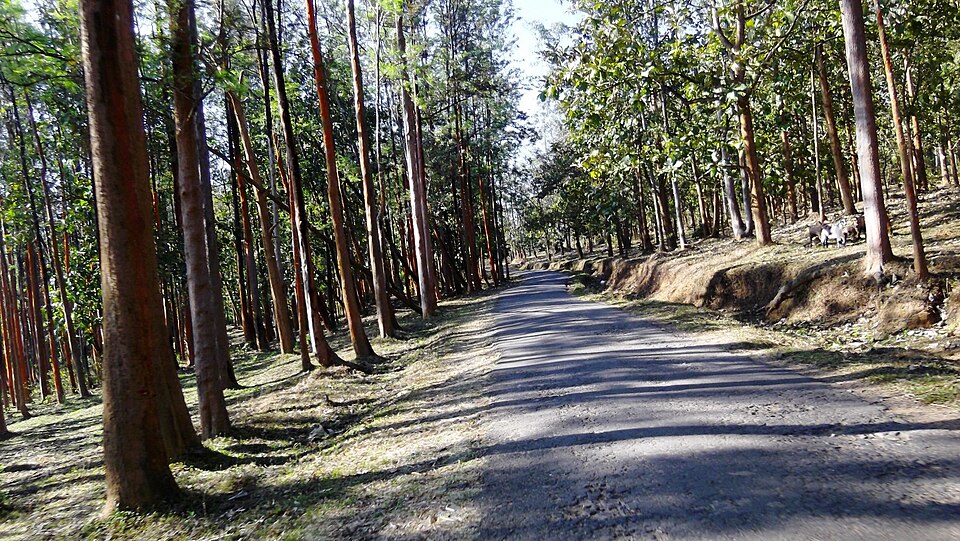
Roads in Malabar were not built for the convenience of local populations. They were built to move troops, guns, and supplies to suppress resistance movements like Pazhassi Raja's, and later to connect spice-producing hinterlands to coastal ports for more efficient extraction. The scarifier at Thalassery Fort -- one of the few surviving specimens of its type in South India, according to the Archaeological Survey of India -- is therefore not merely a piece of agricultural equipment. It is a physical artefact of the infrastructural logic of colonial domination: the systematic engineering of the Malabar landscape to serve British military and commercial objectives.
The ASI's preservation of this object alongside the fort's spice chambers, its minting apparatus, and its military bastions creates, entirely unintentionally, one of the most complete material narratives of colonial economics available at any single site in Kerala. For the historically attentive visitor, the scarifier deserves more time and attention than it currently receives.